Istanbul, Turkey
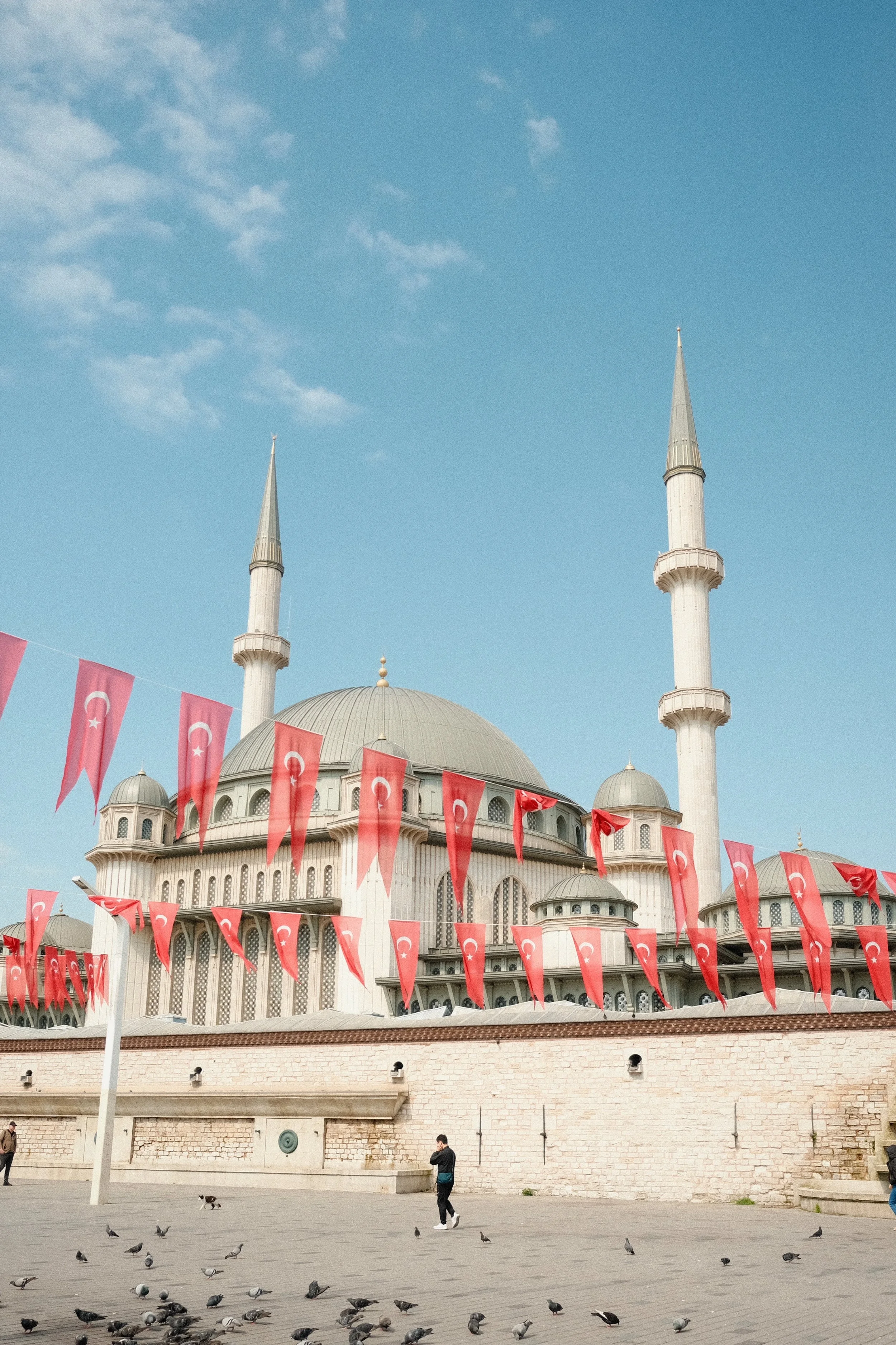
We arrived in Istanbul at the start of Kurban Bayramı, the festival of Eid al-Adha, ready for a few days of sunshine, good food and ambling aimlessly. This was my second visit to the city and my partner's first.
The first time I came, back in 2018, I had travelled with a large group of friends. We spent our days happily getting lost, eating far too much and falling in love with the city one neighbourhood at a time. Istanbul left a deep impression on me then, and for years afterwards I found myself talking about it so often that my partner was understandably curious to see what all the fuss was about.
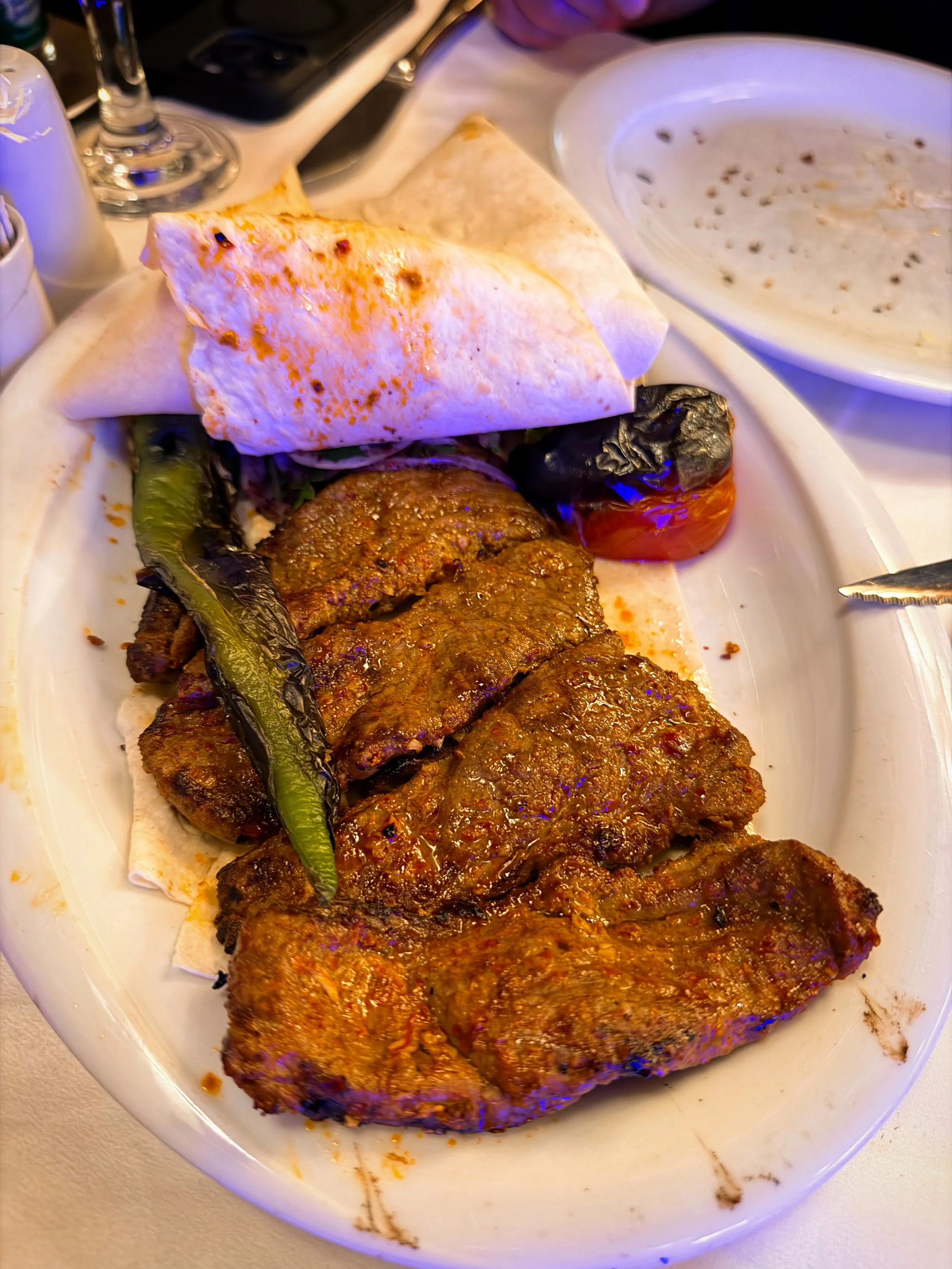
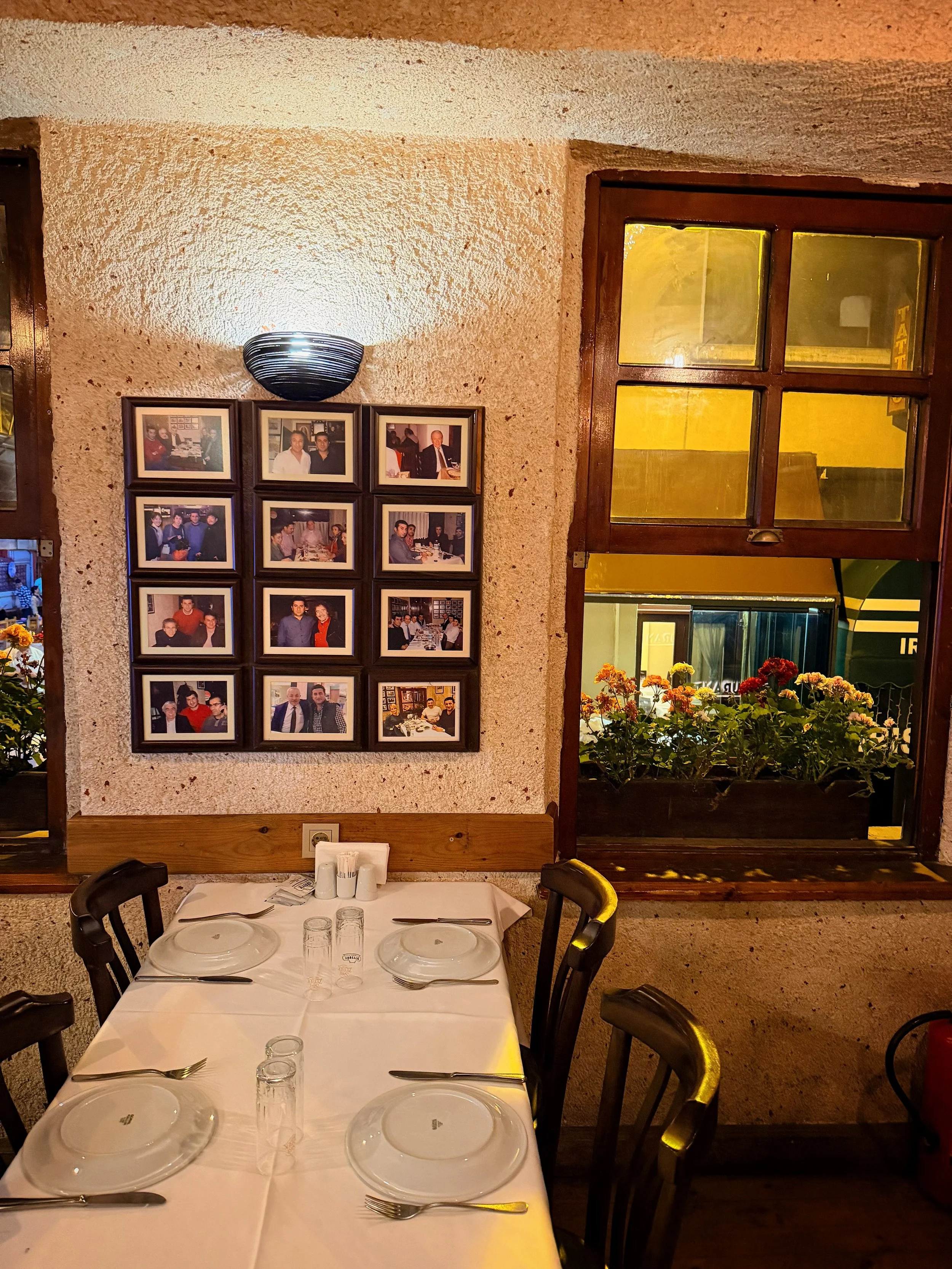
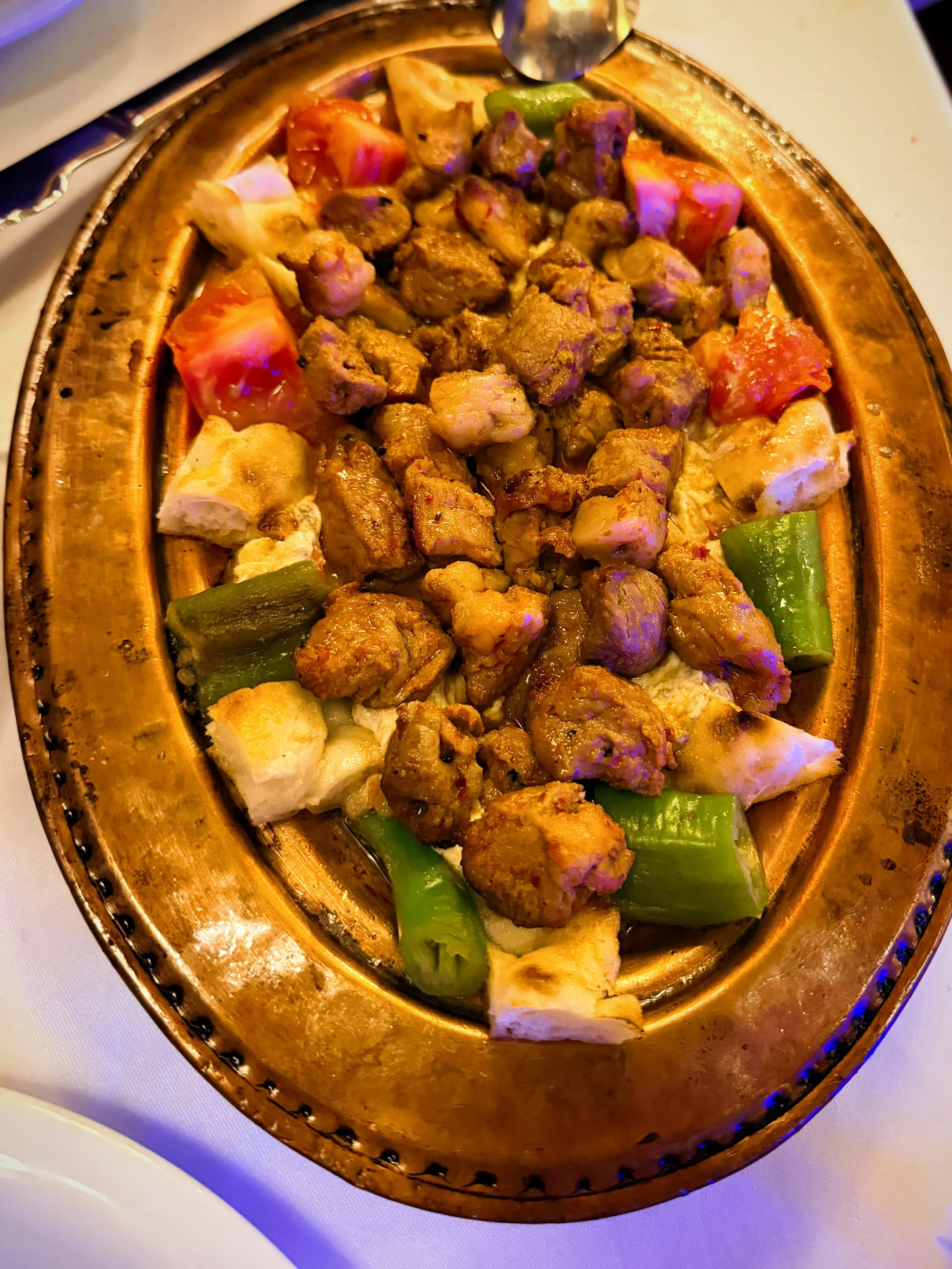
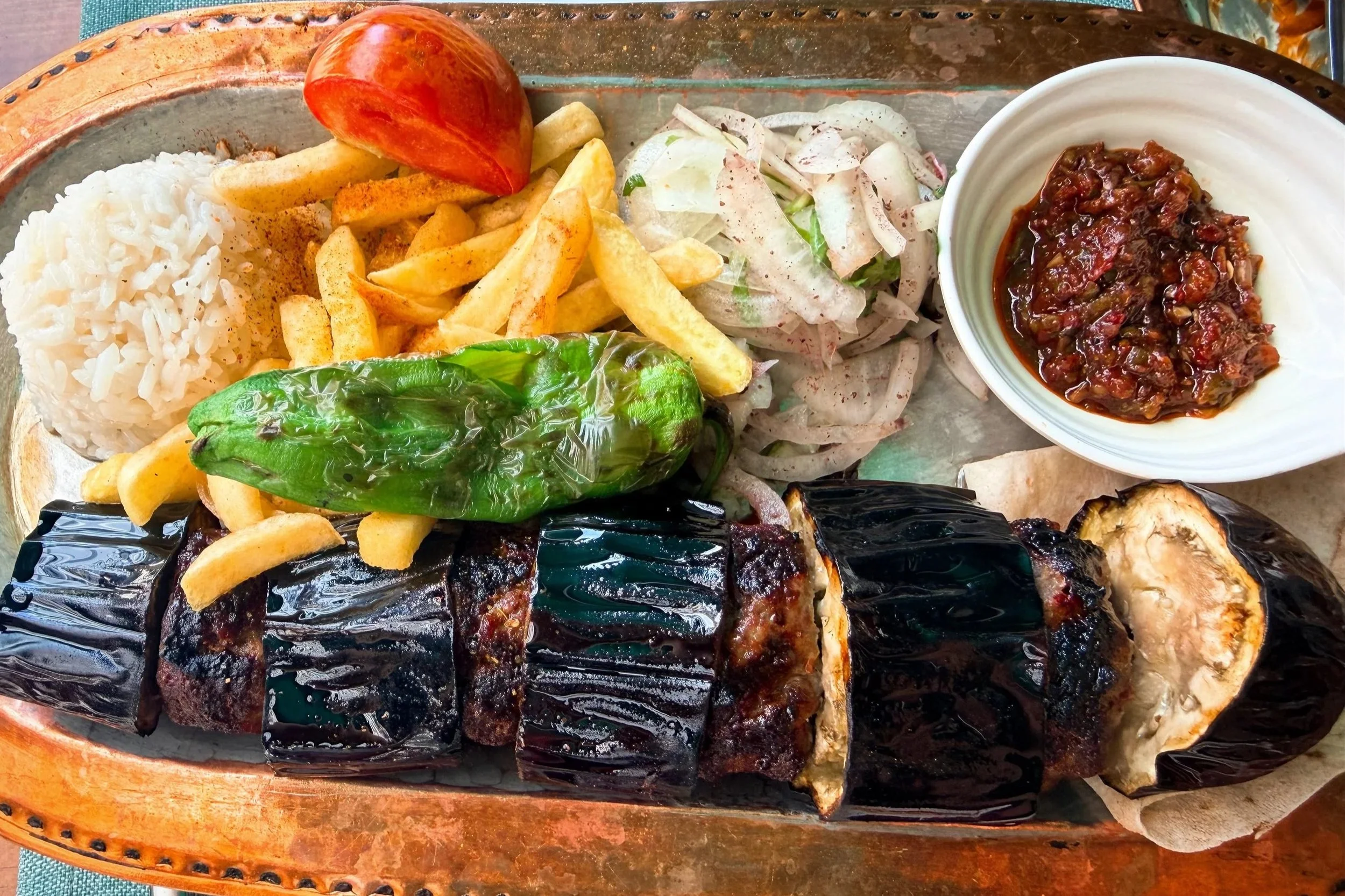
We arrived late on our first evening and, as all sensible arrivals in Turkey should, immediately went in search of meat. We stumbled into Zübeyir Ocakbaşı and ordered juicy lamb kebabs and Ali Nazik, one of my favourite Turkish dishes. It was only when I got up to go to the bathroom that I realised where we were. Eight years earlier, I had sat in the very same restaurant celebrating a friend's birthday. Somehow, in a city of more than fifteen million people, I had unknowingly returned to exactly the same place for another memorable meal.
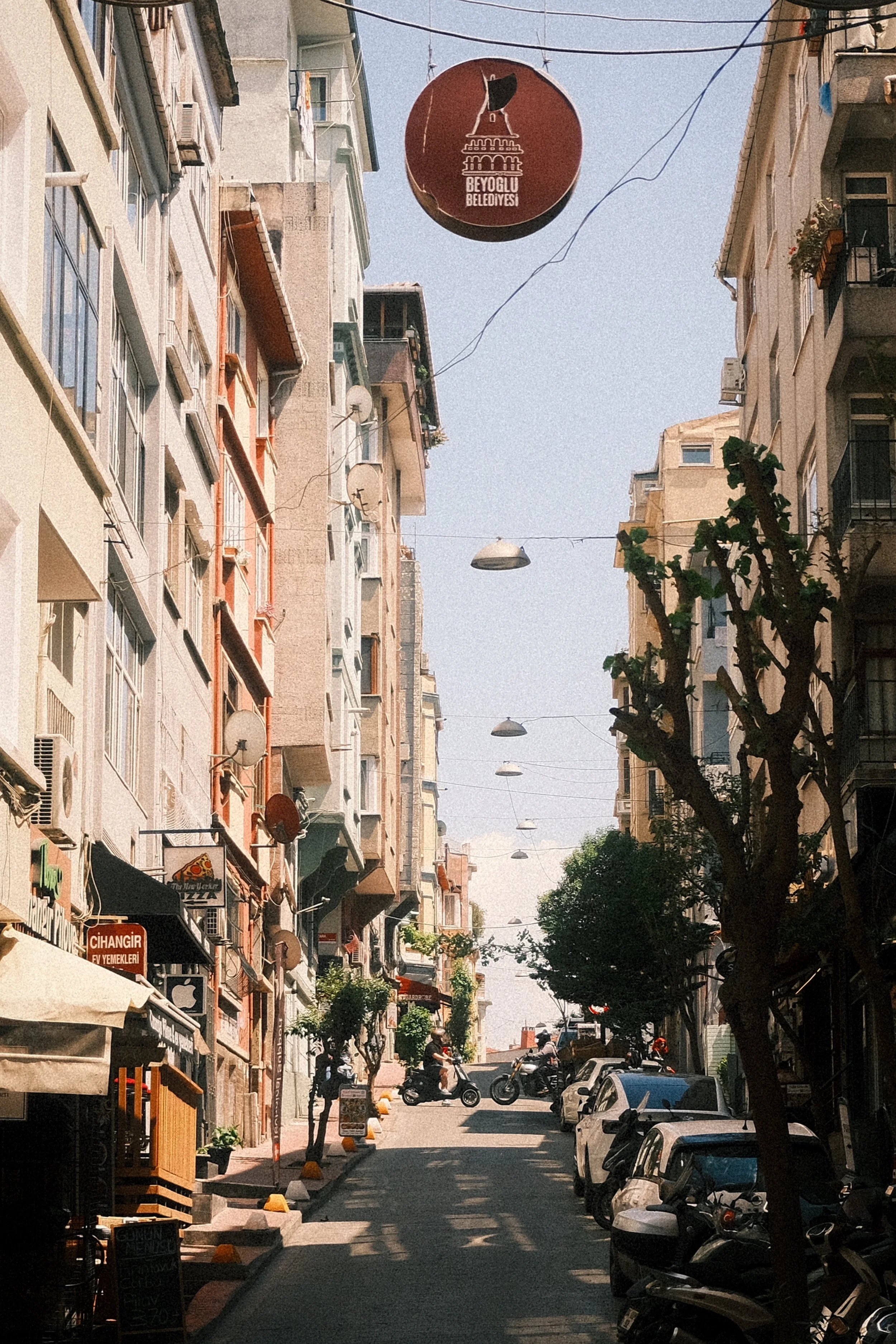
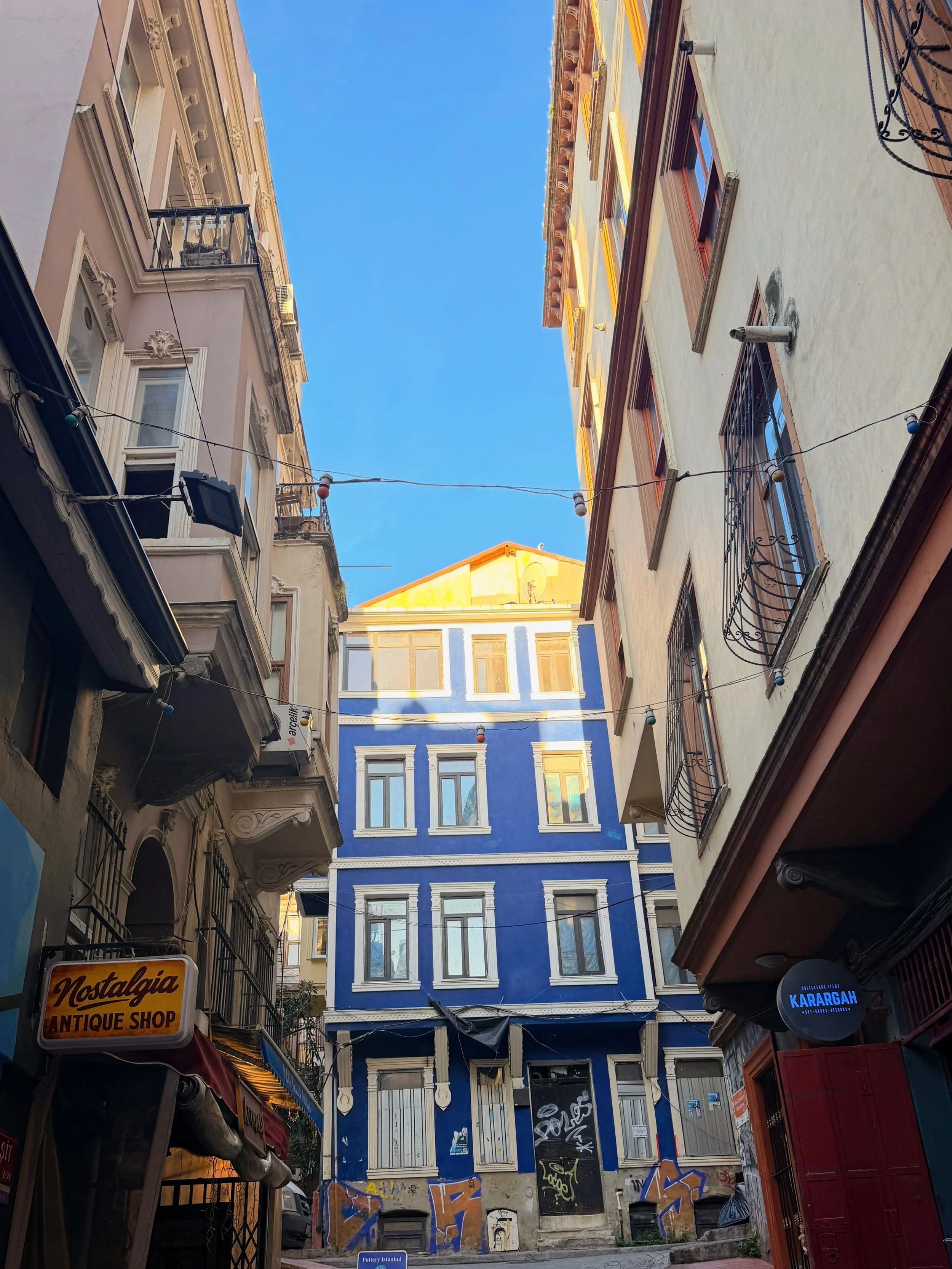
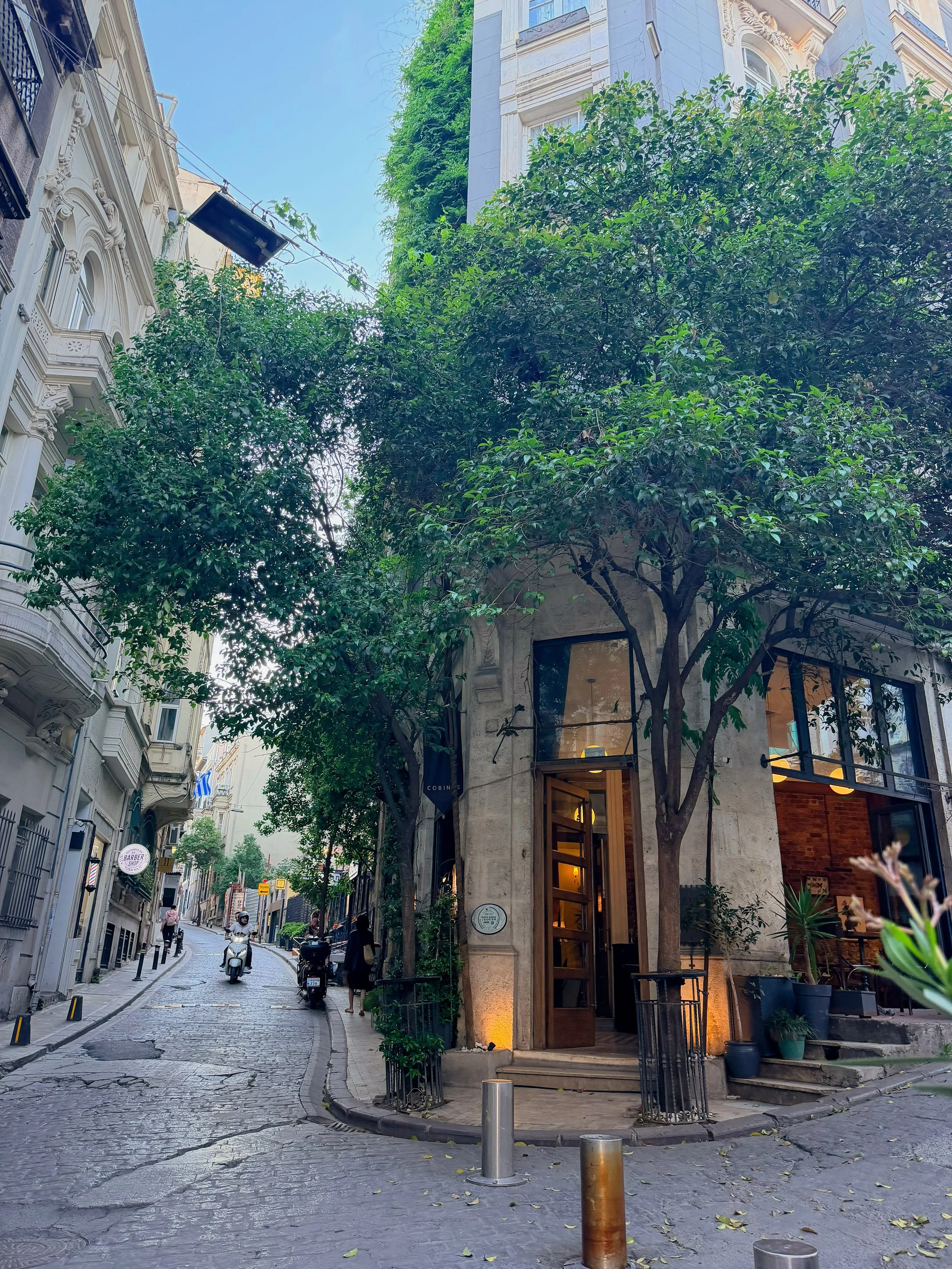
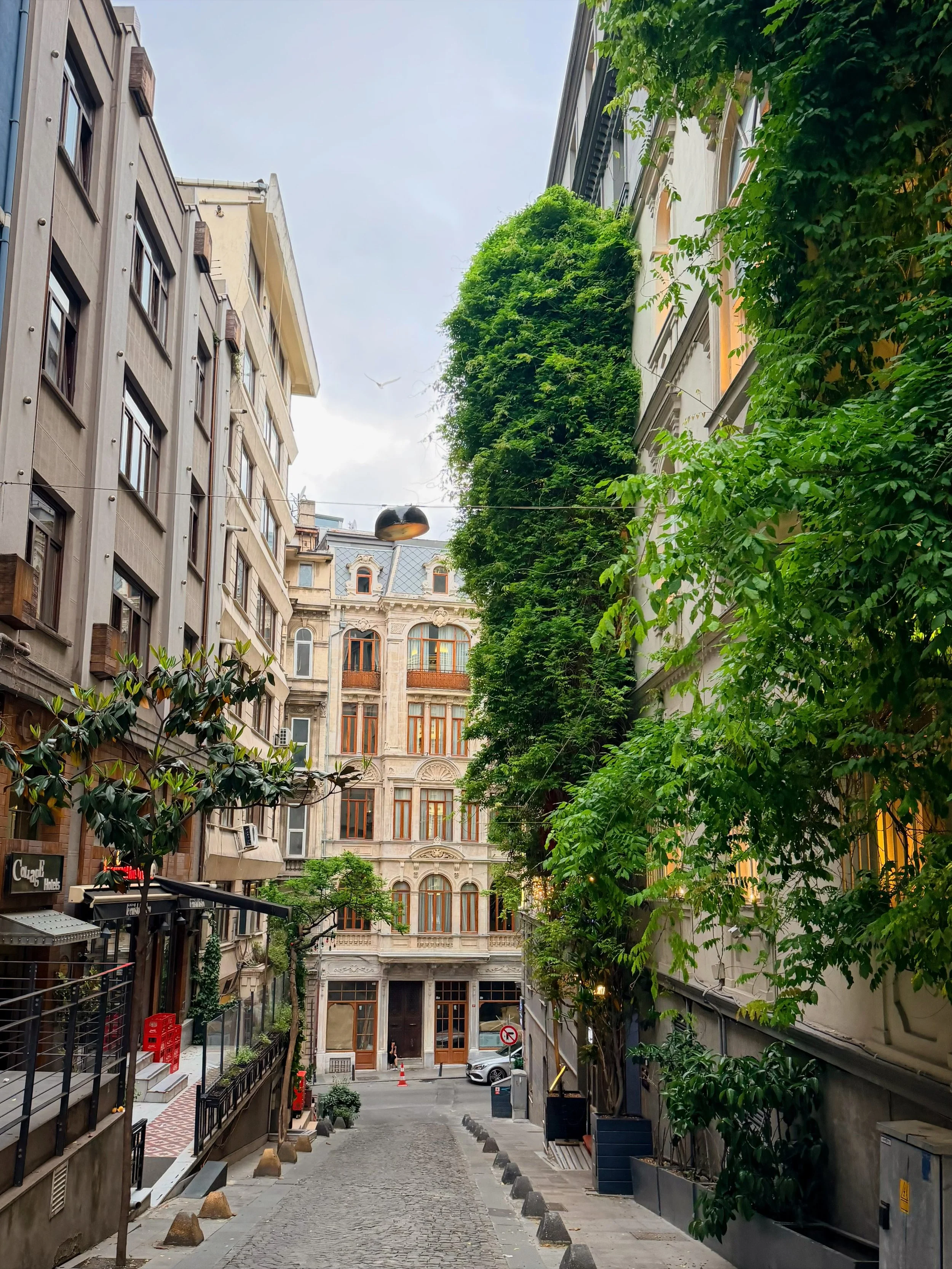
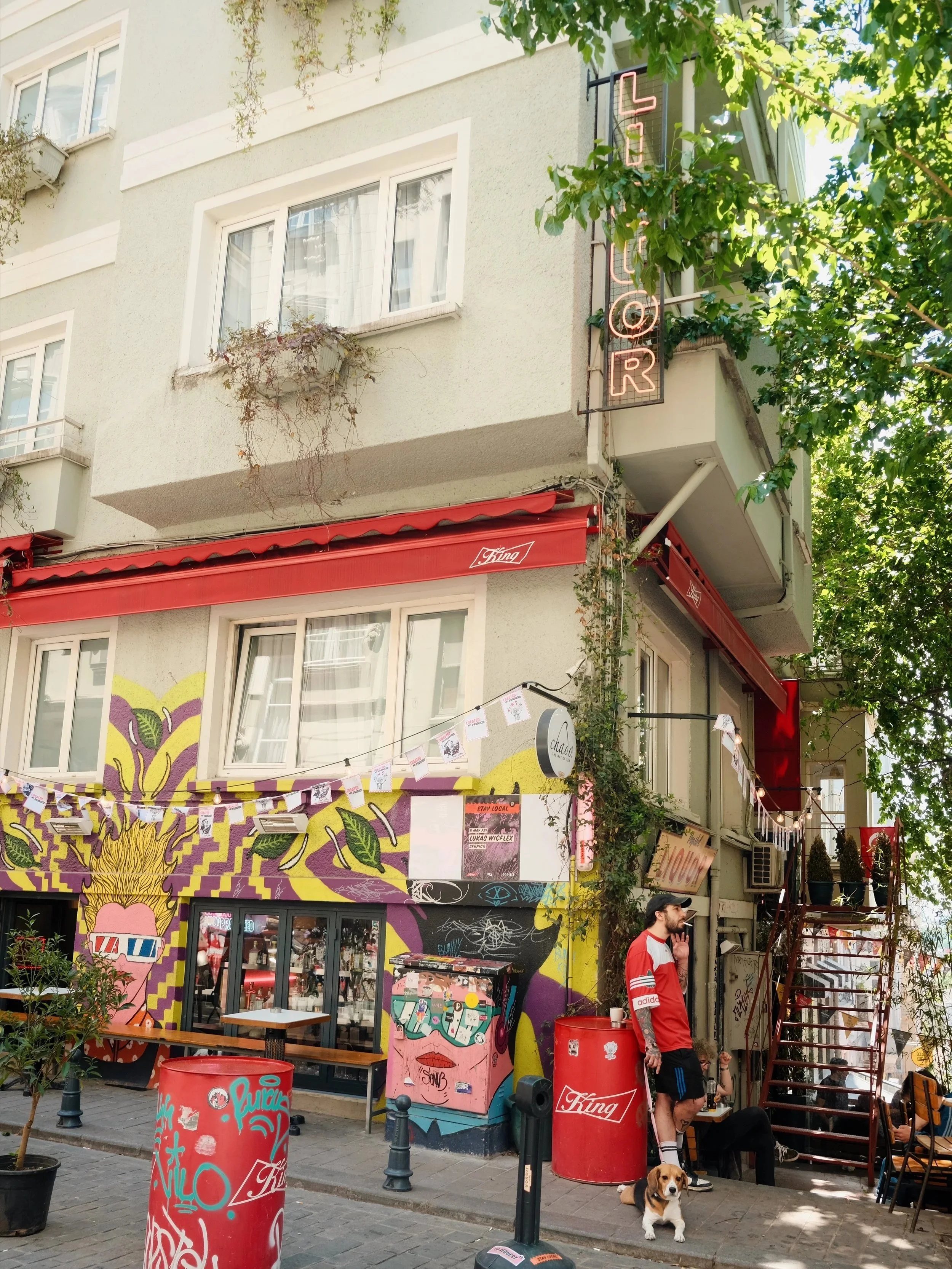
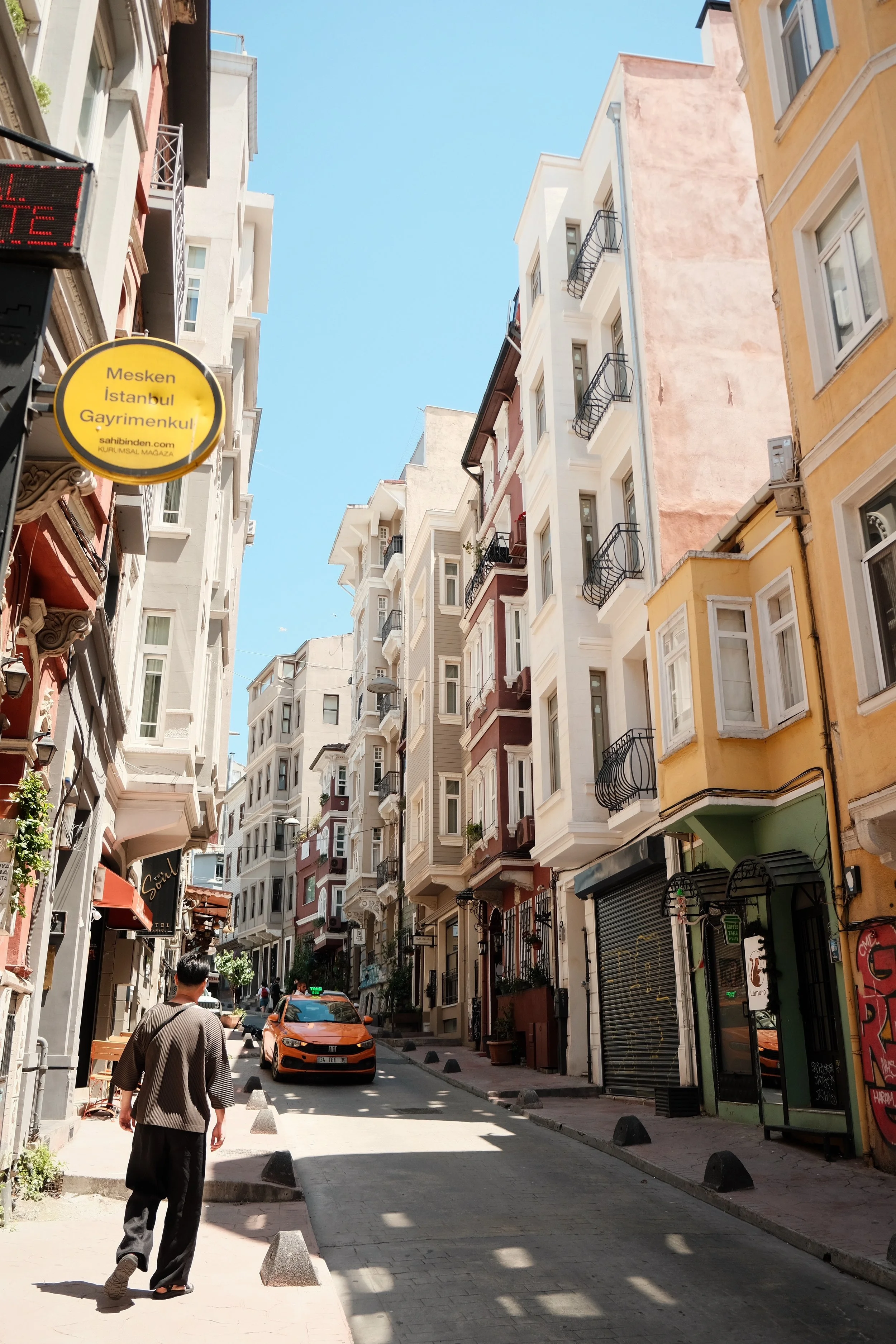
For four nights we stayed at the Rayelin Hotel in Taksim, a newly opened place that proved to be an excellent find. The price included a generous Turkish breakfast every morning, along with access to a spa, gym, Turkish baths and pool. My partner wanted the gym, I wanted the spa and so we were happy. Taksim makes a practical base for exploring the city, though neighbouring Cihangir offers a slightly more bohemian atmosphere, full of independent cafés and antique shops.
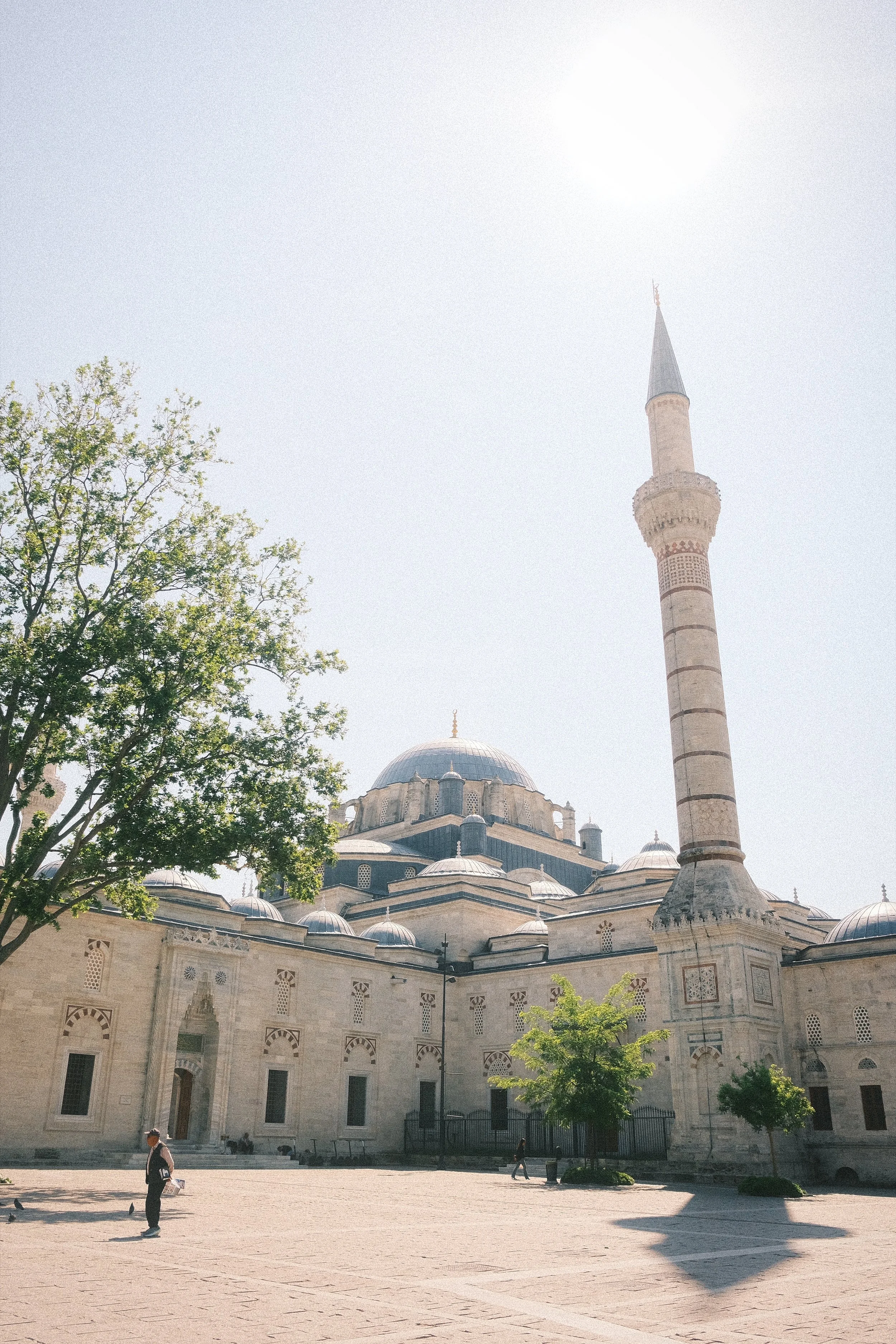
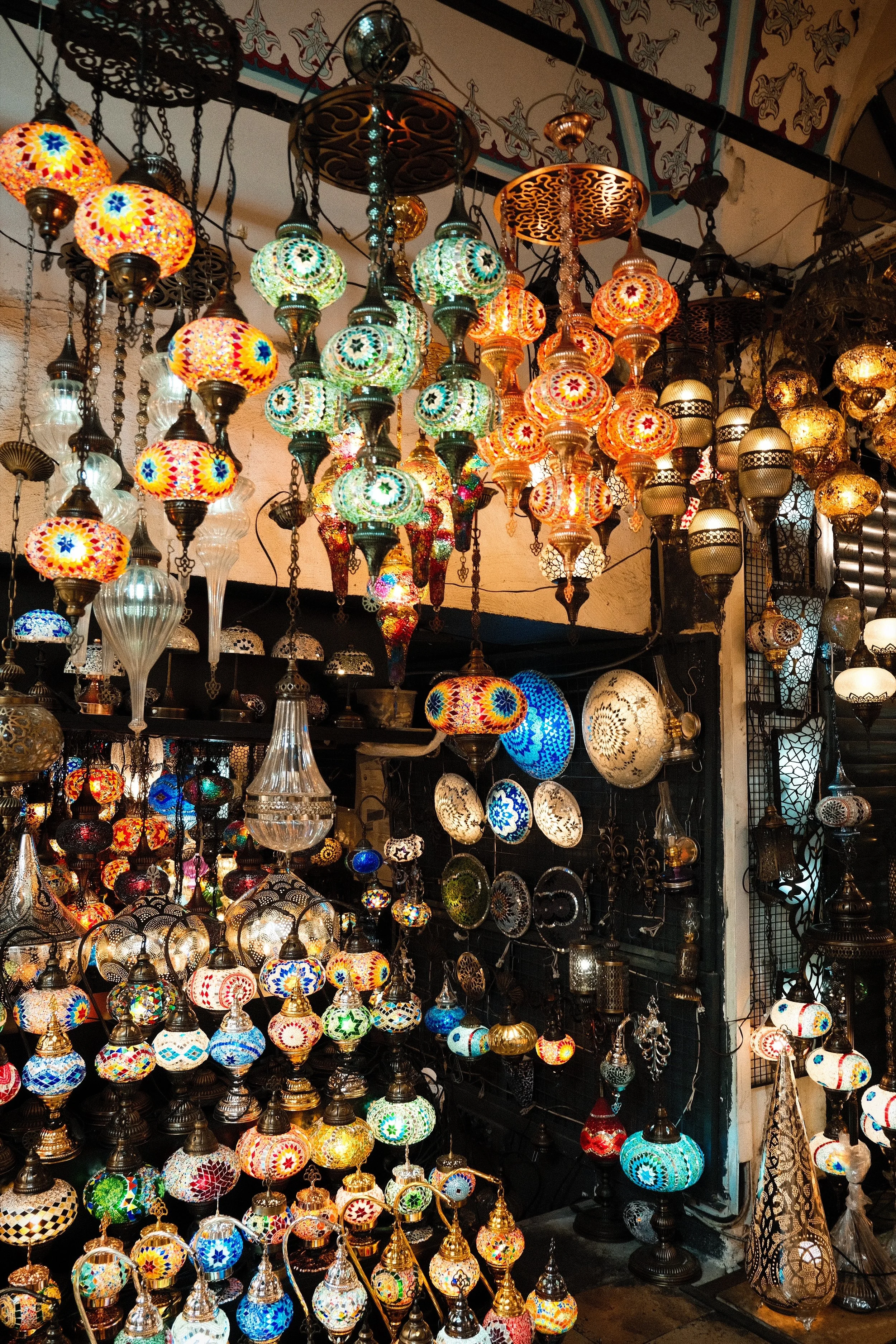
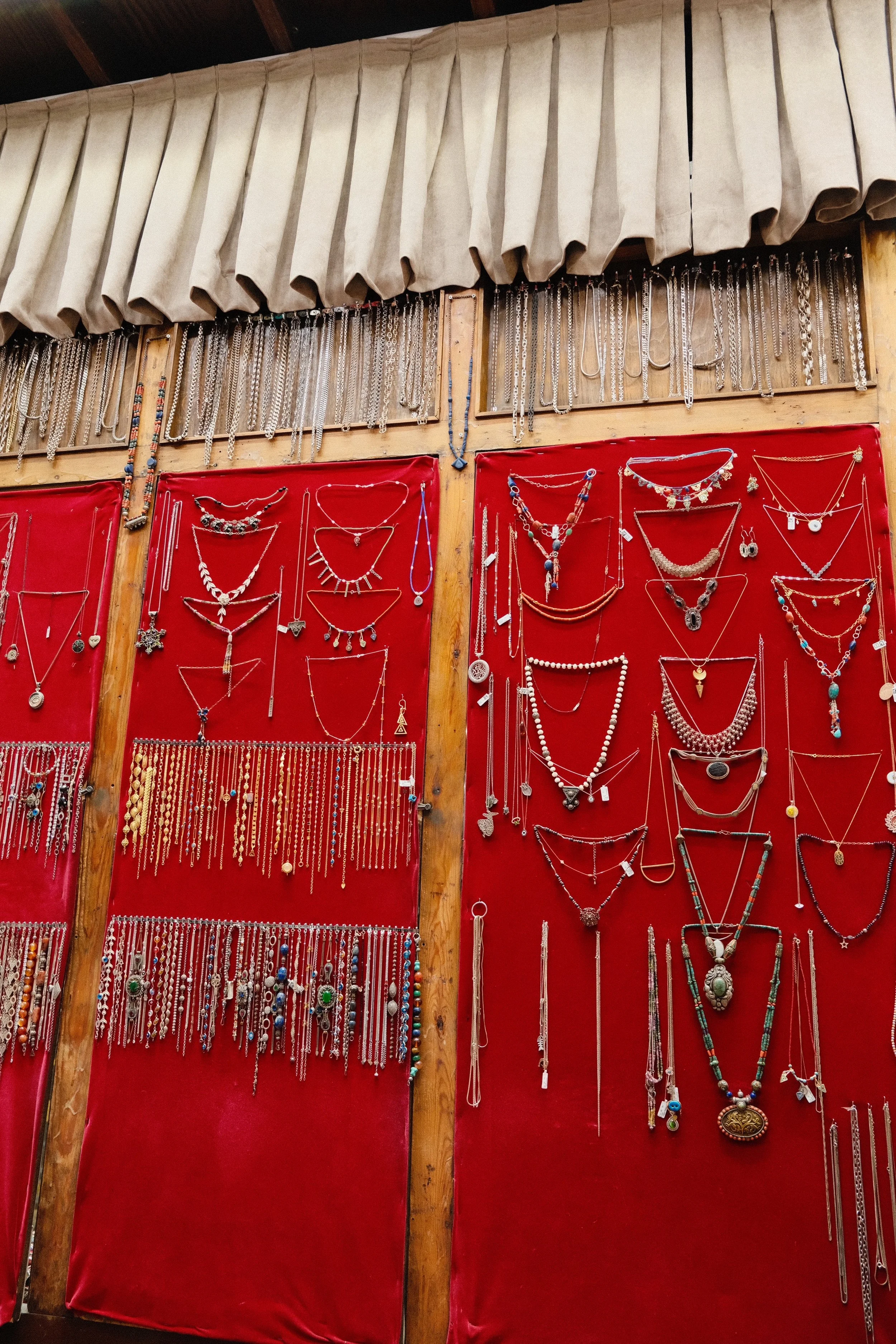
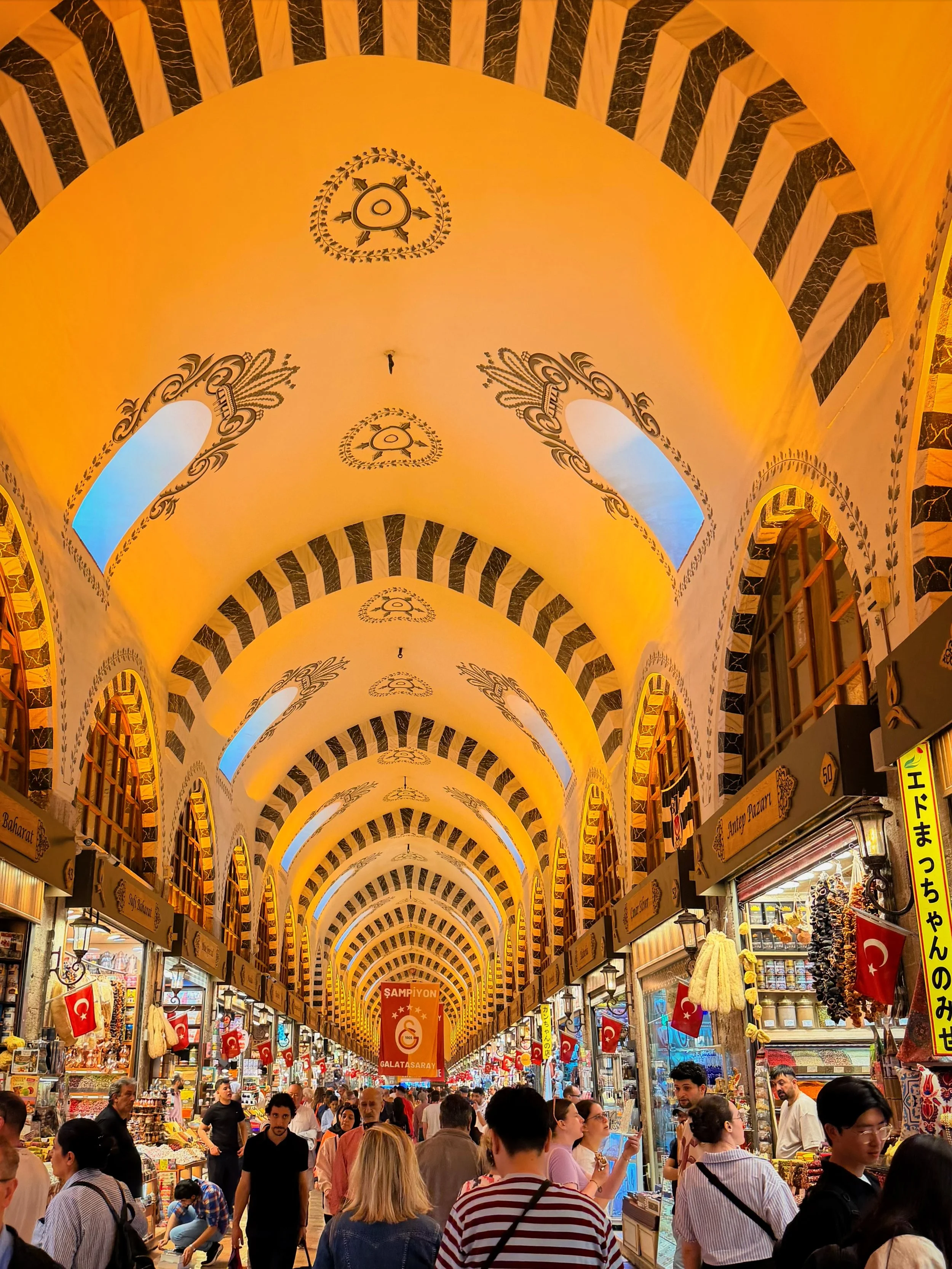
On our first morning, we rose early and headed straight to the Grand Bazaar. Knowing that the markets would close for much of the Eid holiday, we felt fortunate to catch them before the shutters came down. My partner, who collects silver rings, found a tiny jewellery workshop tucked away in one of the quieter passages. While a ring was resized for him, we sat drinking tea with the owner, chatting about the city and exchanging recommendations.
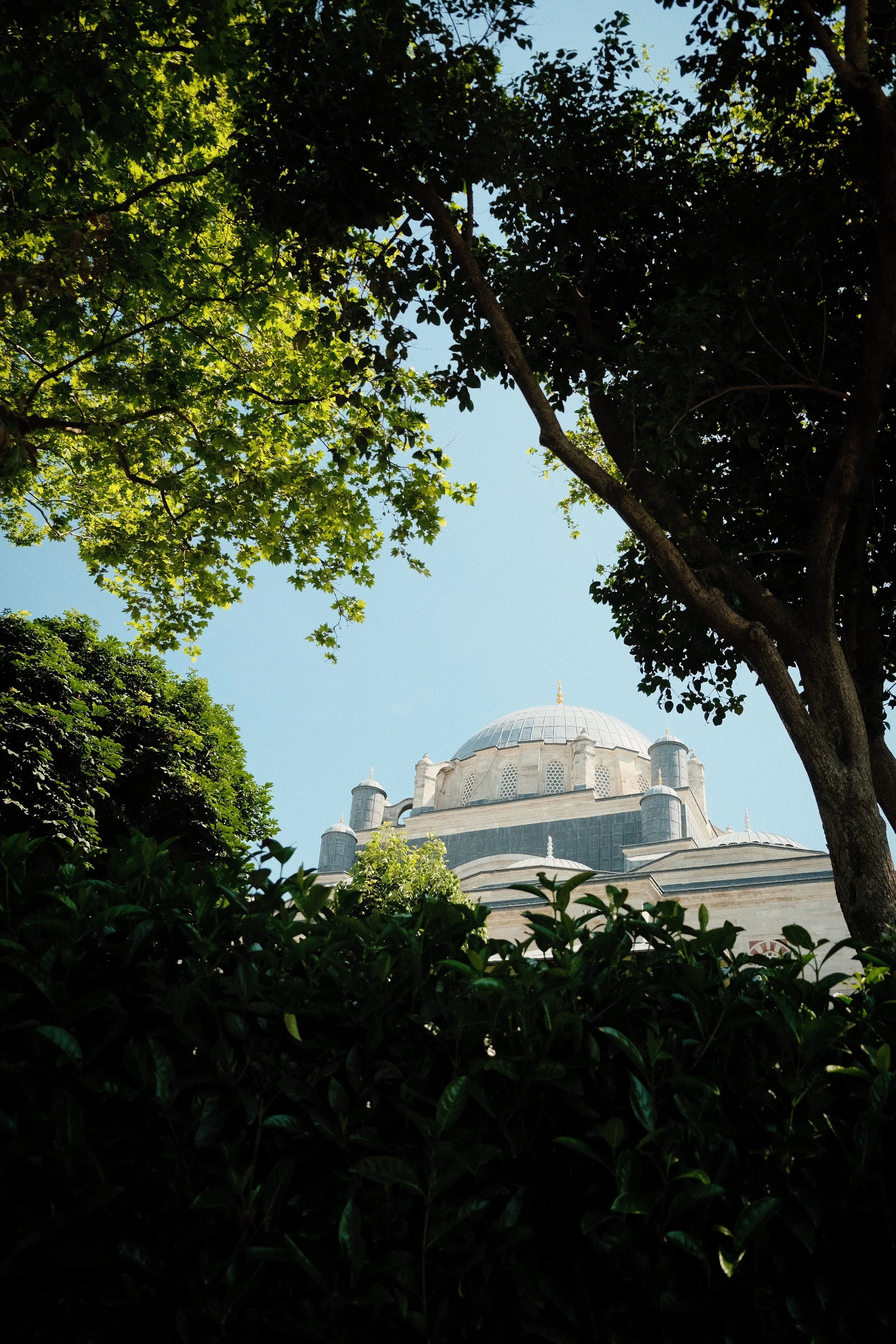
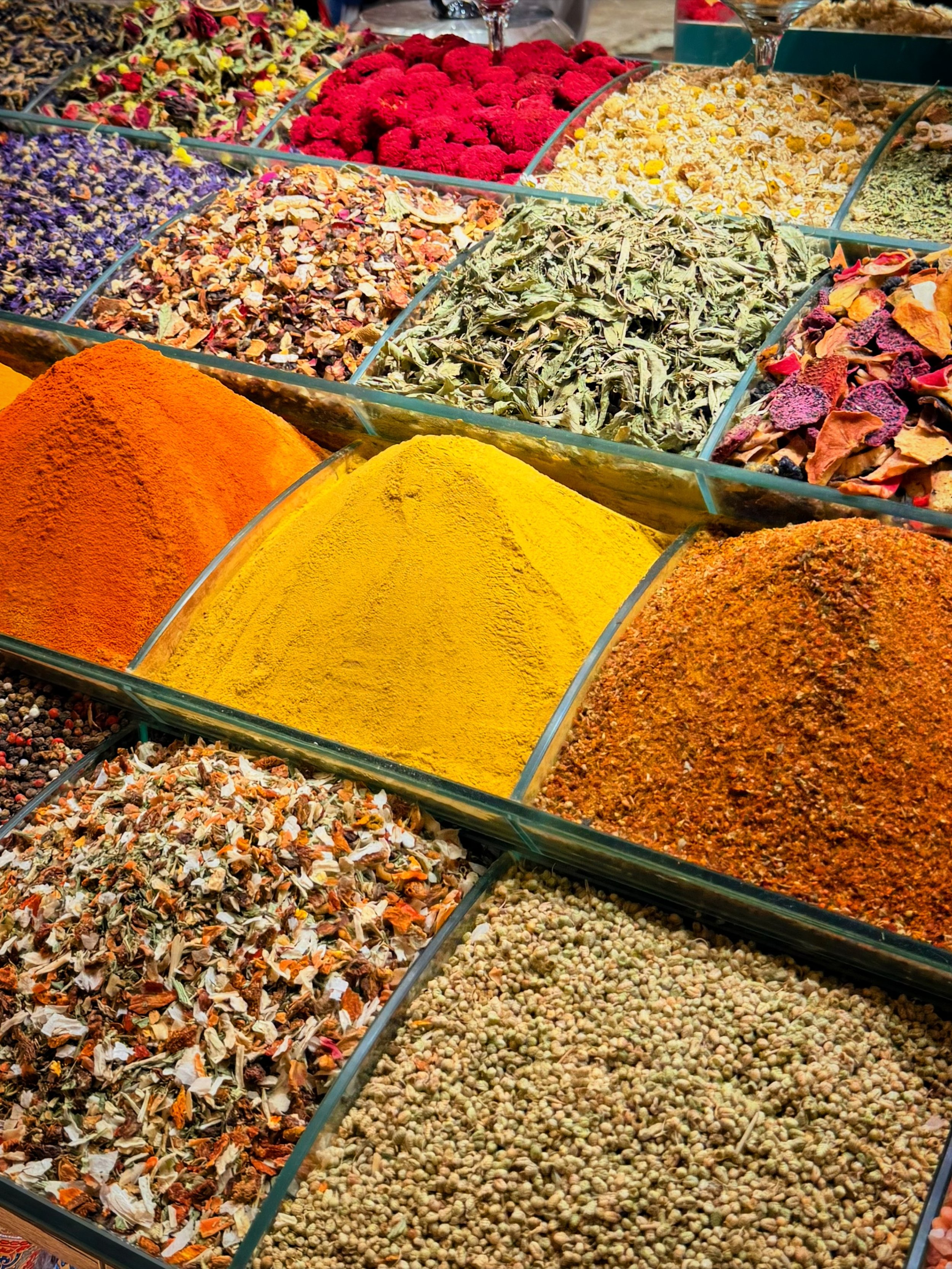
The Grand Bazaar rewards patience. Beyond the inevitable stalls selling counterfeit luxury goods, there are still craftspeople producing beautiful ceramics, textiles and jewellery. The market remains what it has been for centuries: a place of trade, conversation and craftsmanship. After a brief wander through the Spice Bazaar, surrounded by towers of saffron, dried fruits and fragrant teas, we stopped for lunch.
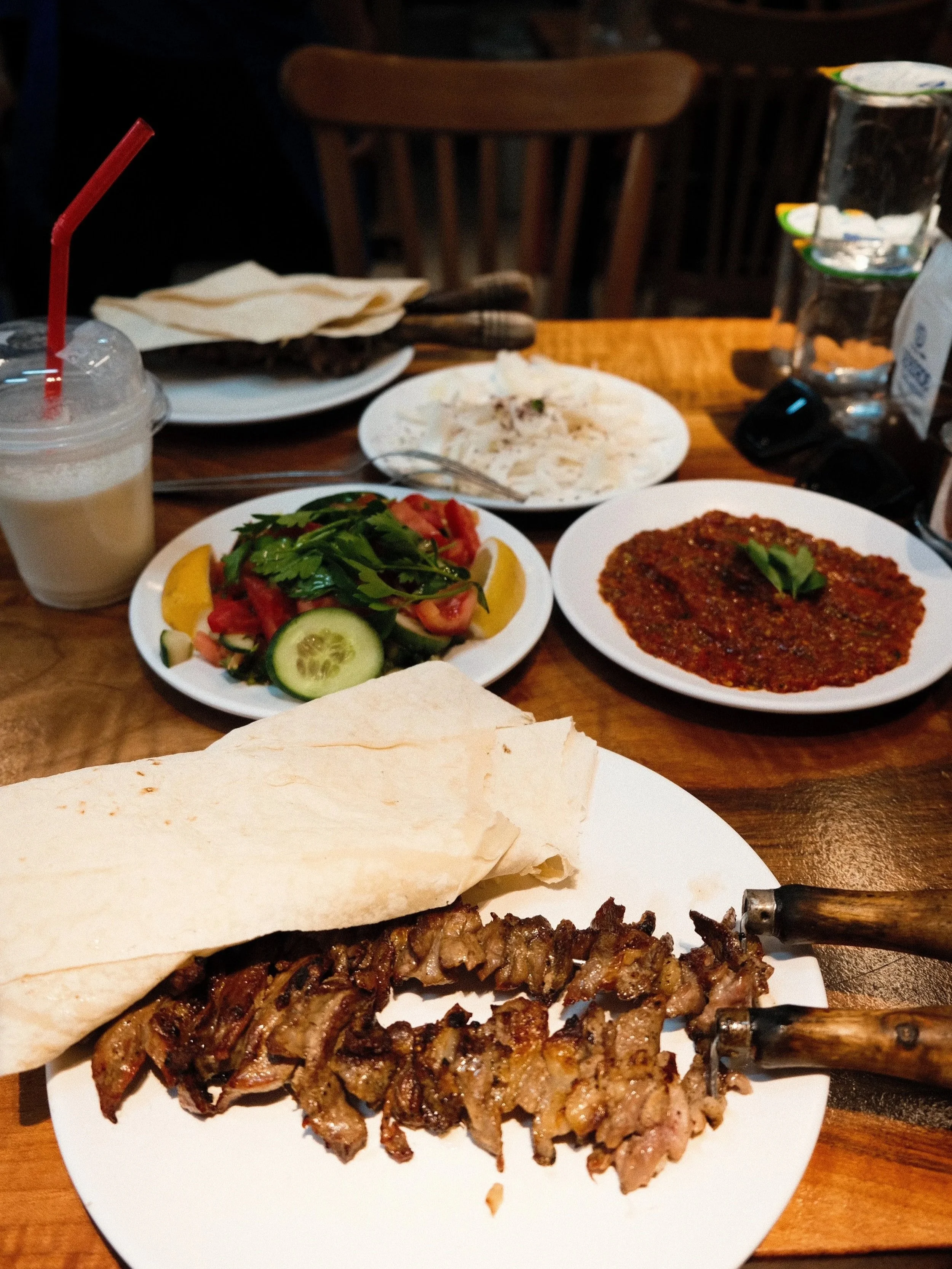
Lunch was at Şehzade Cağ Kebap, where enormous skewers of caramelised lamb arrived alongside paper-thin flatbreads. The concept is simple. Wrap the lamb, add salad and sauce and eat immediately. Superb.
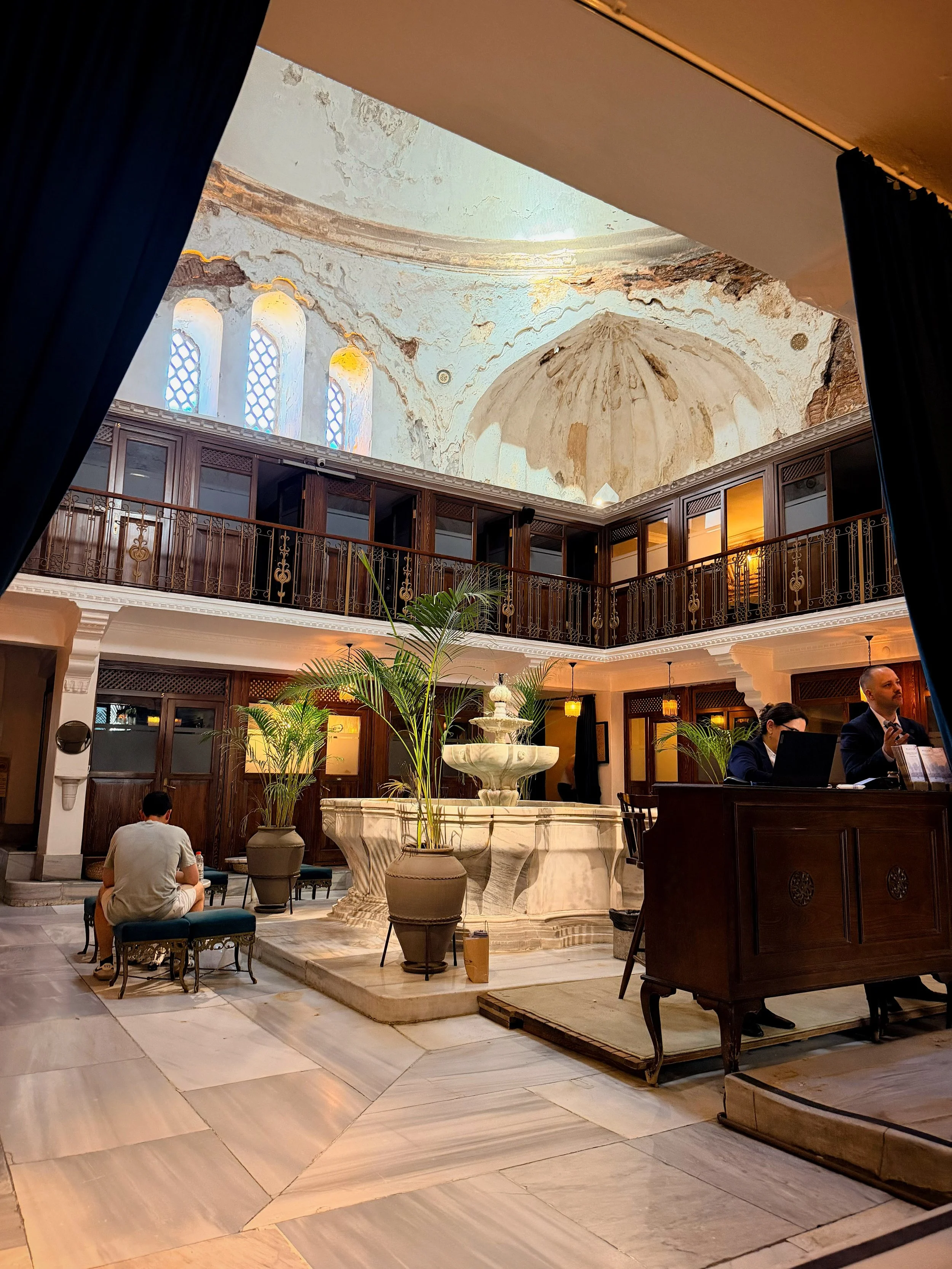
That afternoon, we escaped the heat at Cağaloğlu Hamamı, the last grand hammam built during the Ottoman Empire in 1741. The building itself is magnificent, all marble, domes and filtered sunlight. Having visited before, I knew exactly what awaited us. Several bewildered American tourists clearly did not. A Turkish bath is not a shy experience. You are naked. You are scrubbed, washed and generally manhandled by attendants who have absolutely no interest in preserving your dignity. It is wonderfully liberating once you surrender to it. Afterwards, wrapped in towels and drinking Turkish tea, we felt completely restored.
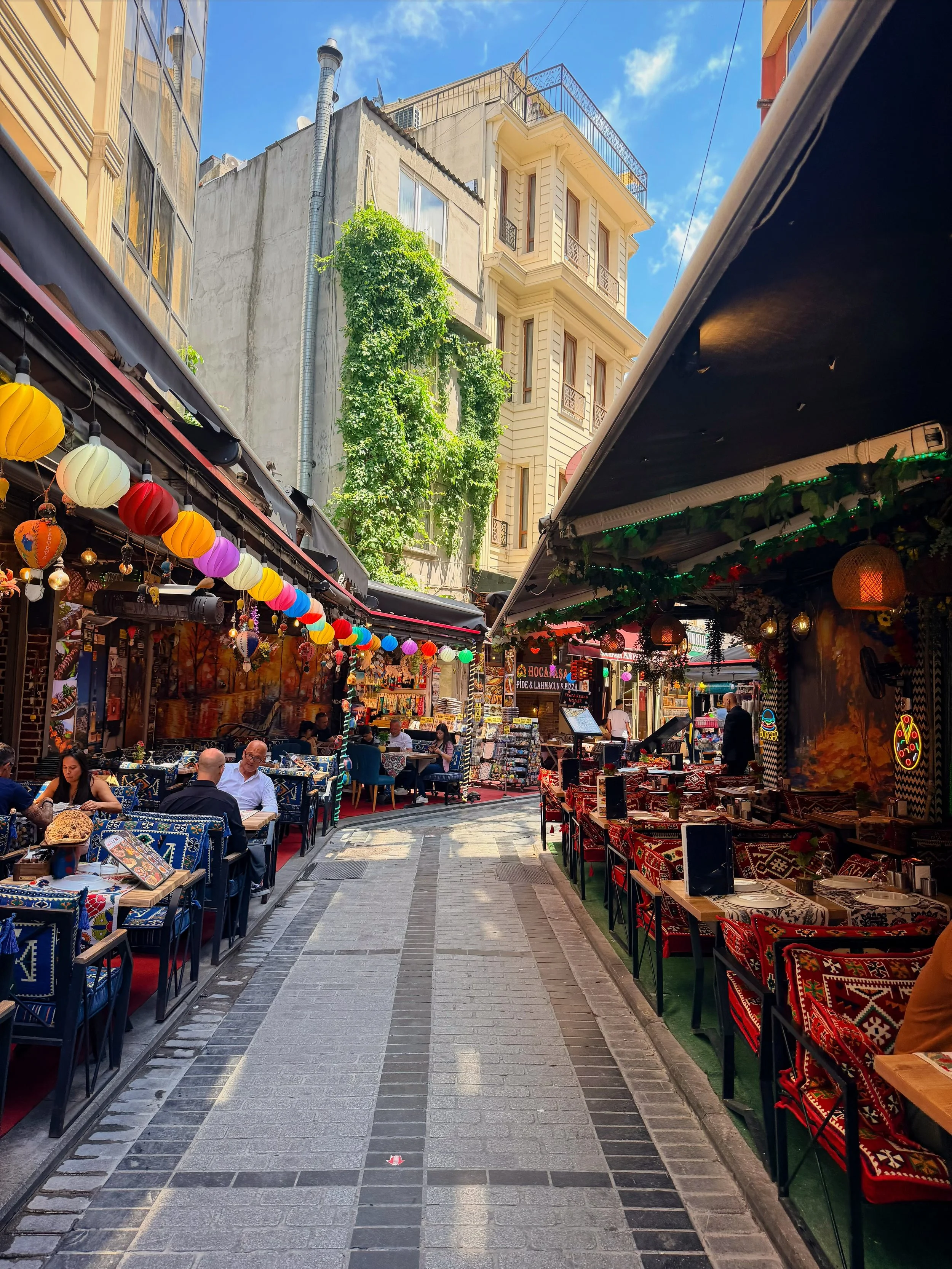
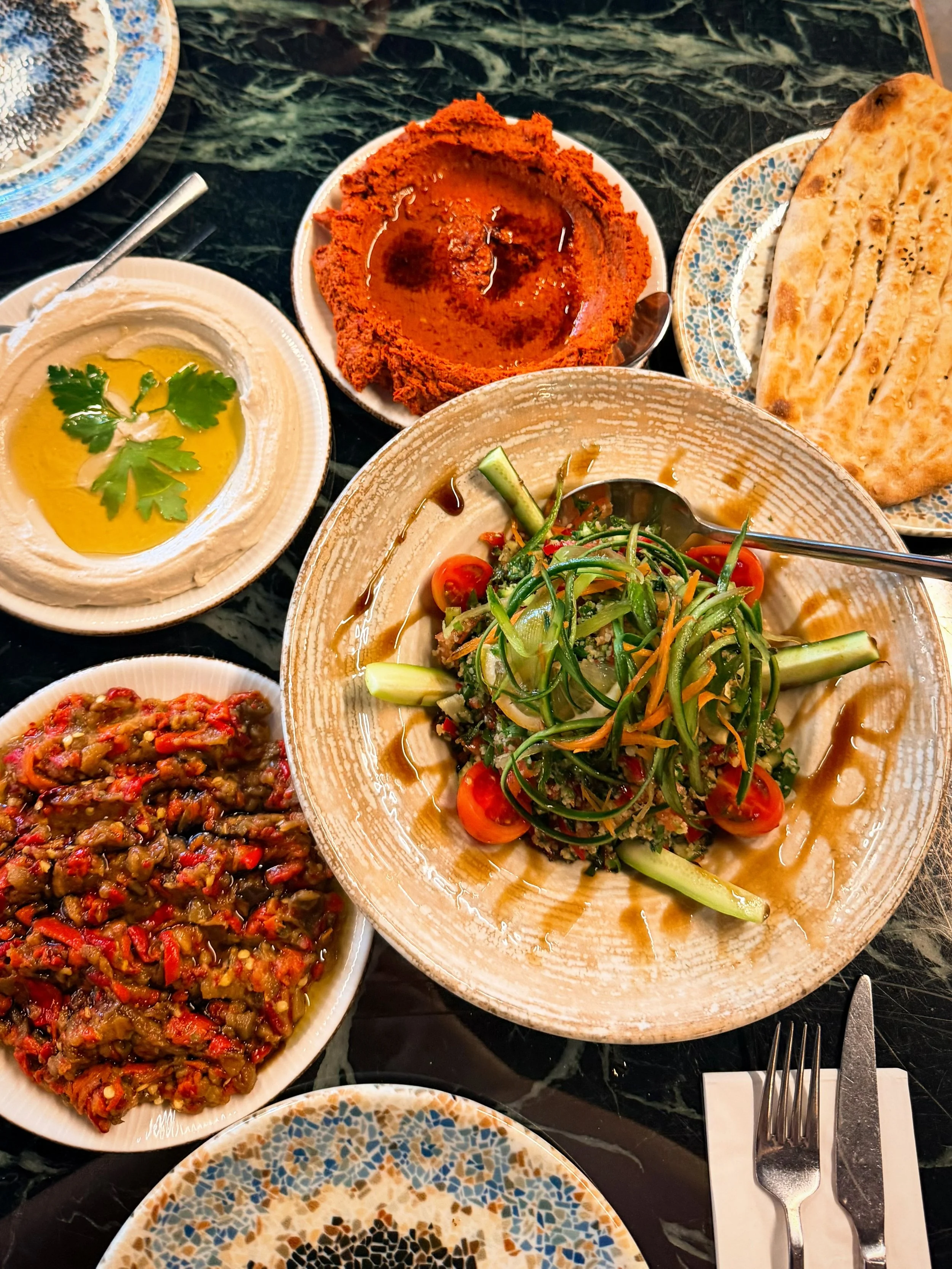
Dinner took us to Casius Antioch Kitchen in Cihangir, where we shared an array of mezze and pide. The aubergine dishes were particularly memorable, and the tabbouleh was astonishingly fresh. It was a meal that reminded us how varied Turkish food can be, offering a welcome contrast to the parade of grilled meats that had dominated the trip so far.
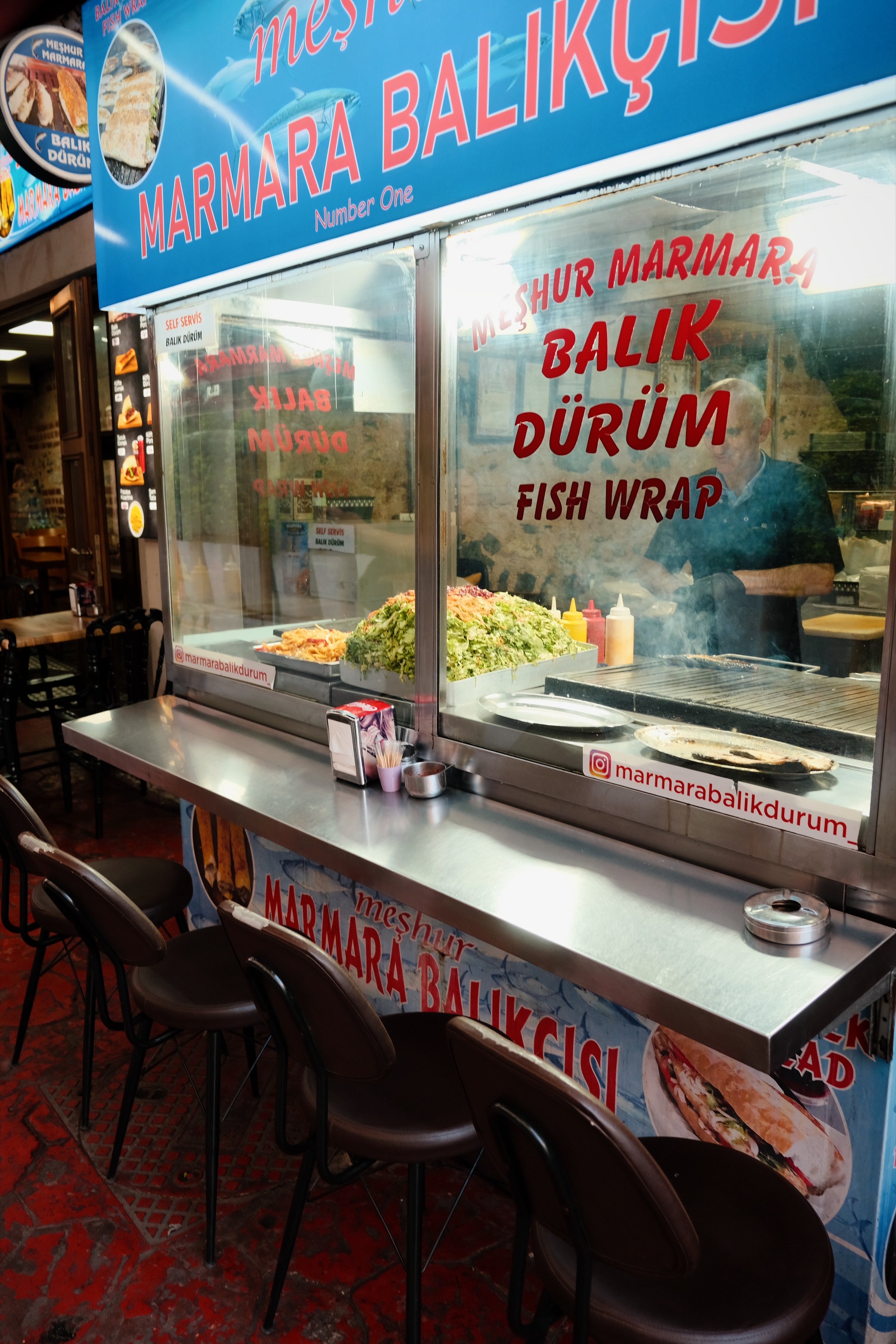
The following morning was slower. We wandered down towards Karaköy and stumbled upon what became one of our favourite discoveries of the trip, balık dürüm. Fresh mackerel grilled over charcoal, deboned and wrapped with lettuce, tomatoes, sumac onions and pomegranate molasses before being toasted again with spices. We ate ours at Marmara Balık Dürüm and immediately understood why locals are so passionate about it.
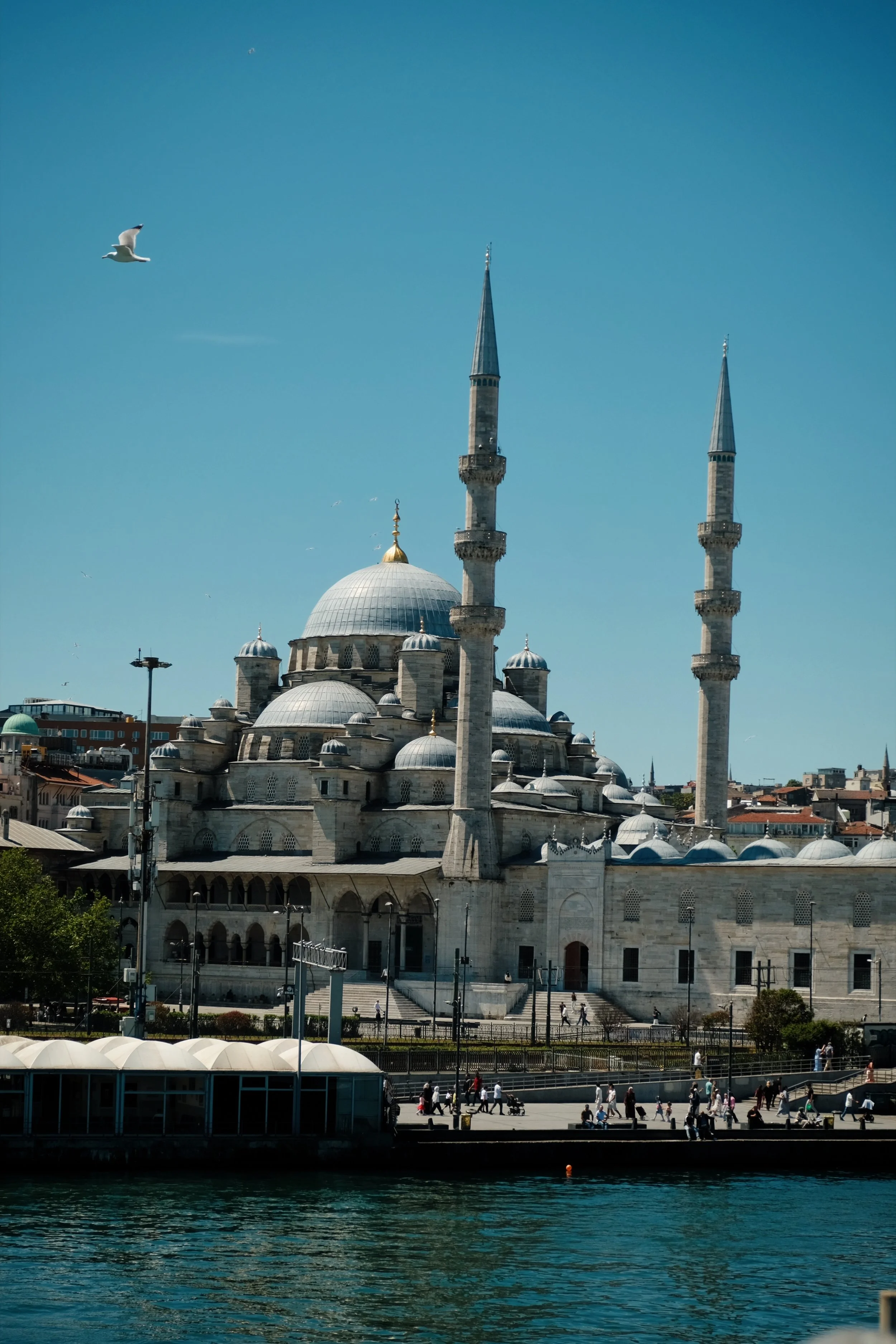
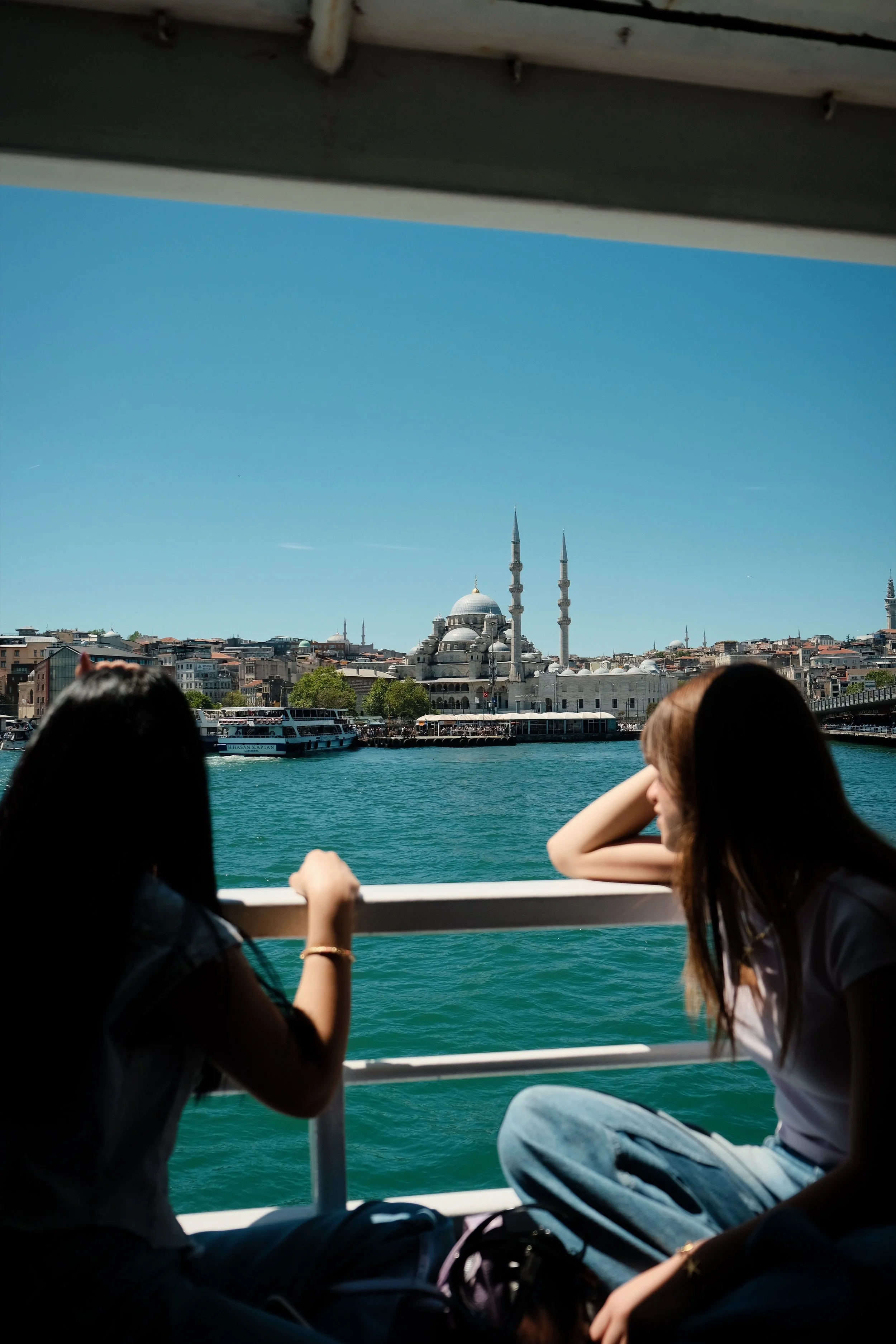
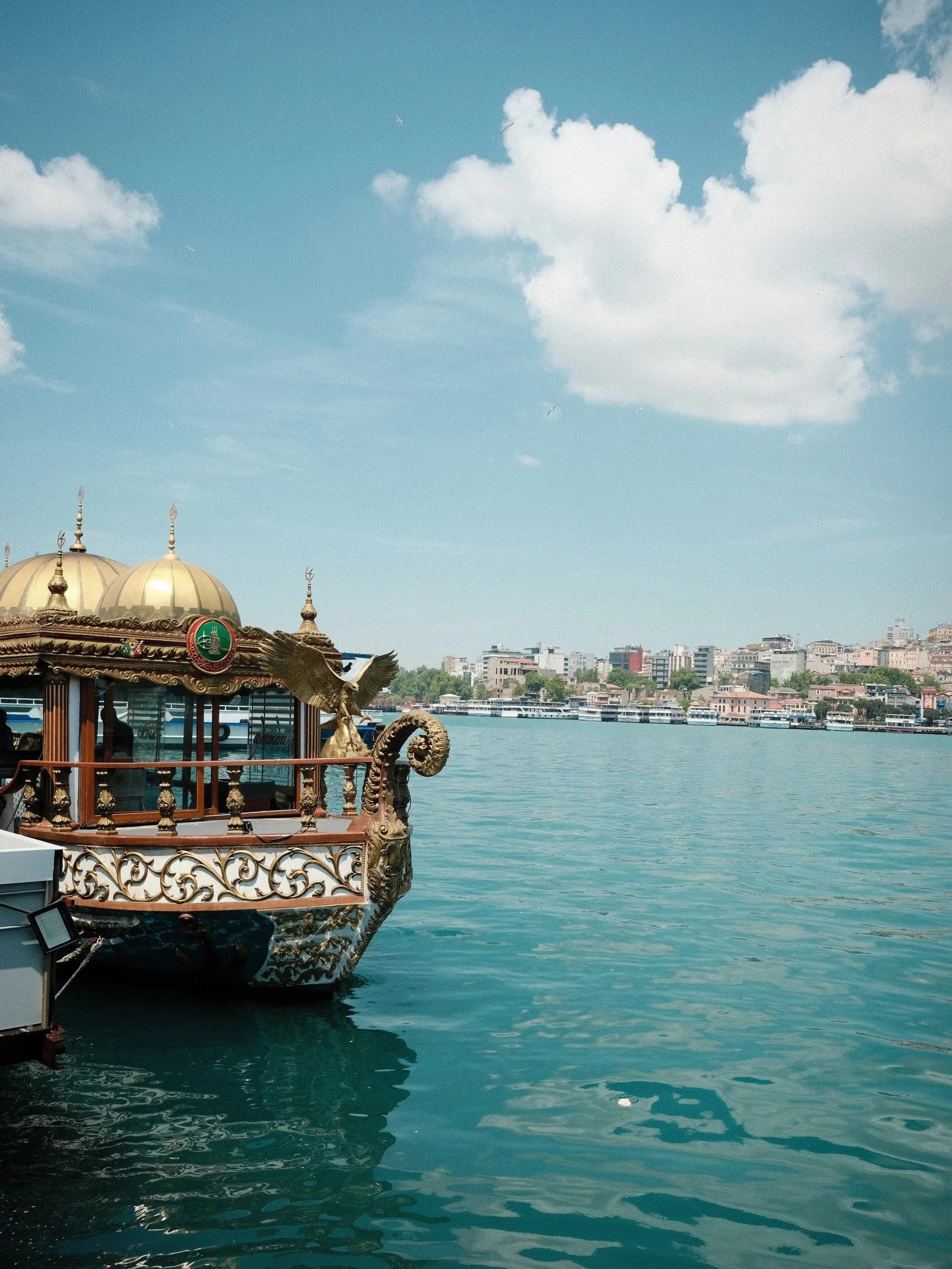
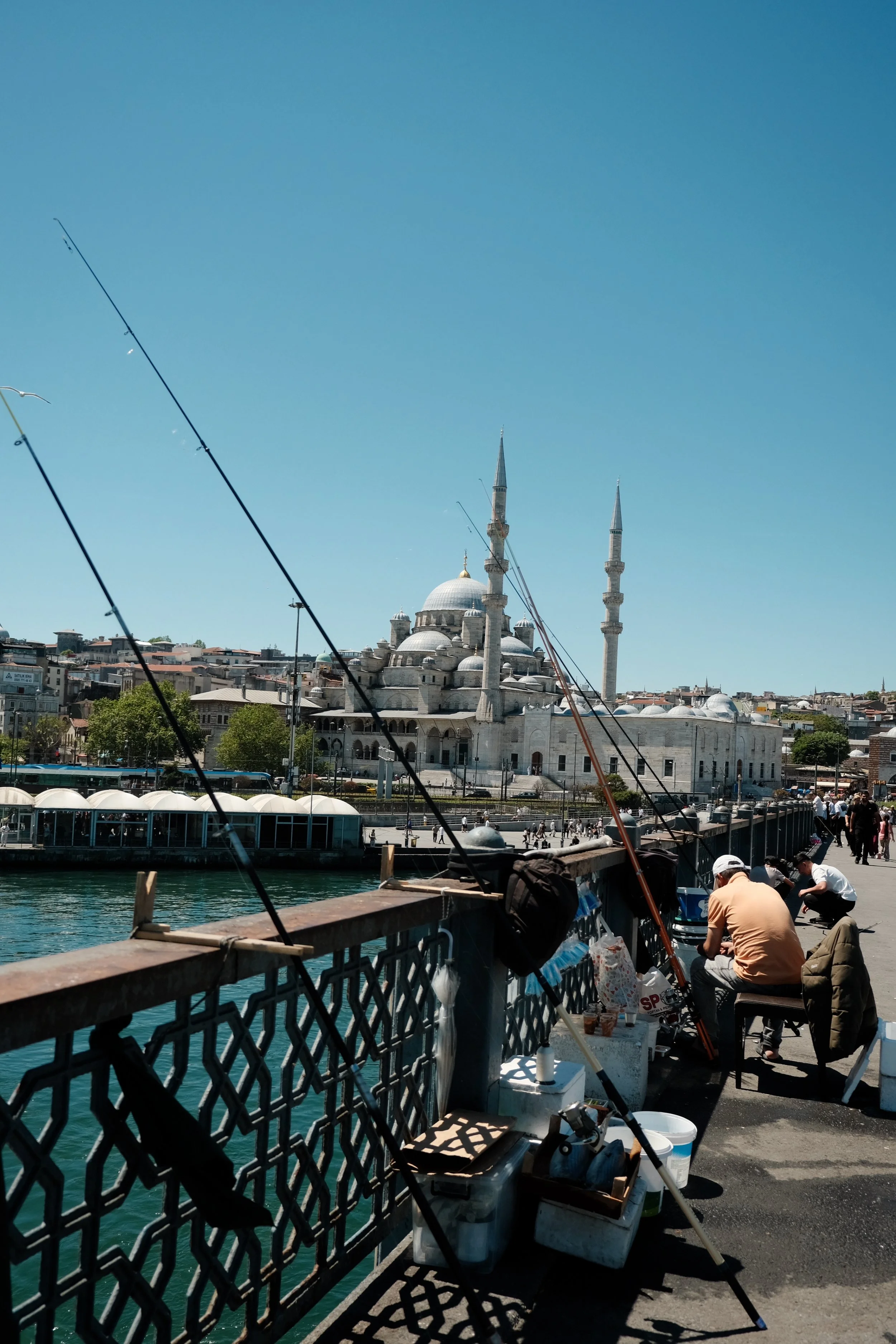
From there, we joined local families dressed in their finest Eid clothes aboard the ferry to Kadıköy. Istanbul's ferries are one of the city's great pleasures. For less than the price of a coffee, you get some of the best views in the city. As we crossed the Bosphorus, seagulls followed the boat and the city's skyline shimmered in the summer haze.
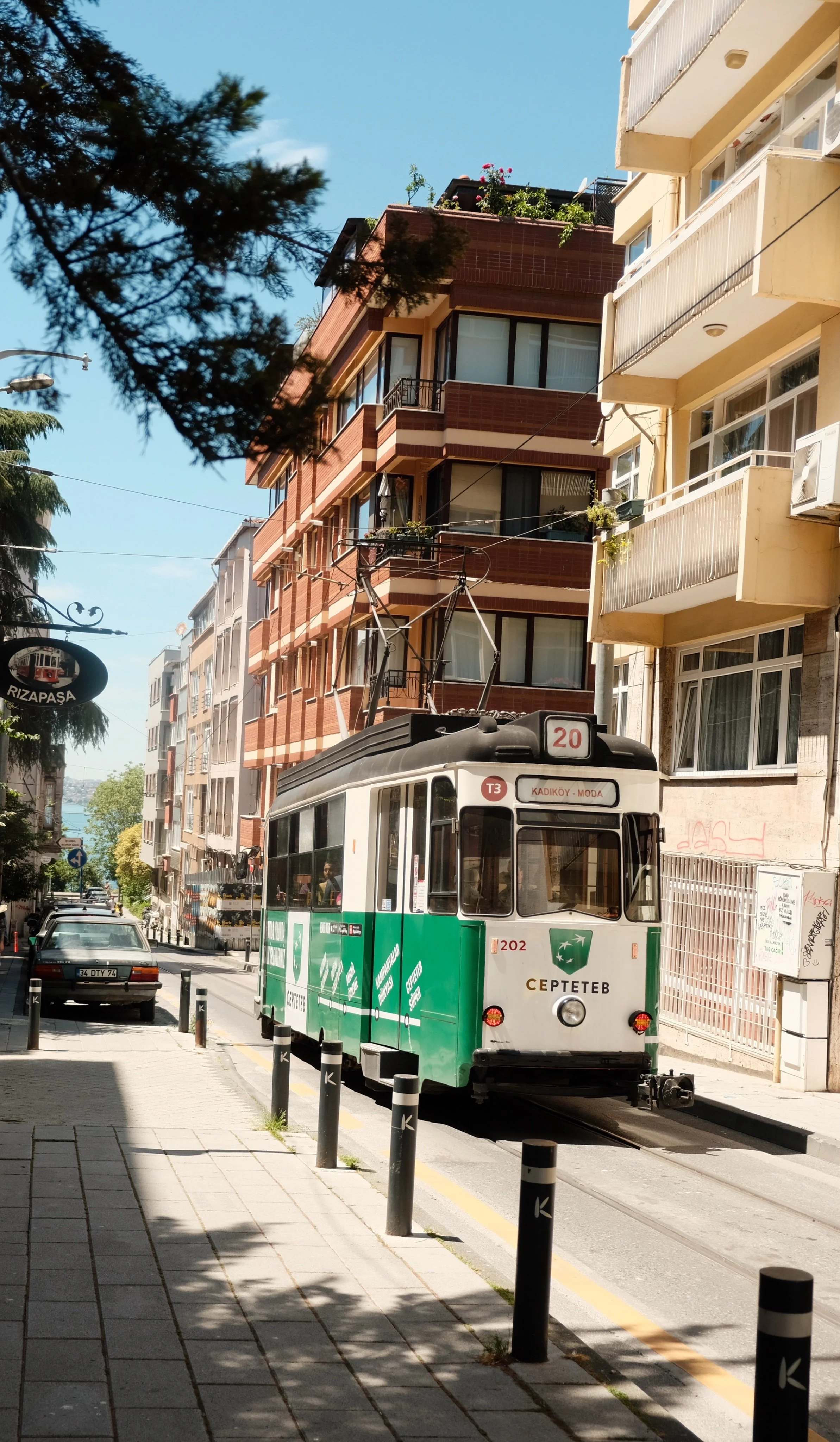
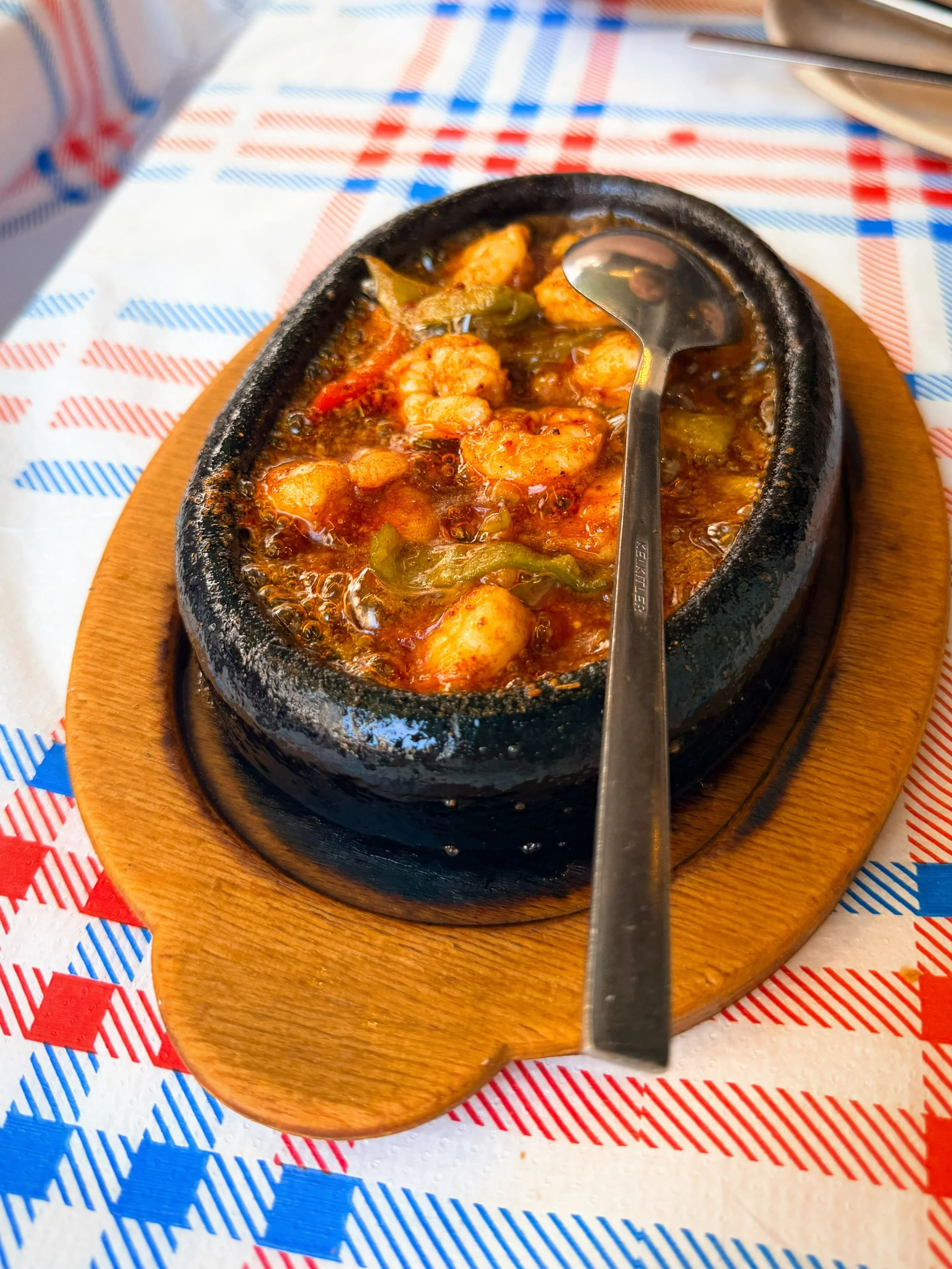
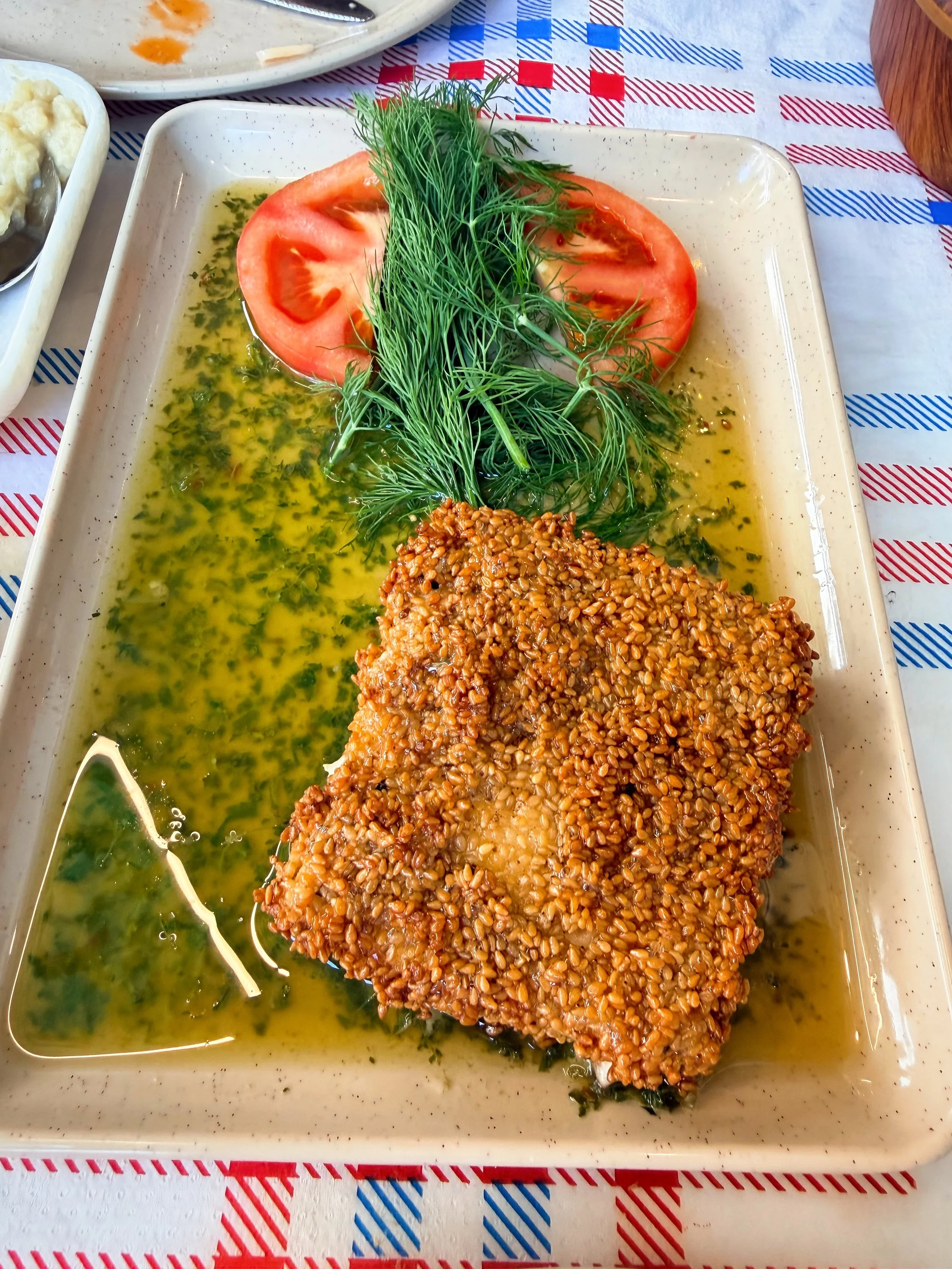
Kadıköy was perfect for our favourite style of sightseeing, which my partner calls "eye-browsing." No destination, no schedule, simply following whichever street looked interesting. We spent the morning wandering before settling down for a leisurely seafood lunch, with a side helping of some excellent cheese grilled in sesame seeds. Afterwards, lulled by the sunshine and sea breeze, we promptly fell asleep on the ferry ride back.
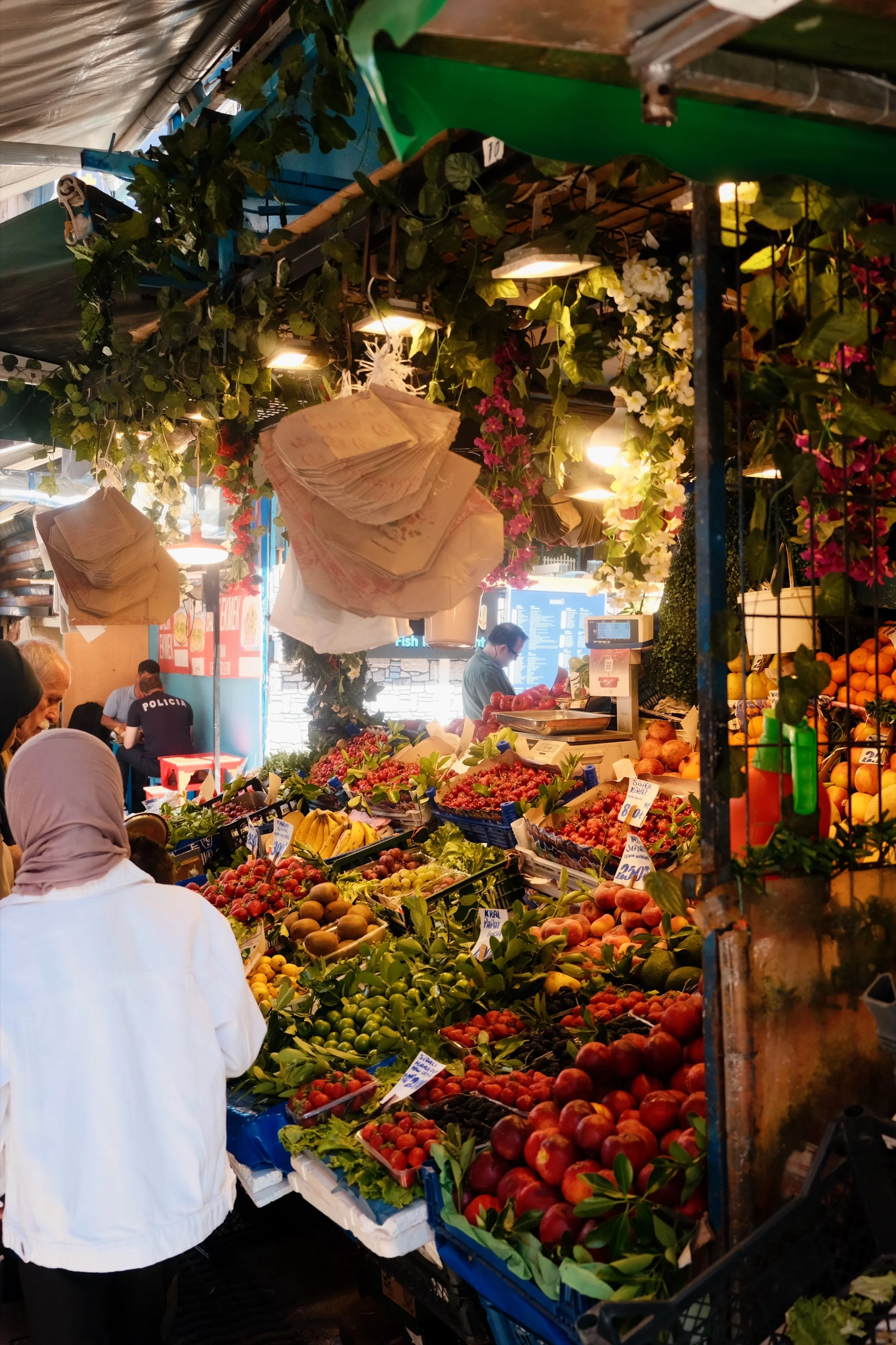
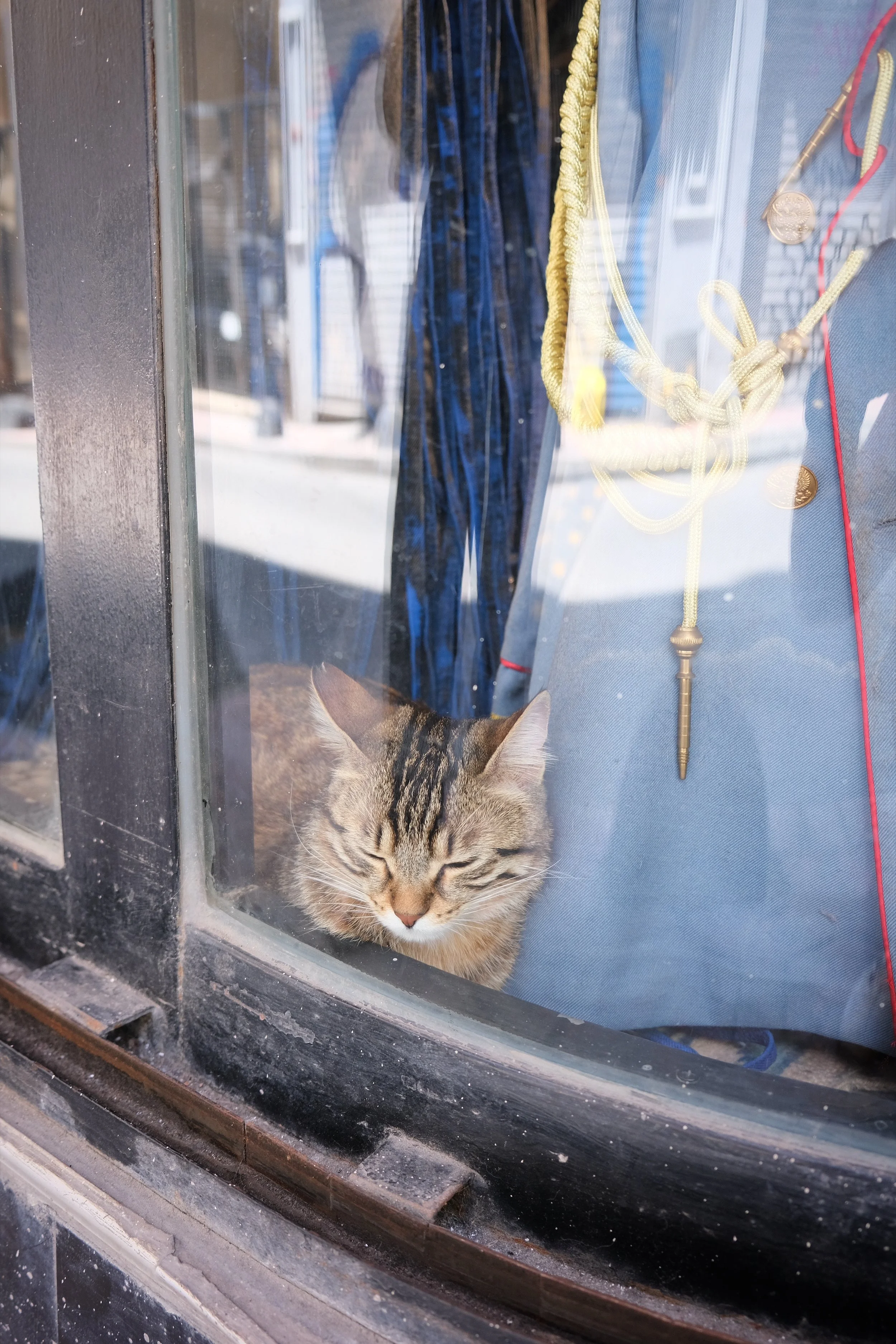
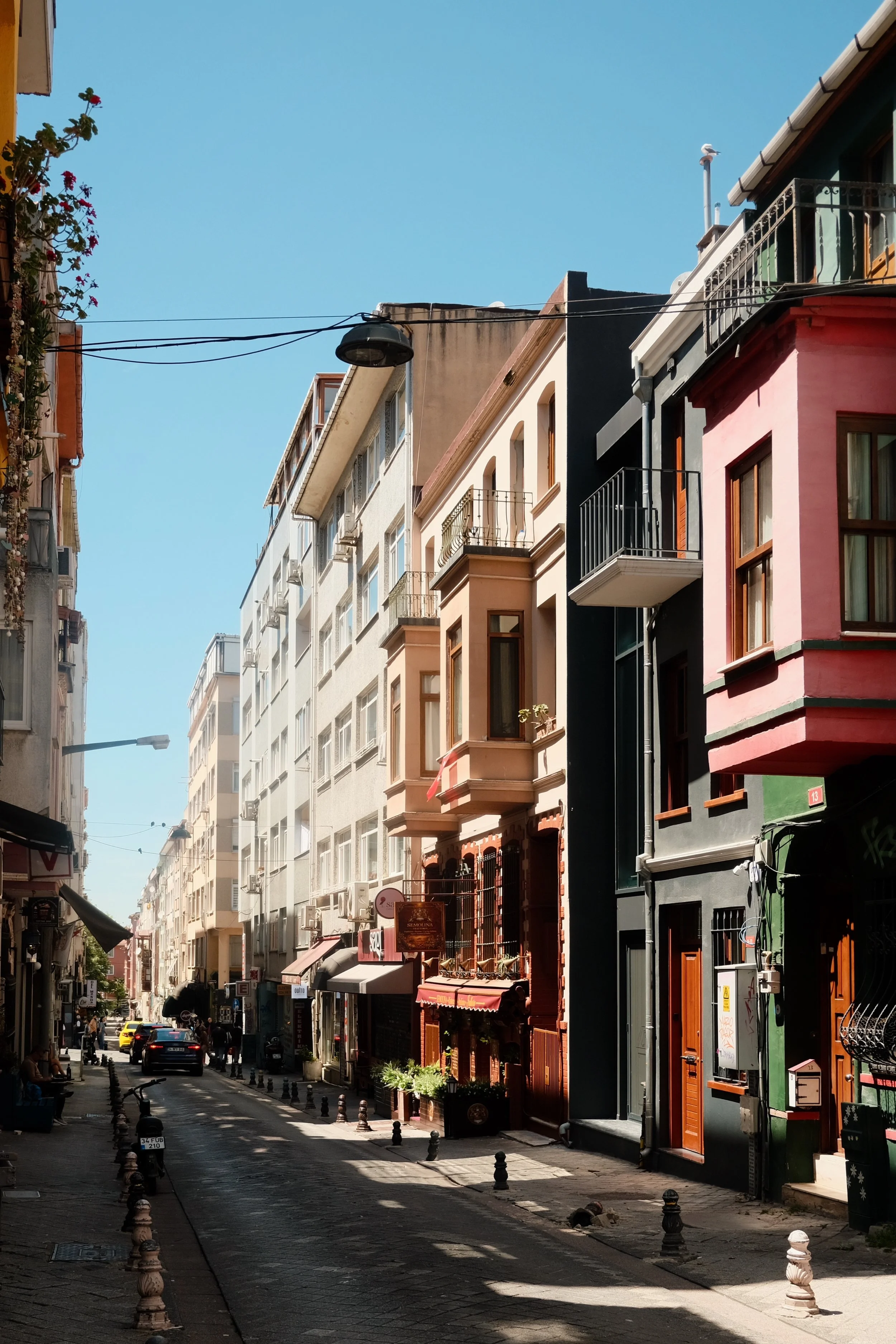
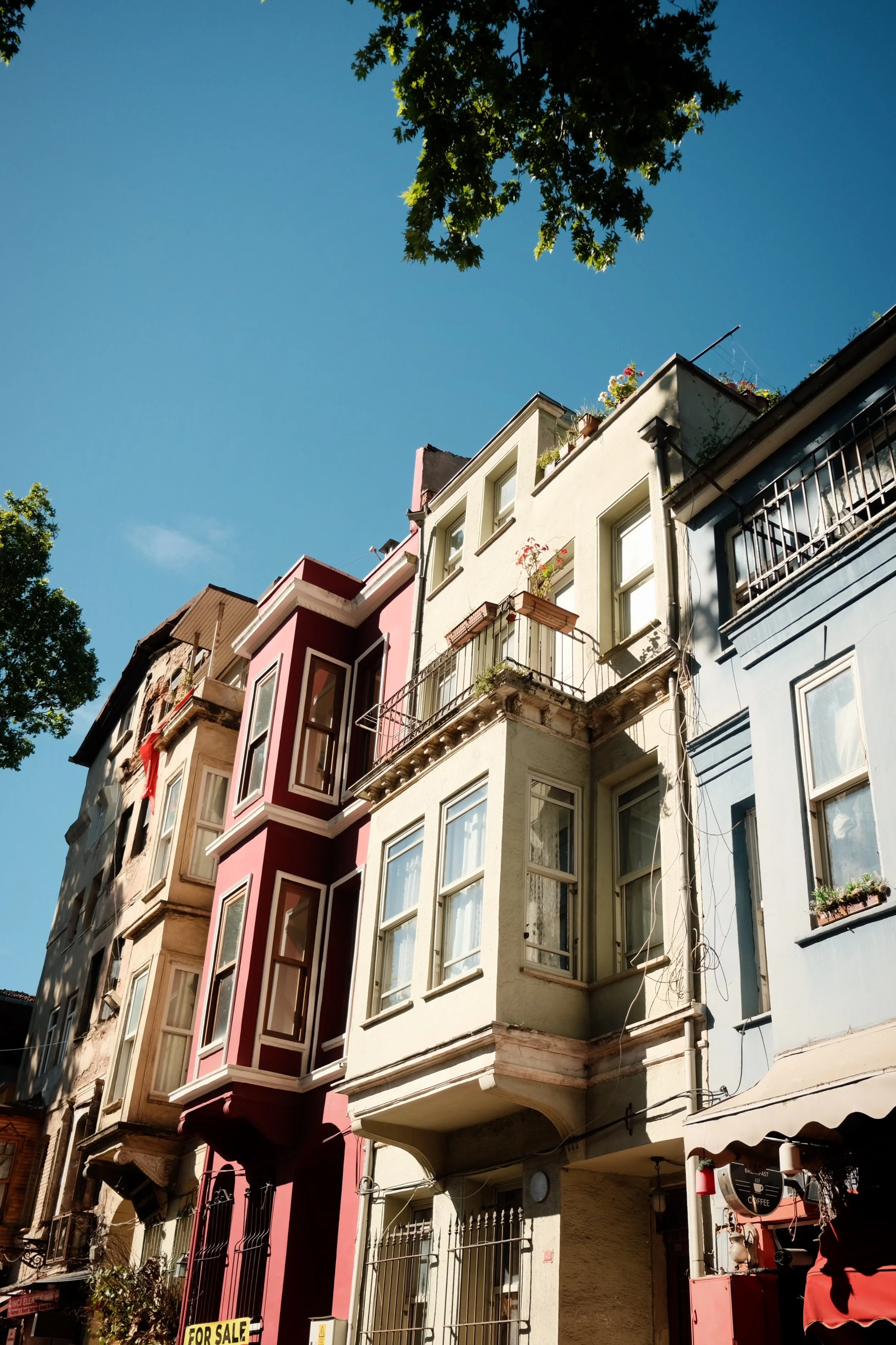
That afternoon we explored Fener and Balat, neighbourhoods whose colourful houses and steep streets have become iconic. Historically home to Greek and Jewish communities, the area retains a distinct character. Cats lounged in doorways, cafés spilled onto pavements.
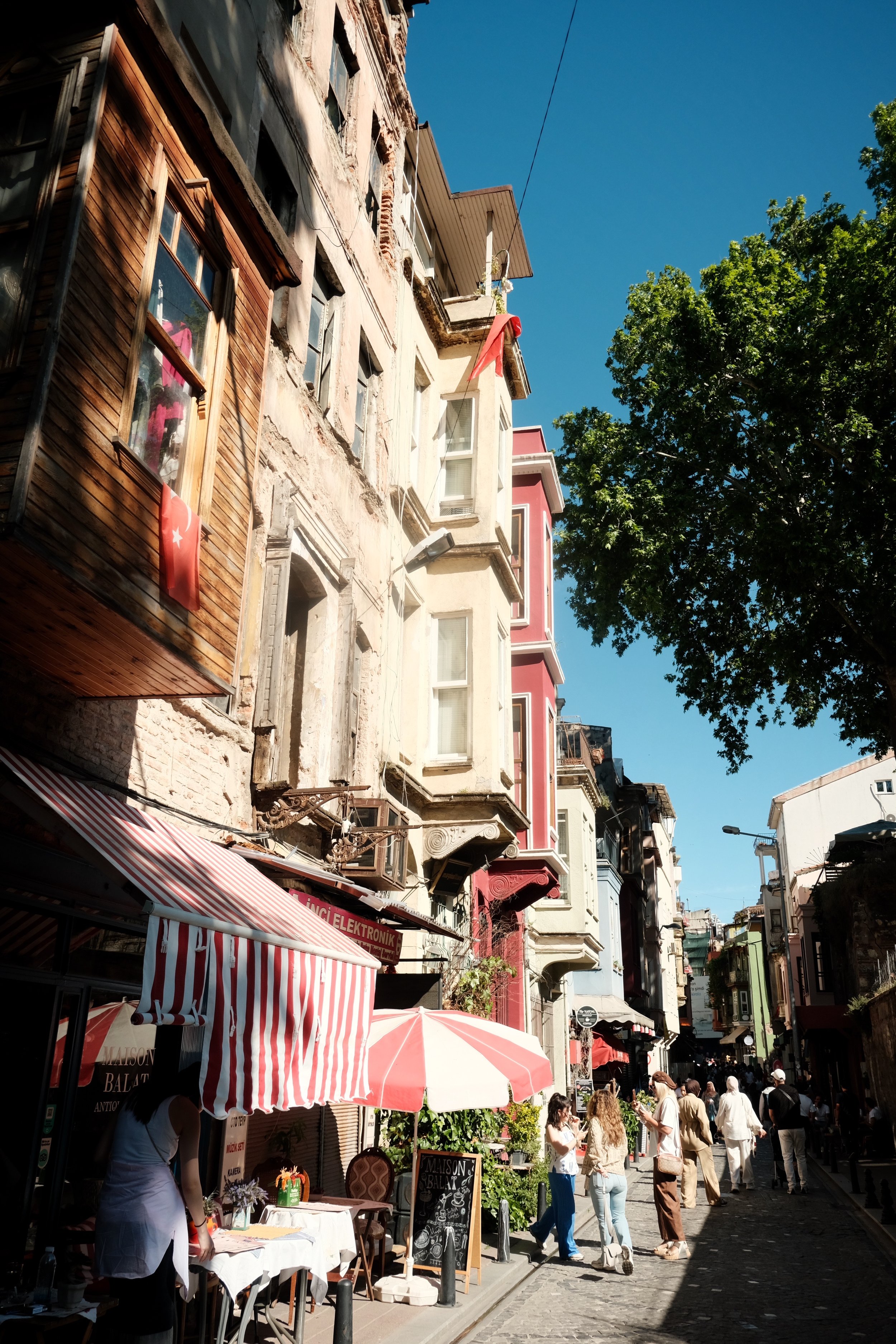
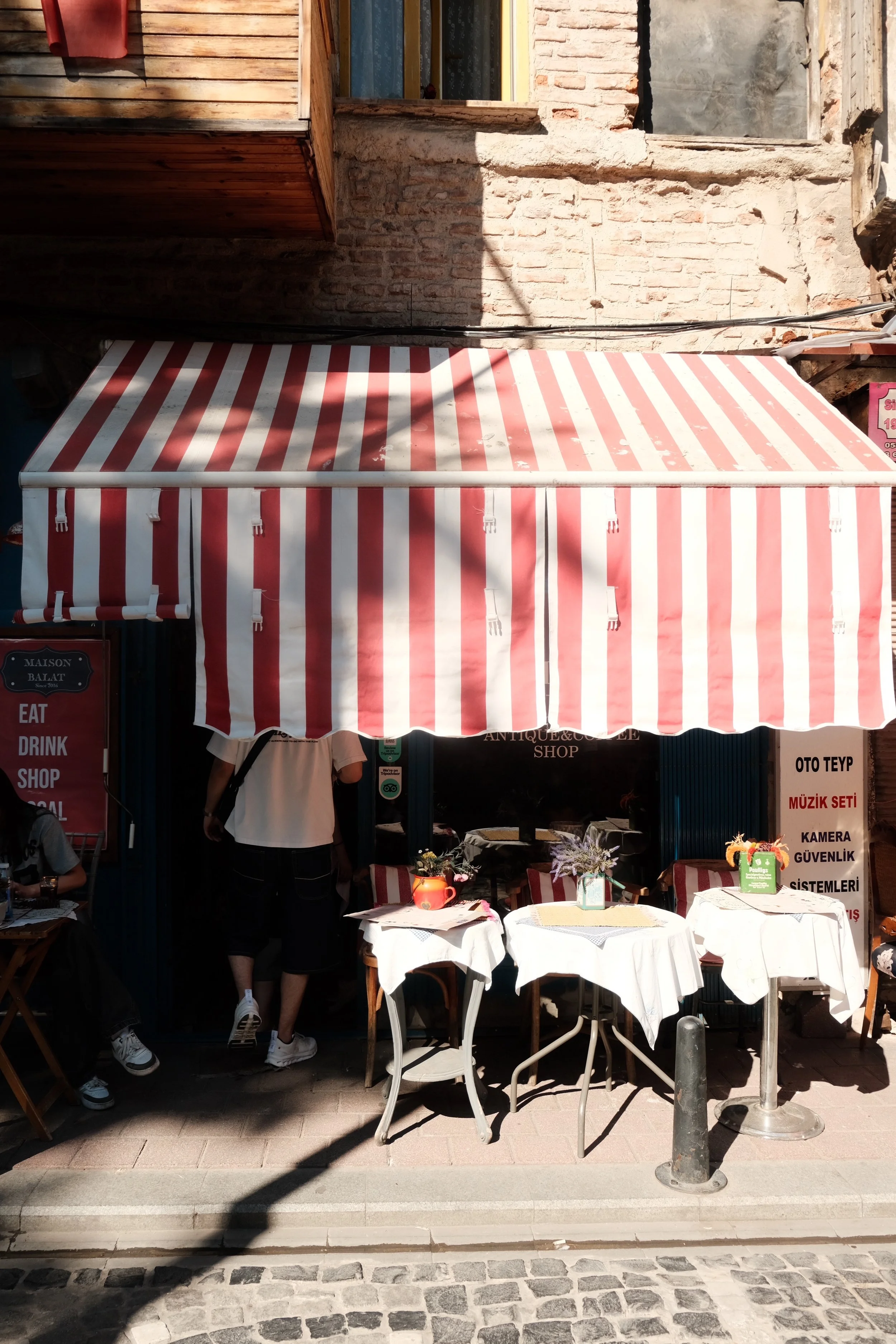
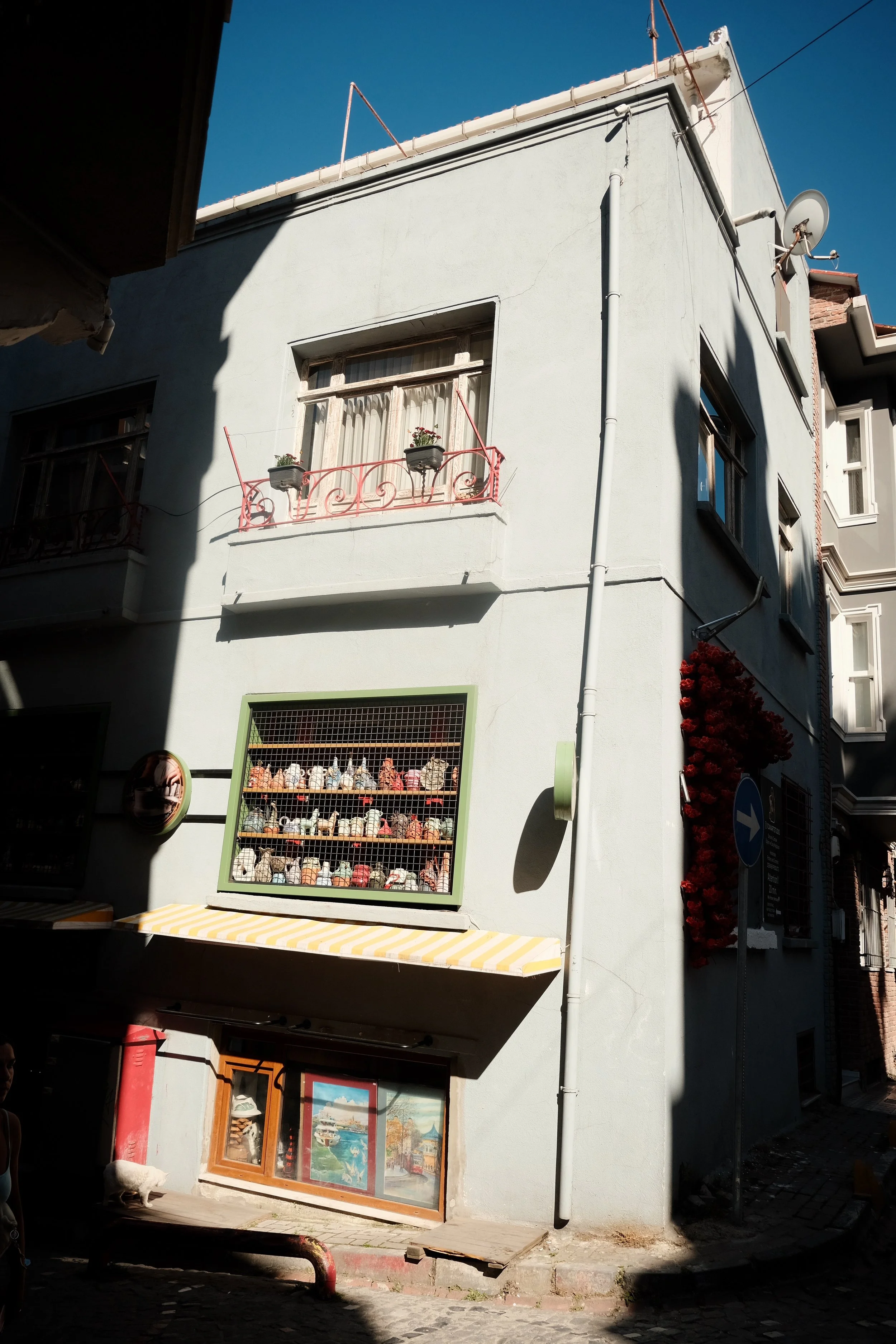
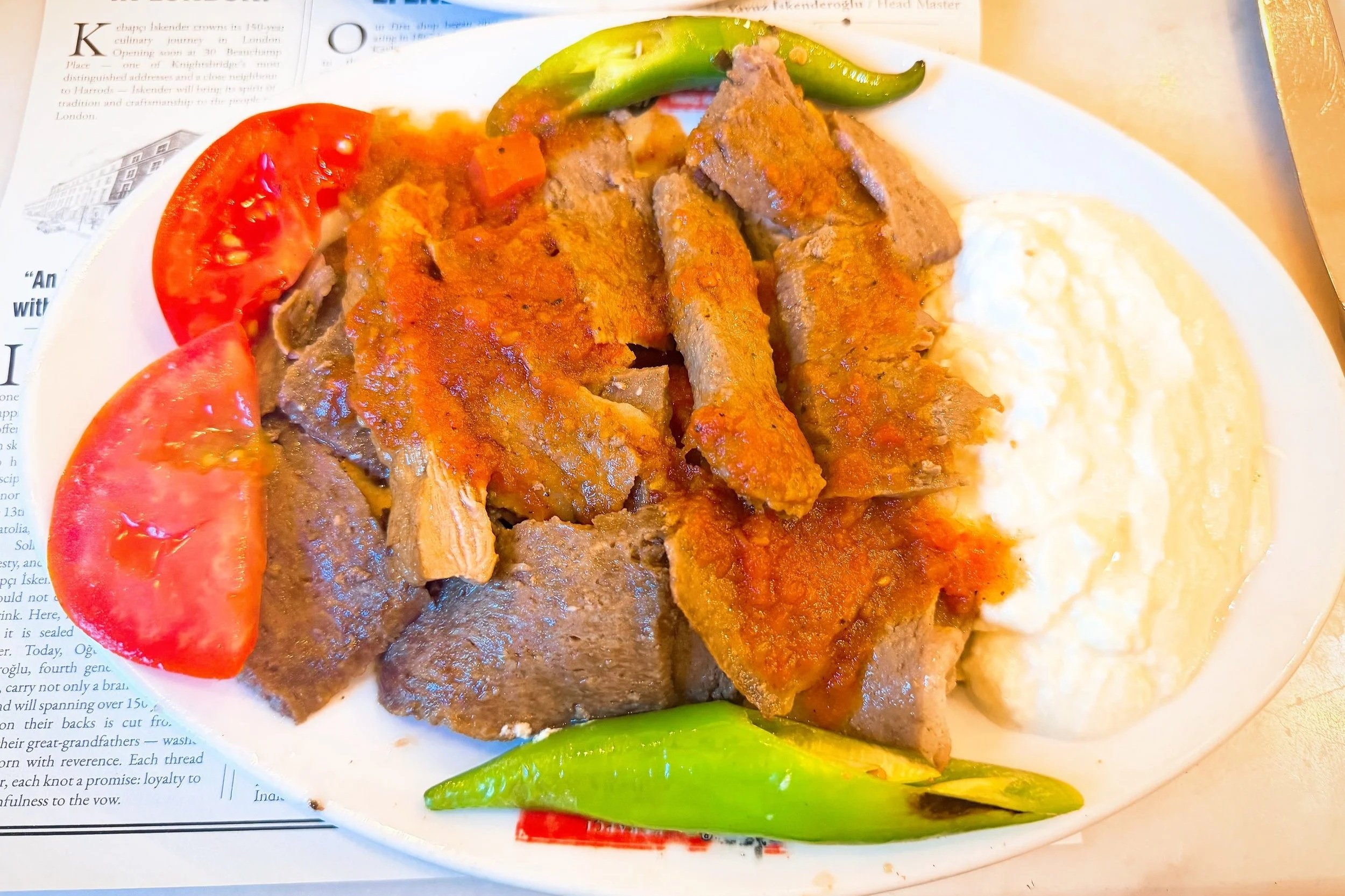
Dinner that evening was at İSKENDER Kuruluş 1867, the birthplace of the famous İskender kebap. Perhaps our expectations were simply too high, but this was the only meal that didn't quite live up to the reputation. It was good, just not extraordinary. I’ve definitely had better Iskender in Istanbul and London.
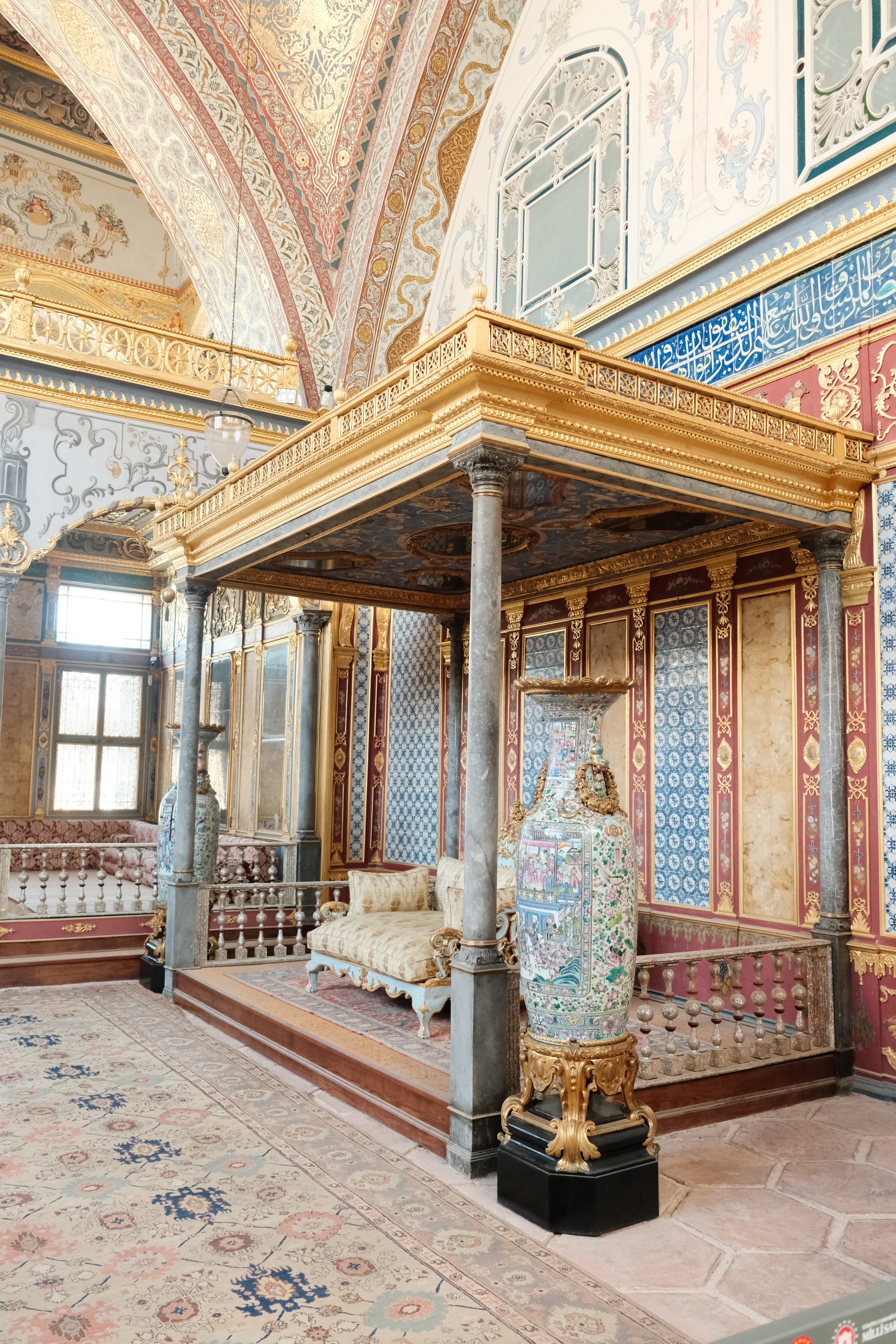
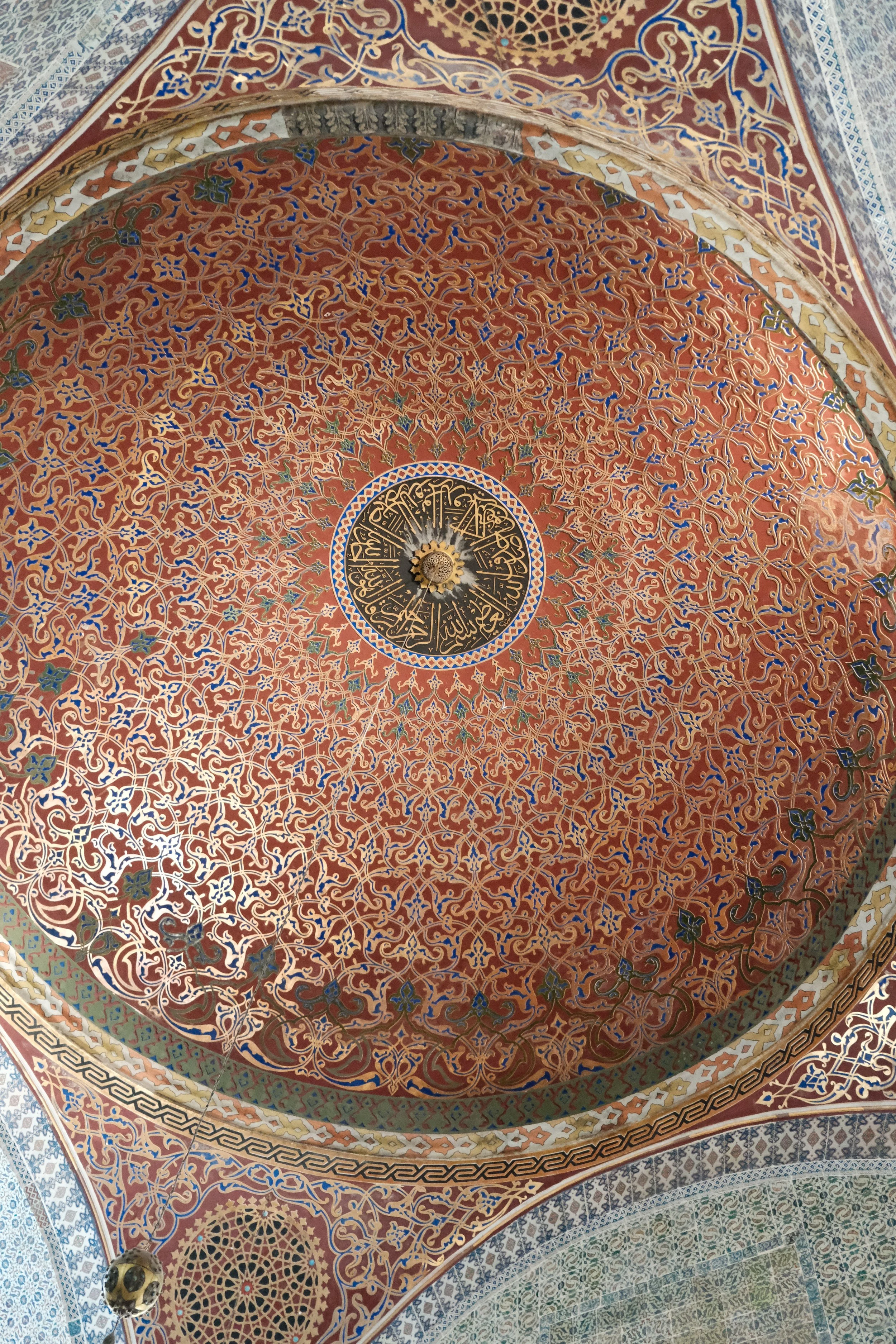
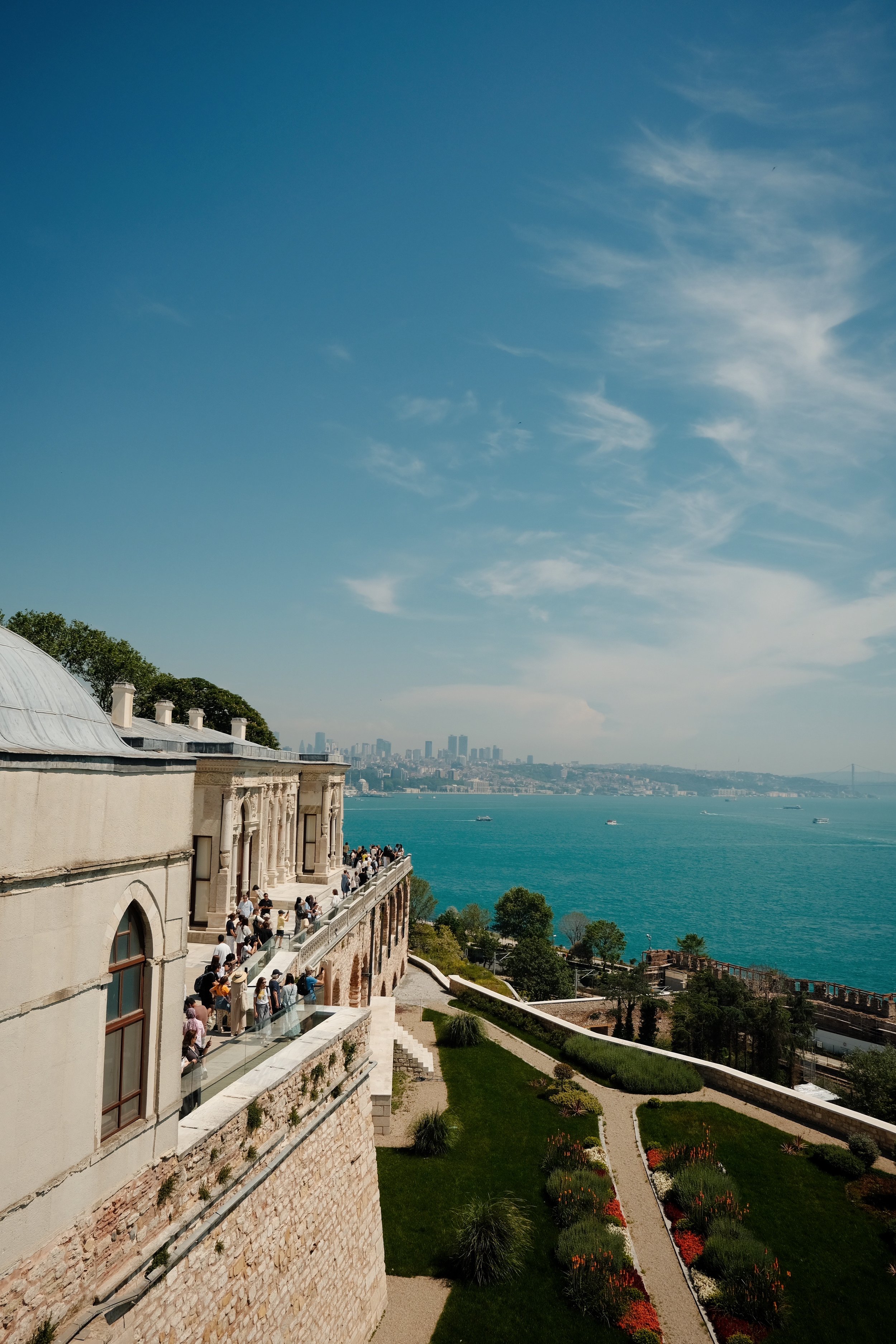
The next morning we arrived early at Topkapı Palace, once the administrative heart of the Ottoman Empire. Built shortly after the conquest of Constantinople in 1453, it served as the home of the sultans for nearly four centuries. The palace itself is beautiful, but what captivated me most were the collections of Islamic artefacts and the sense of standing at the centre of a former empire. Nearby, the Istanbul Archaeological Museums provided another happy few hours for a history enthusiast. A word of warning that attractions such as Topkapi are surprisingly expensive for foreigners in Turkey, so plan carefully or buy an Istanbul pass.
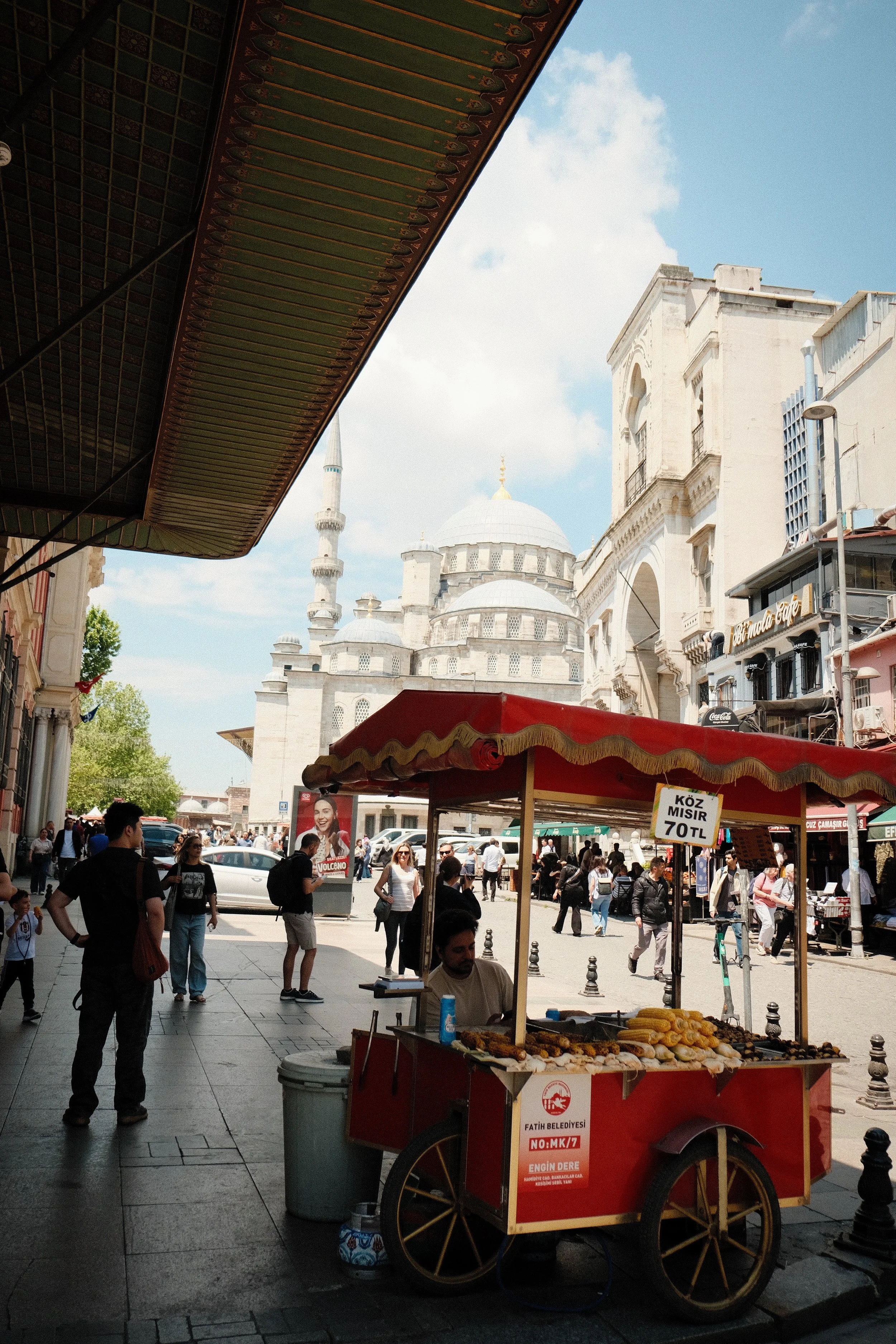
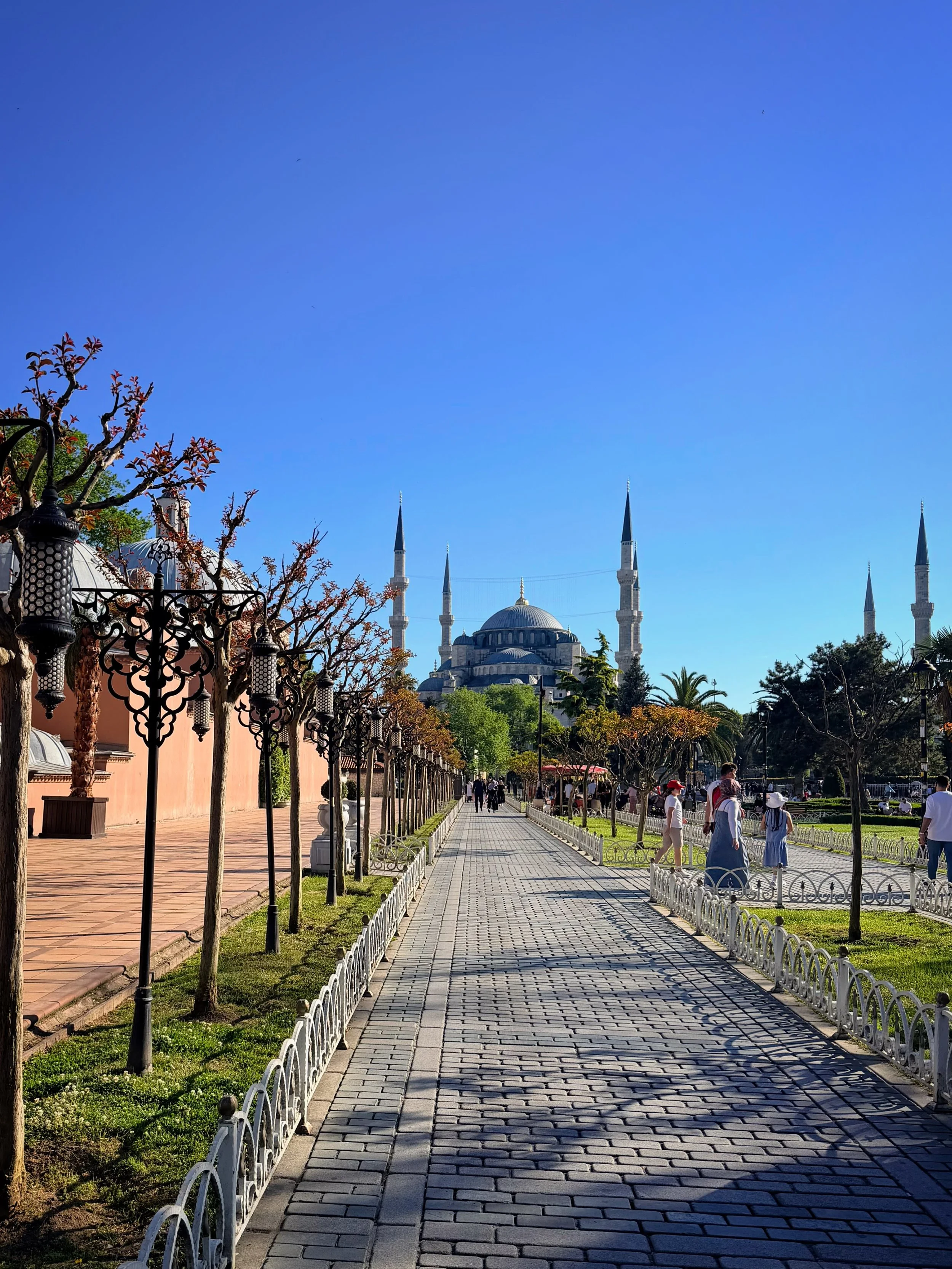
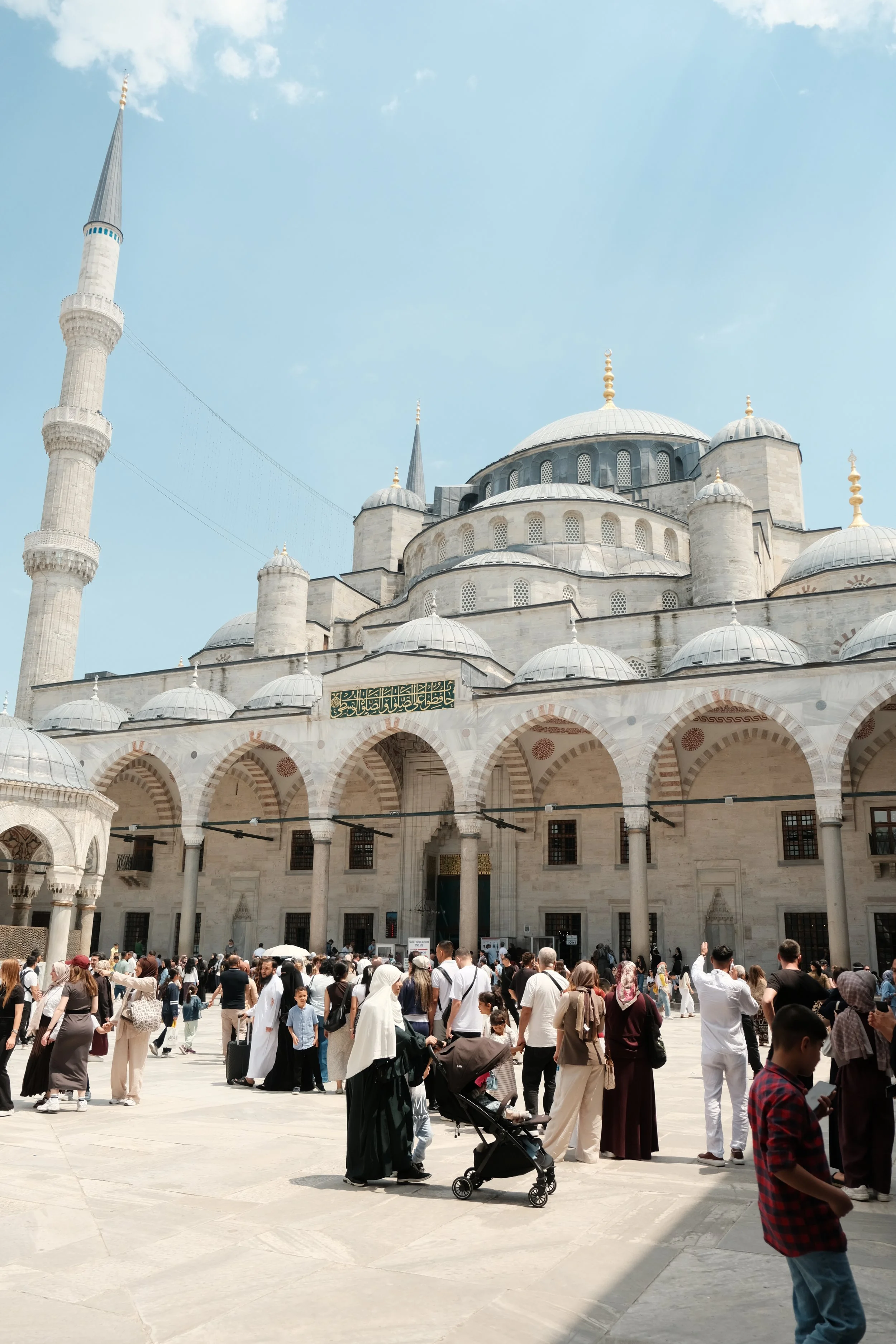
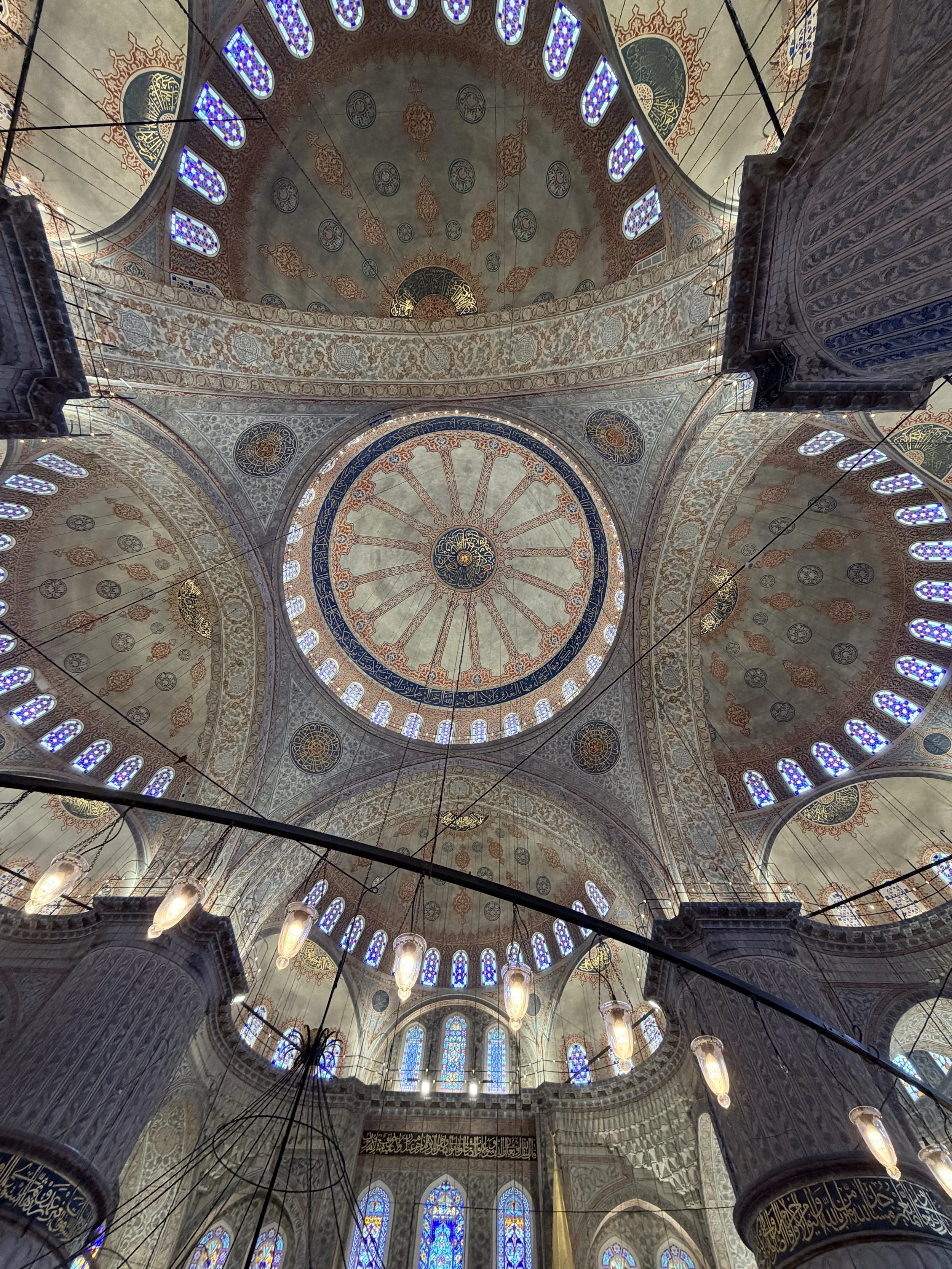
Later we visited the Blue Mosque, one of the most beautiful religious buildings I have ever seen. Light filters through stained glass and reflects off thousands of blue İznik tiles, creating an atmosphere that feels both grand and intimate. The neighbouring Hagia Sophia was undergoing restoration work during our visit, but it remains one of the city's essential sights.
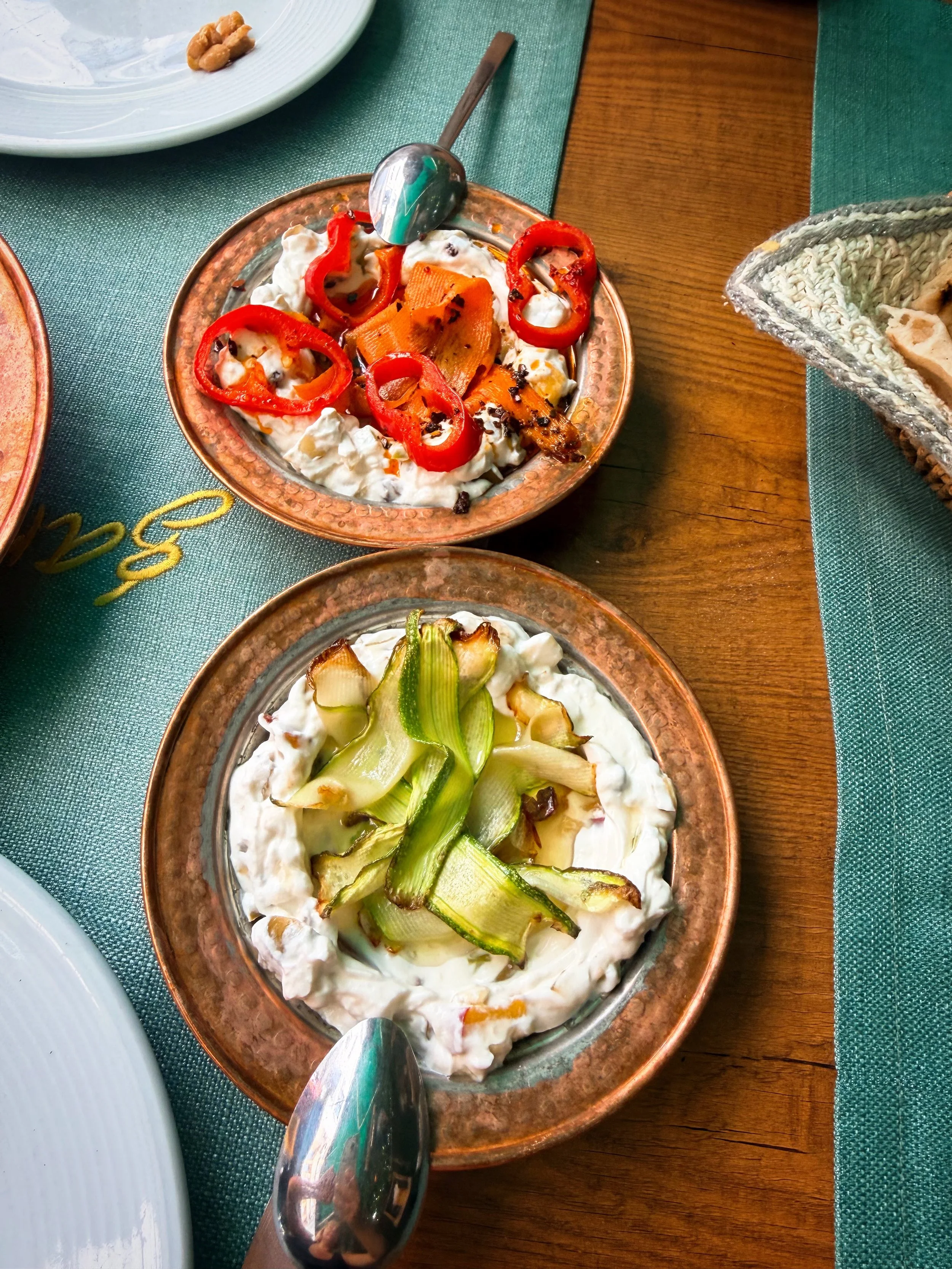
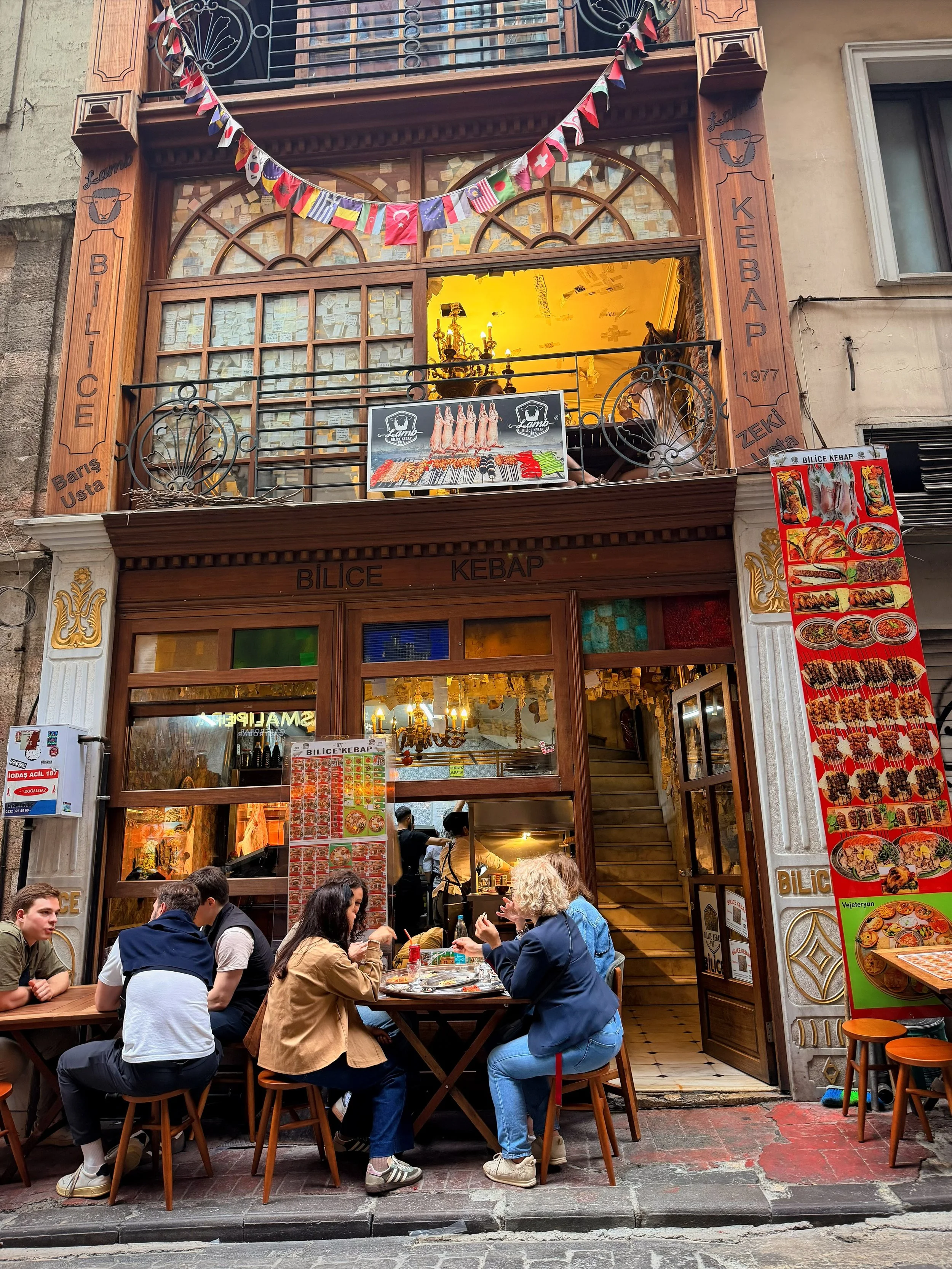
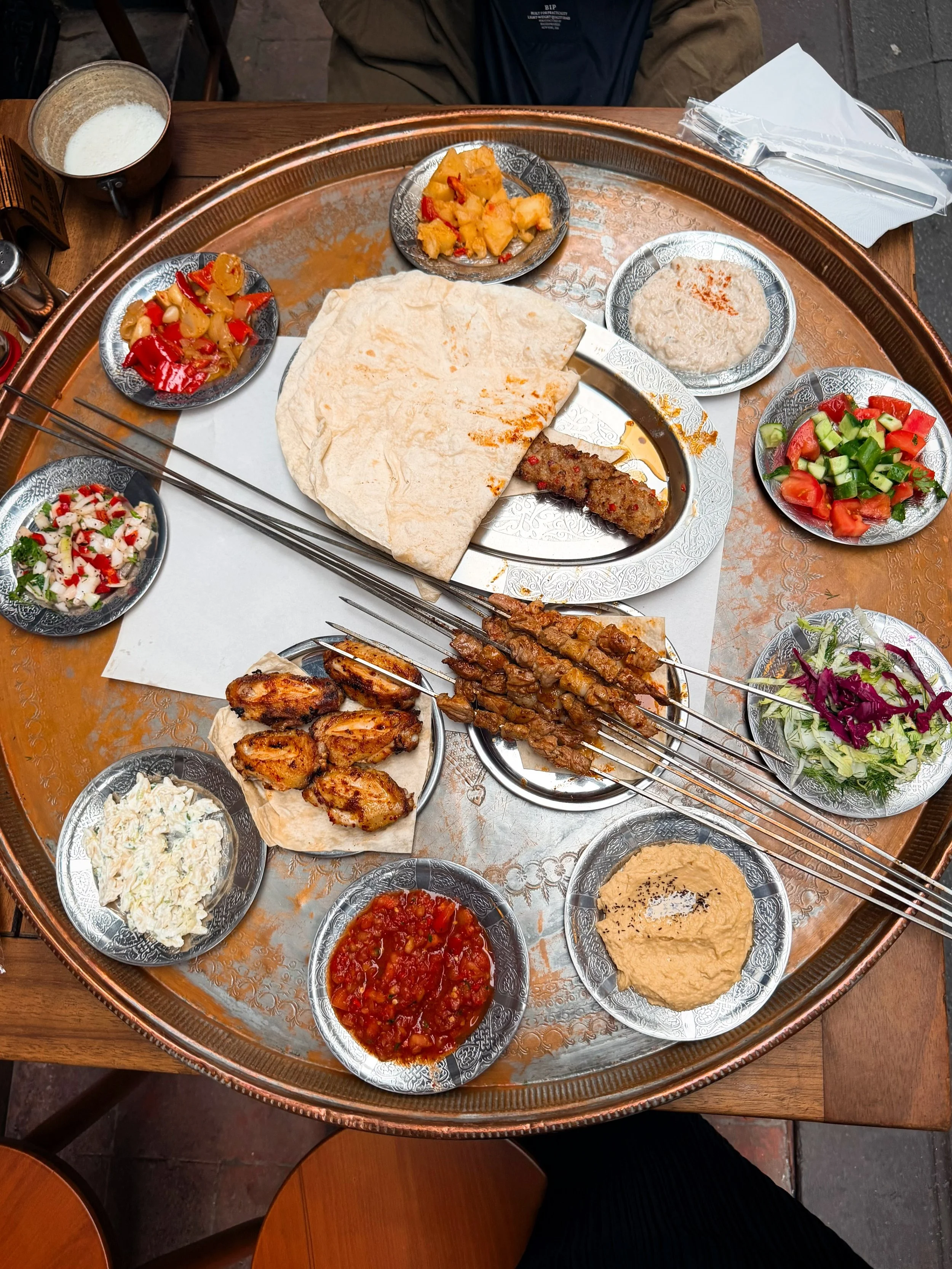
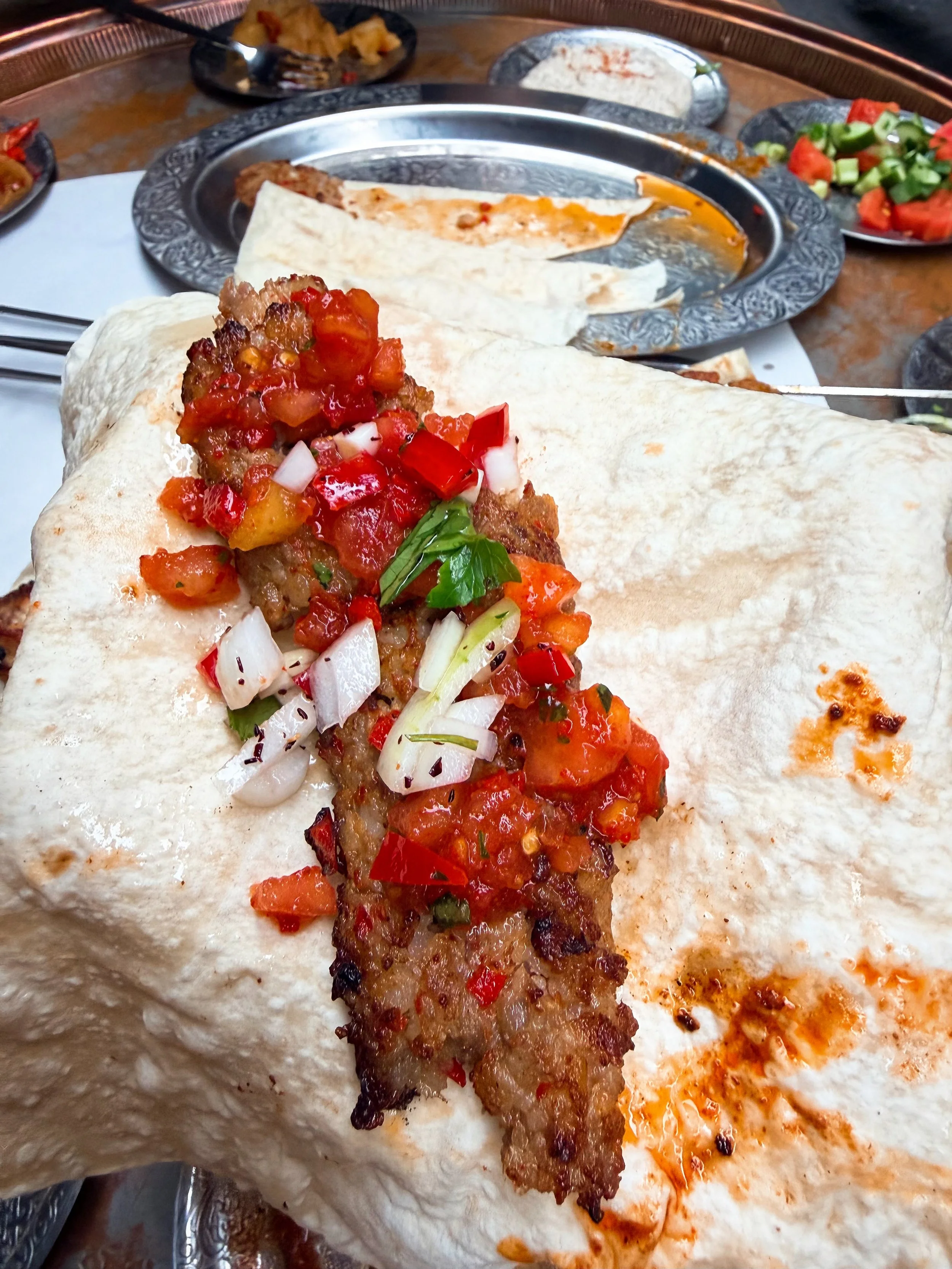
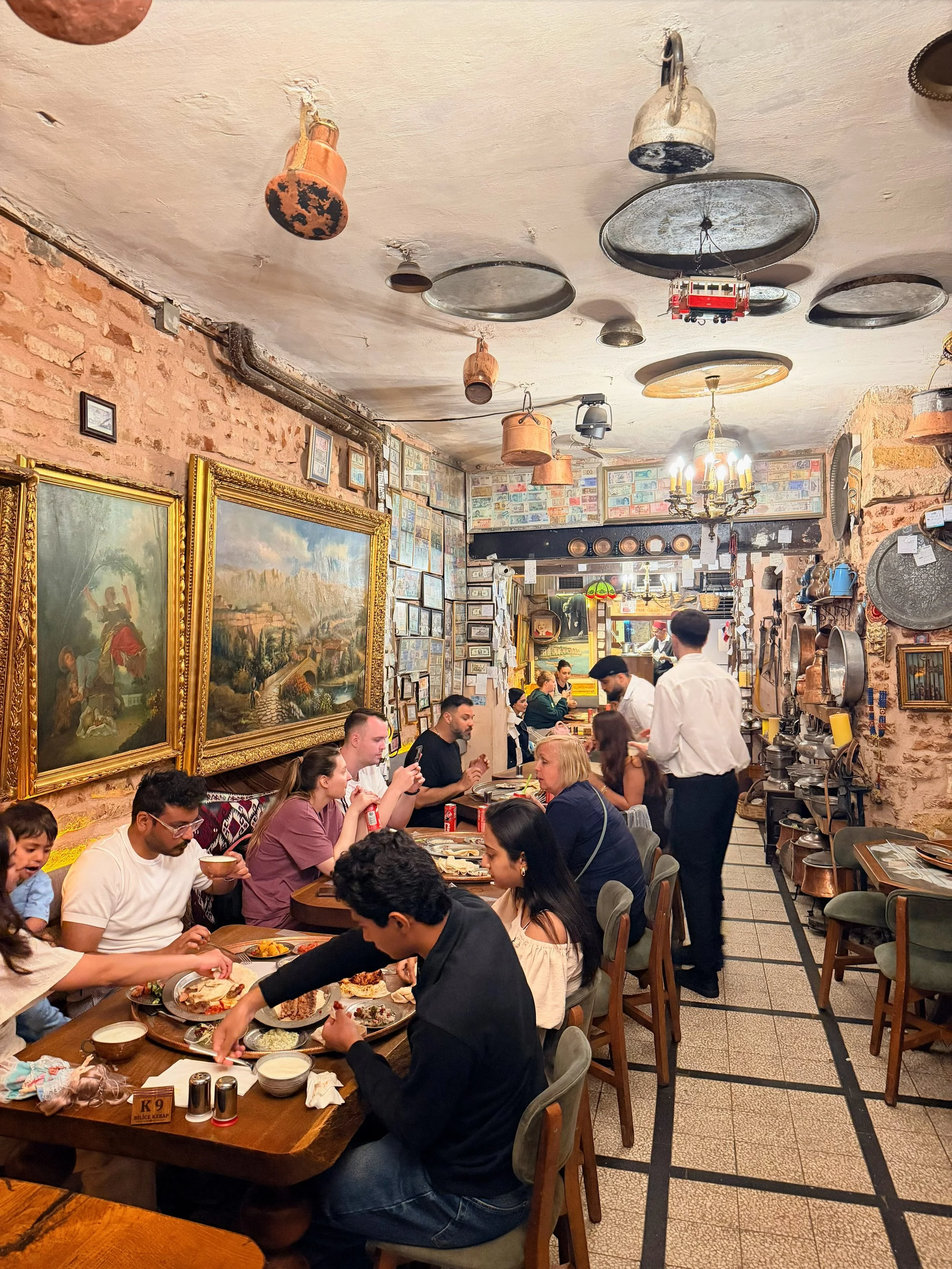
Our final dinner turned out to be the best. At Bilice Kebap, enormous platters arrived piled high with kebabs and surrounded by an abundance of mezze. The lamb skewers were excellent, but the Adana kebab and chicken wings were the stars. We sat outside sharing far more food than we could reasonably finish while passersby glanced enviously at our table.
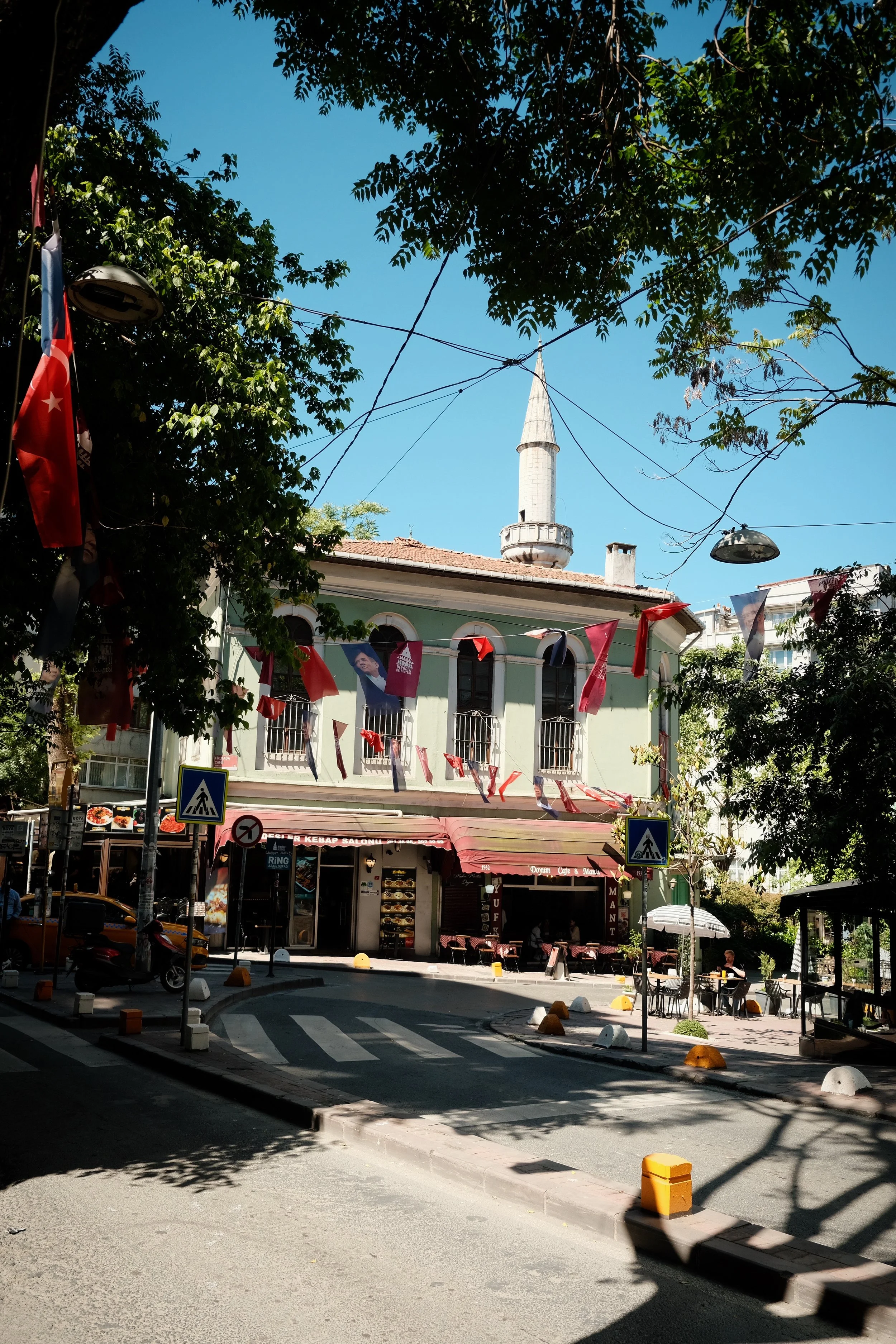
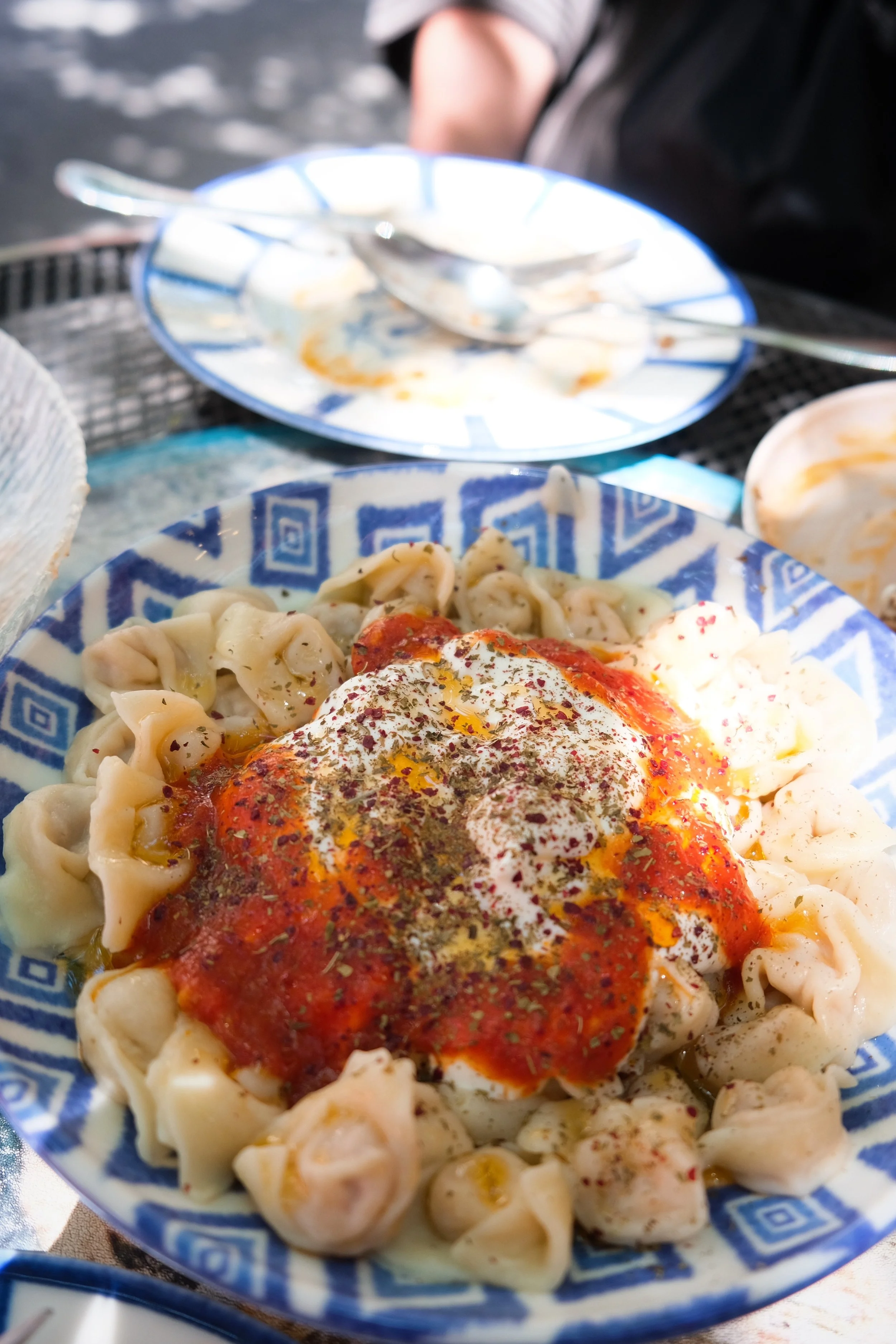
On our final morning, we wandered through Cihangir one last time beneath a cloudless sky before stopping for manti at Cihangir Mantıcısı. Tiny dumplings drenched in yoghurt and butter are one of life's great pleasures and I remain completely passionate about them.
Then it was time for the metro to the airport. A practical note for anyone planning a visit: Istanbul Airport is enormous and astonishingly expensive. £50 for two in McDonalds is not hyperbolic. Eat before you arrive if possible.
As our flight took off over the Bosphorus, I found myself thinking about how much I still hadn't seen. Istanbul is one of those rare cities that feels impossible to exhaust. It sits between continents, between histories, between worlds and somehow contains all of them at once. You come for the food, the architecture and the history, but what stays with you is the feeling of the place. The ferries crossing between Europe and Asia, the call to prayer drifting across the rooftops at sunset, the endless cups of tea. It is a city built for wandering and one that rewards every return.