Camino de Santiago Part 3: Crossing Galicia
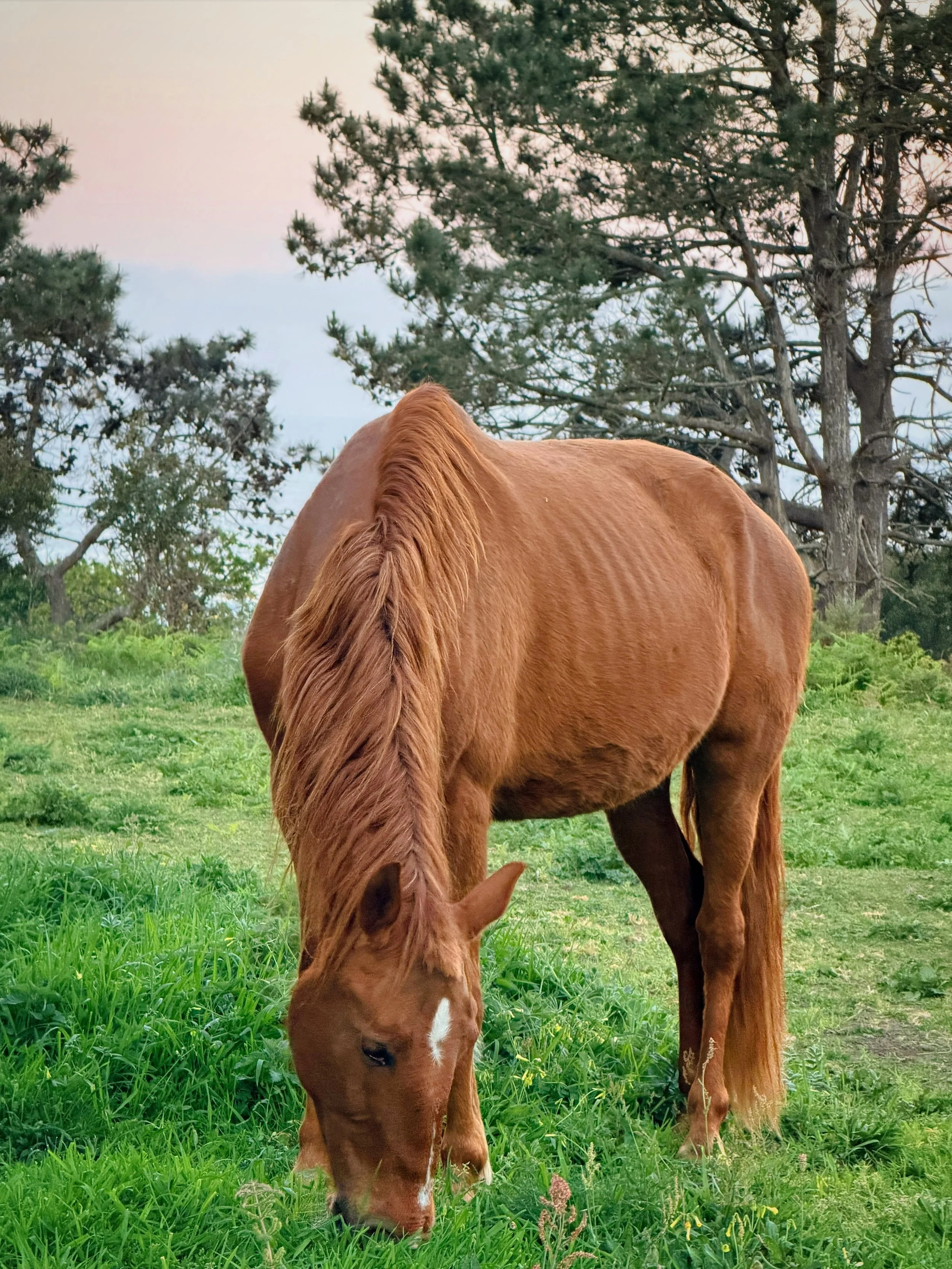
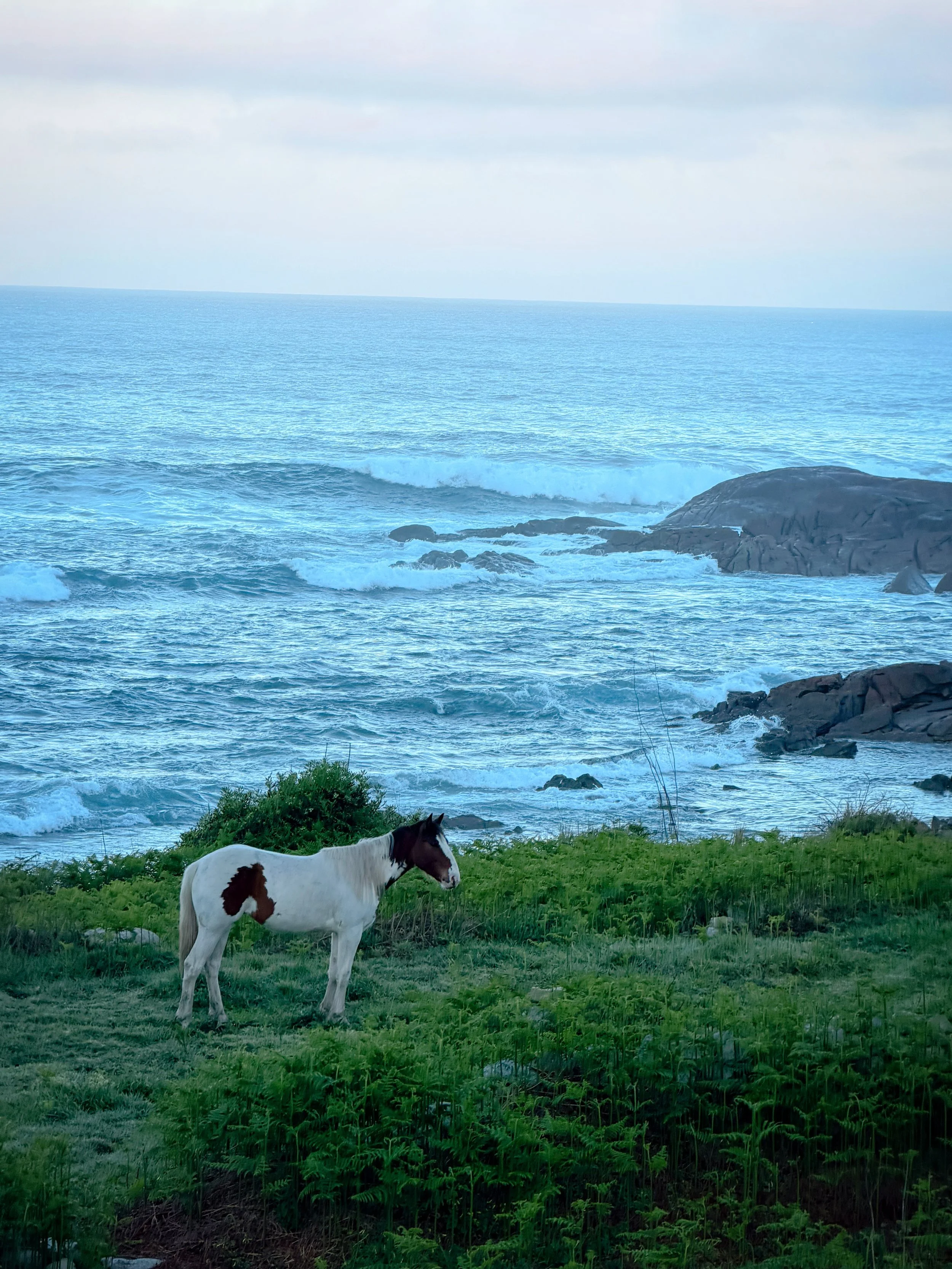
The mornings always began early on the Camino. Up at dawn, usually before the sun had fully risen, quietly packing our bags in semi-darkness before slipping back onto the trail. Leaving Viladesuso that morning, from the guesthouse overlooking the ocean where we had spent the night, the route began with a familiar kind of comfort. We wound our way through sleepy coastal villages still completely silent at that hour. No people yet, just shuttered windows, barking dogs in the distance and horses grazing lazily in fields beside the path.
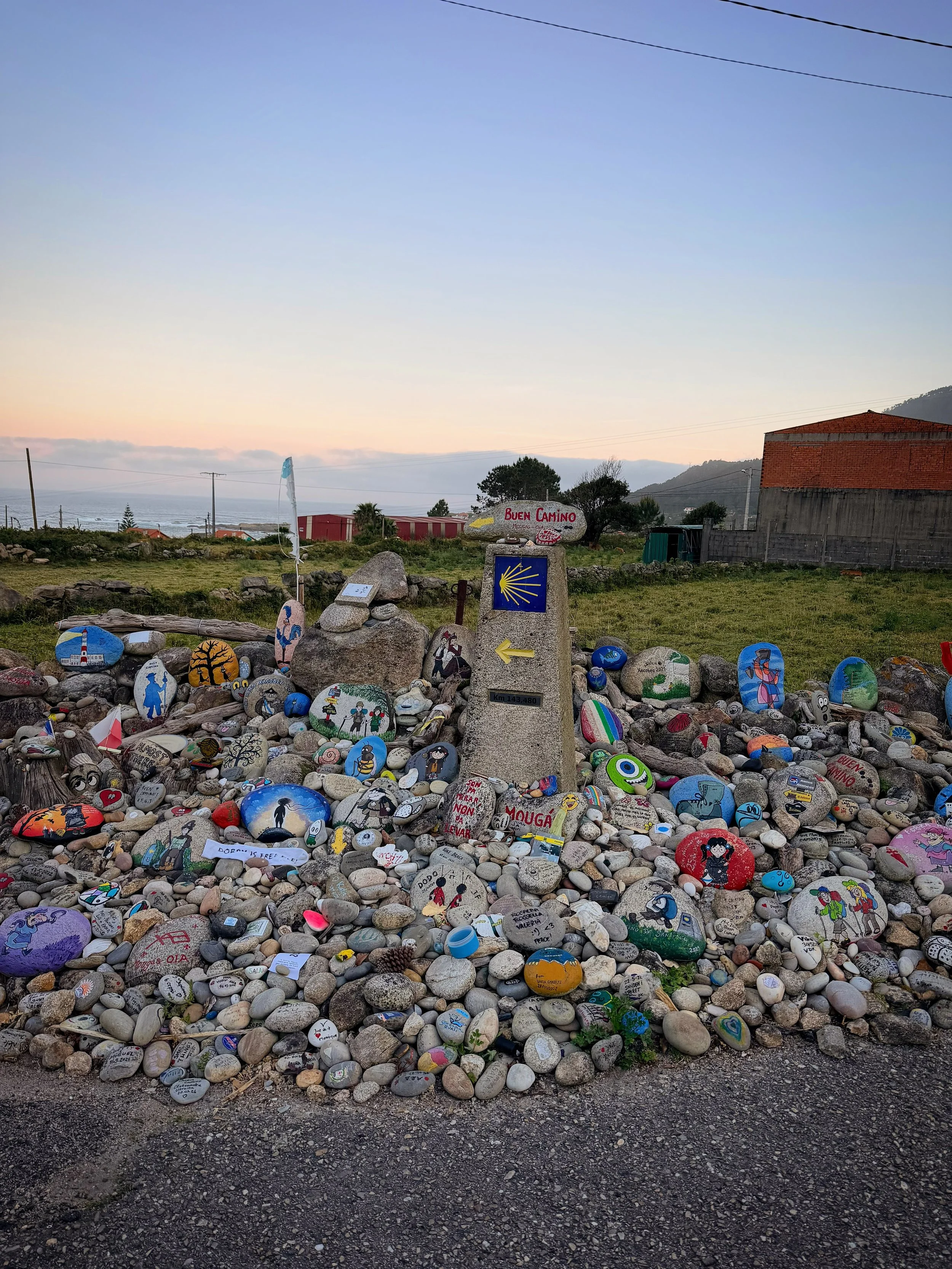
Every so often there were reminders that, despite the silence, we were not alone on the journey. Piles of painted stones left behind by pilgrims before us, balanced carefully on walls and signposts. Tiny offerings of reflection and memory scattered along the route.
And then the climbing began.
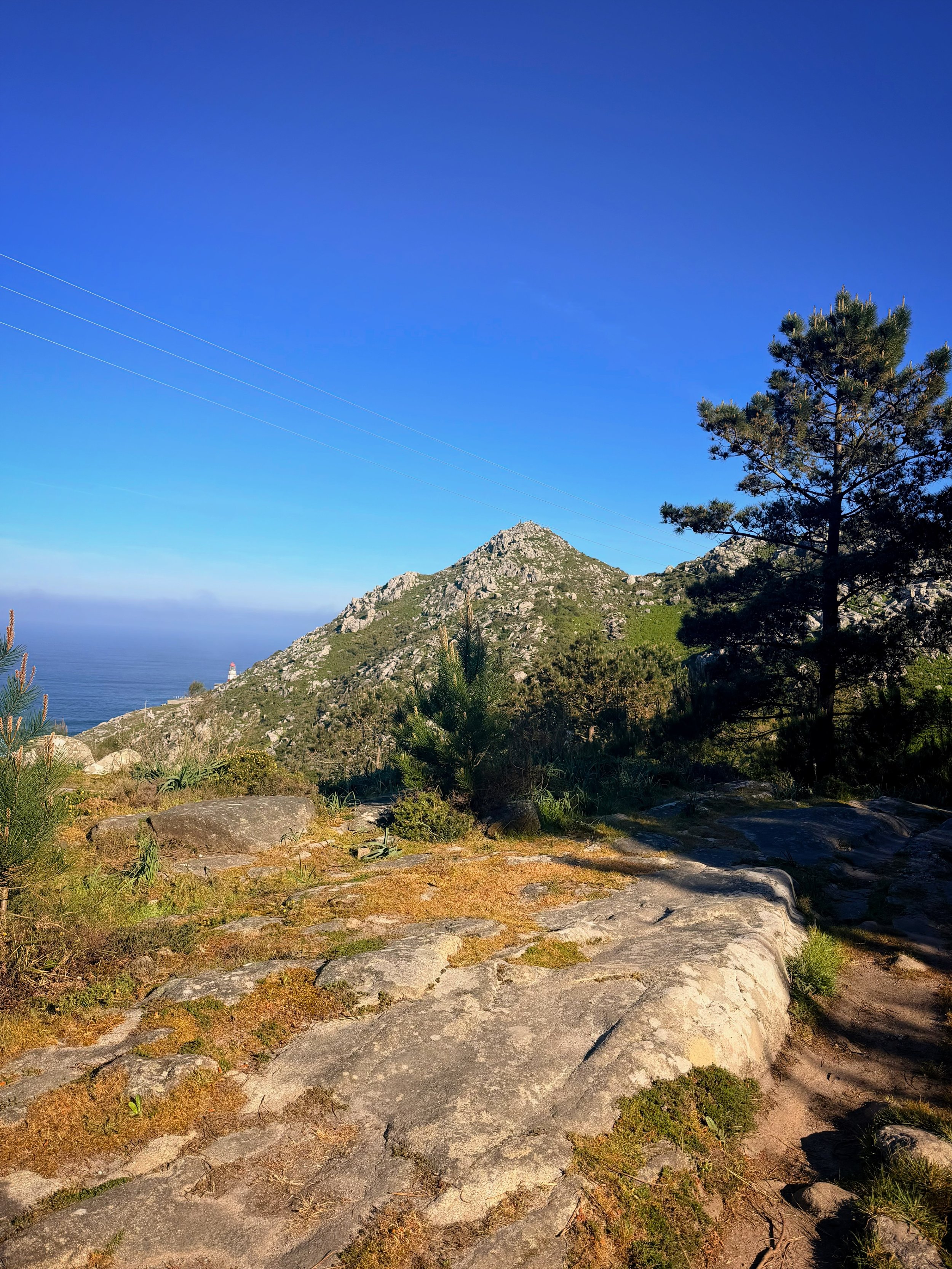
The path rose sharply into wild, rugged hills overlooking the sea. The terrain here felt dramatic, rocky tracks twisting up mountainsides while huge waves crashed below us against the coastline. Oddly, I didn’t mind the incline at all. The higher we climbed, the more spectacular the views became. The colours felt impossibly vivid in the morning light: burnt orange earth, deep green hillsides, black trees and the brilliant blue of the Atlantic stretching endlessly beside us.
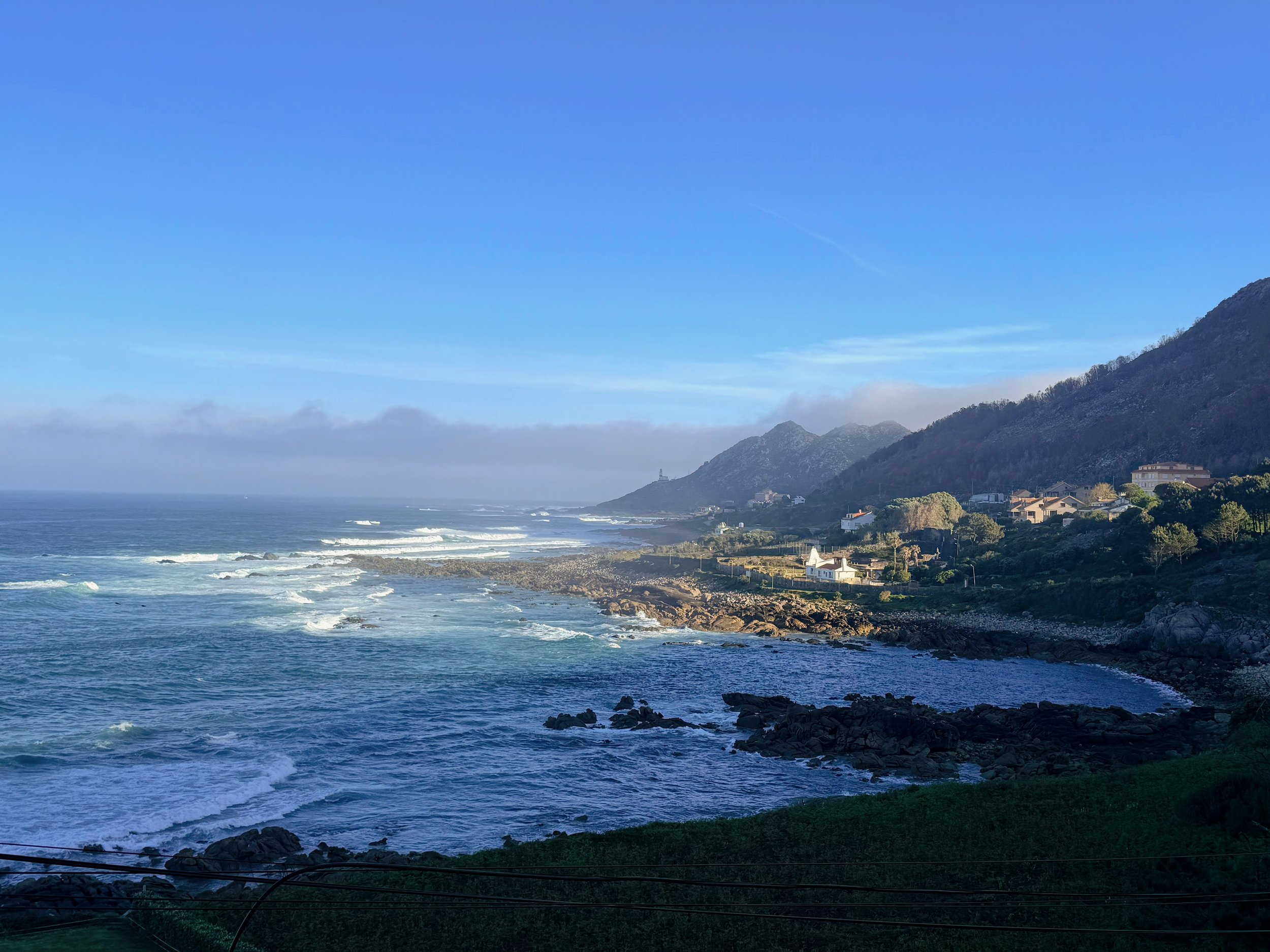
Again, somehow, the weather was perfect. Warm sunshine softened by a constant breeze coming off the water. I genuinely don’t think there could have been a luckier pair of pilgrims than us during those two weeks. Every morning felt like the weather gods had personally decided to reward our efforts.
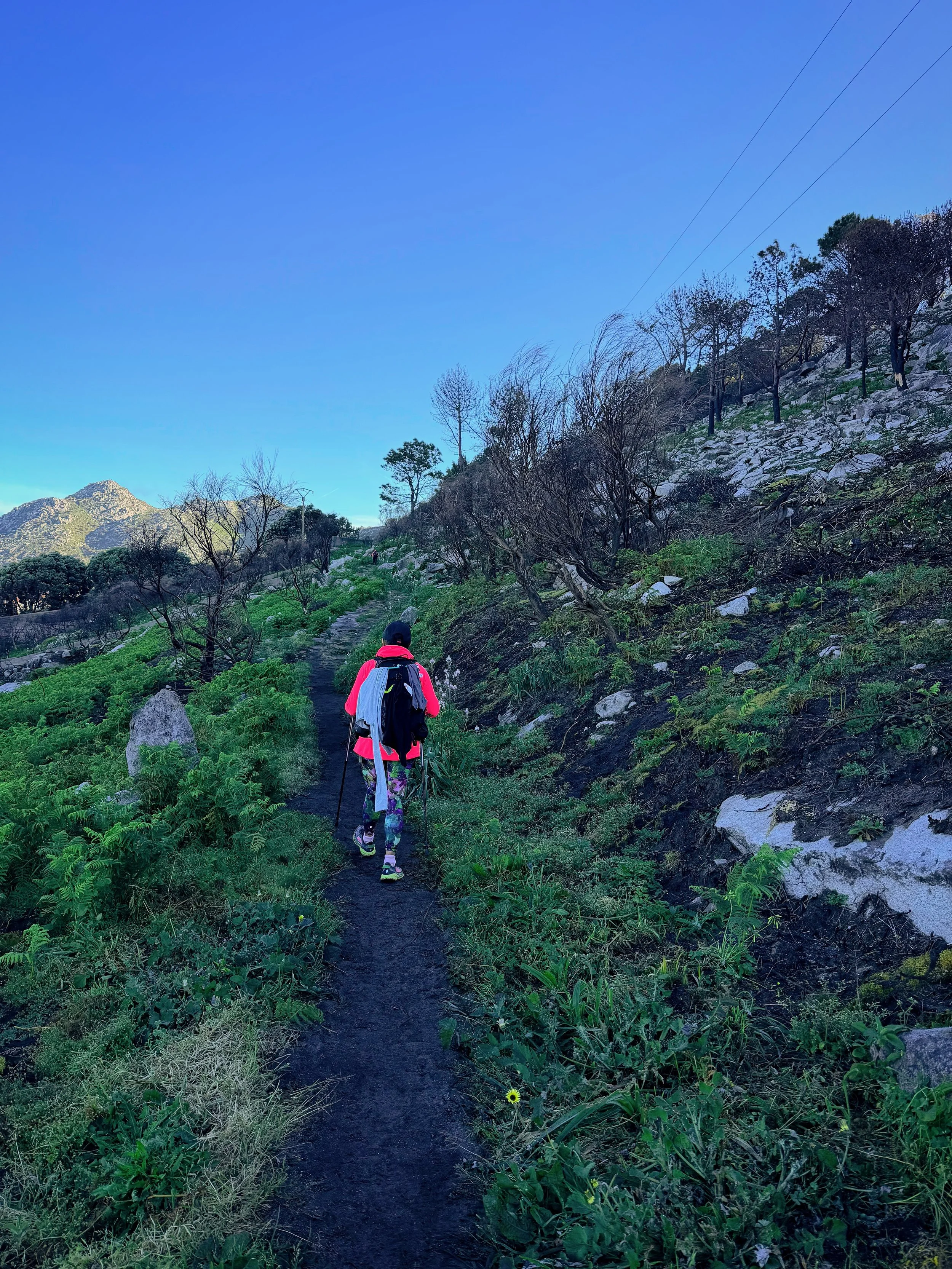
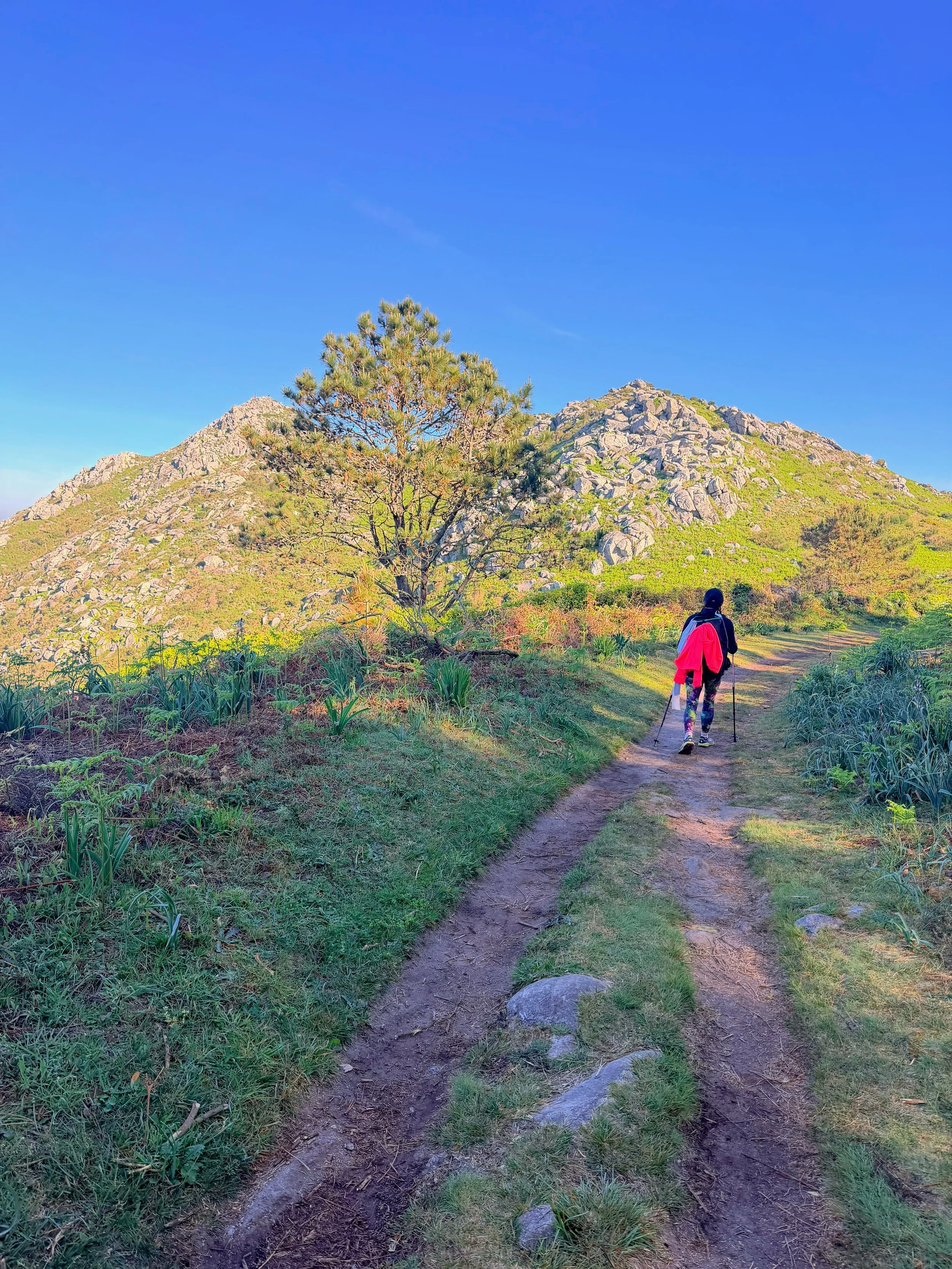
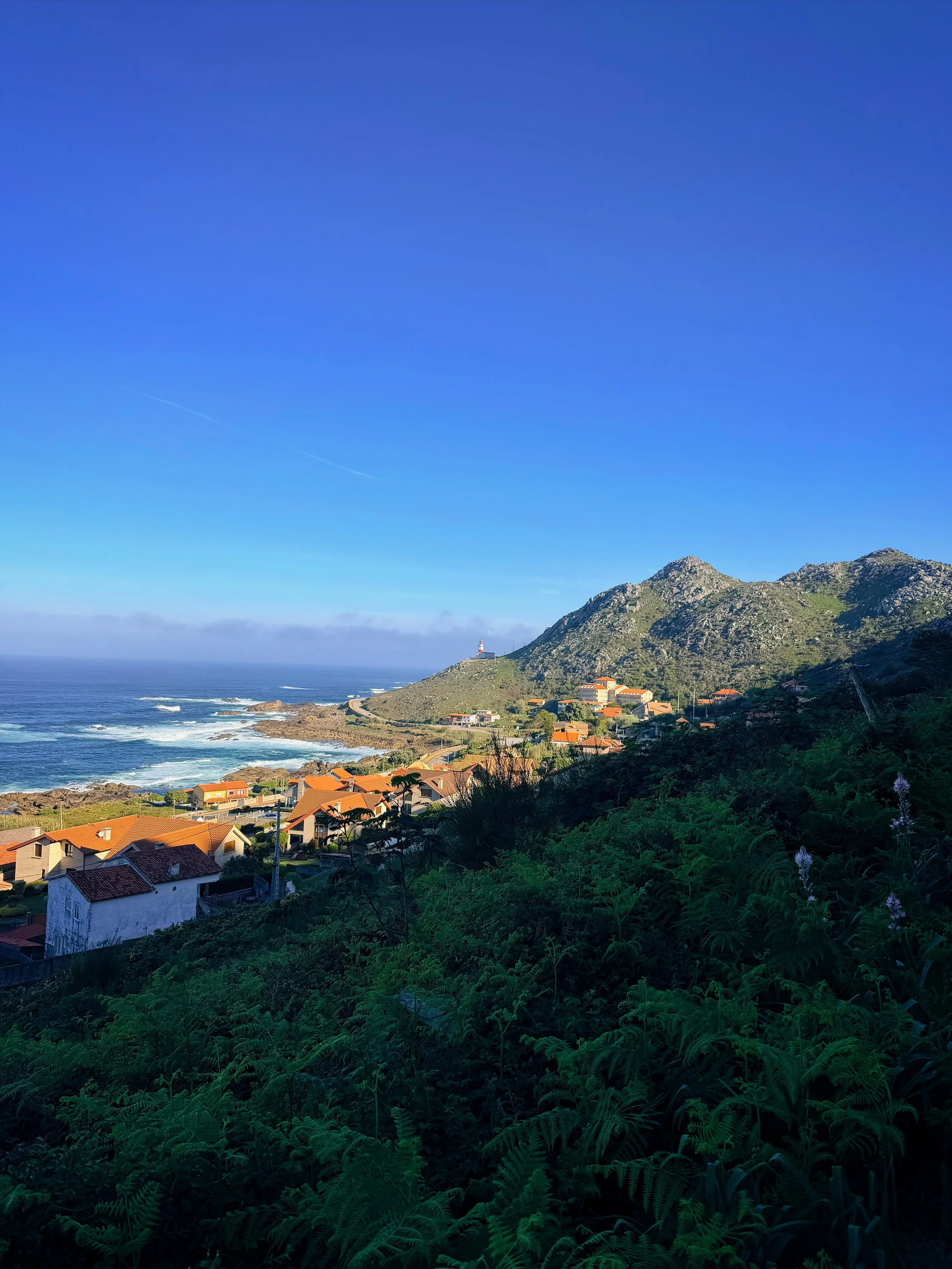
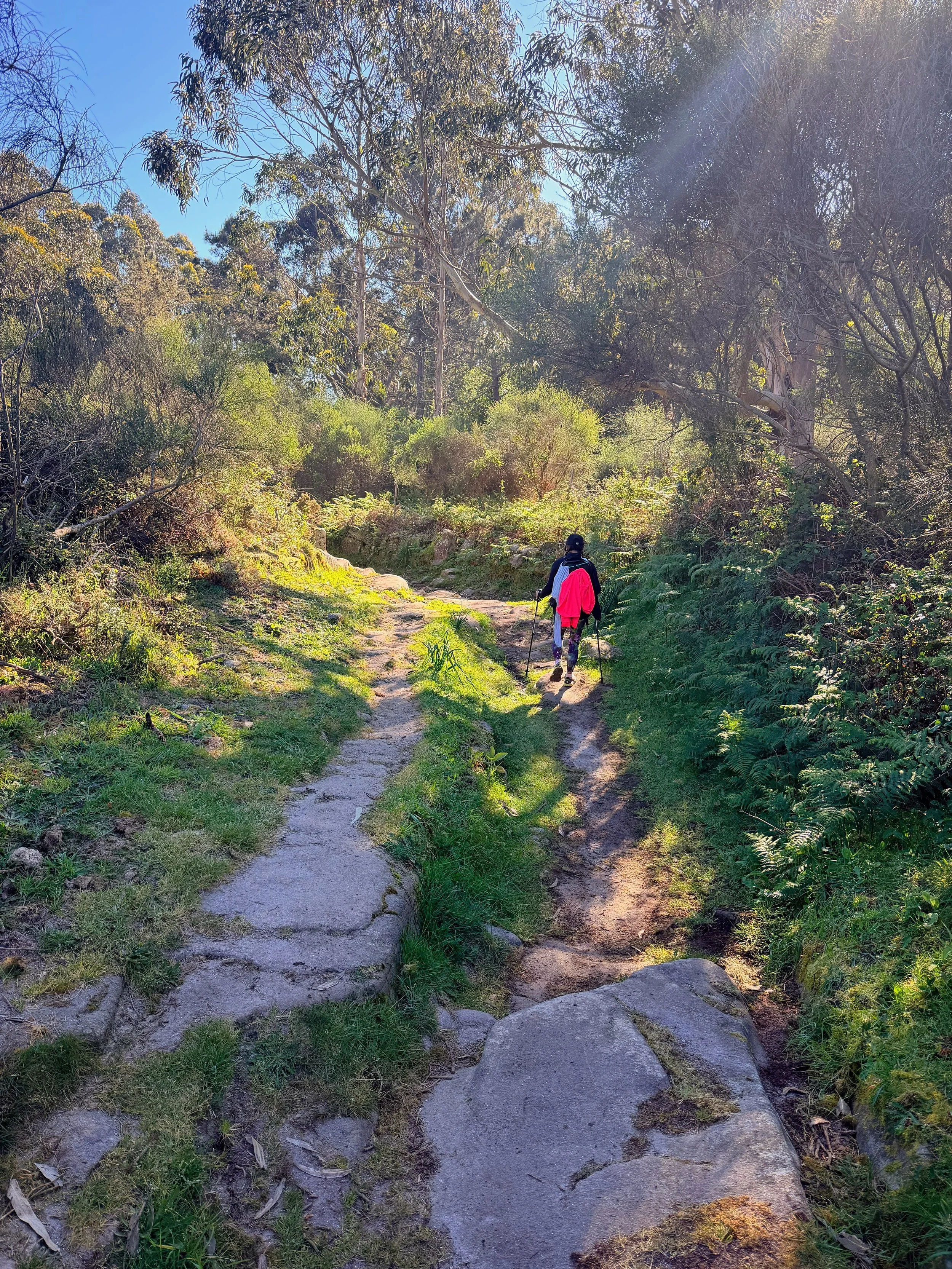
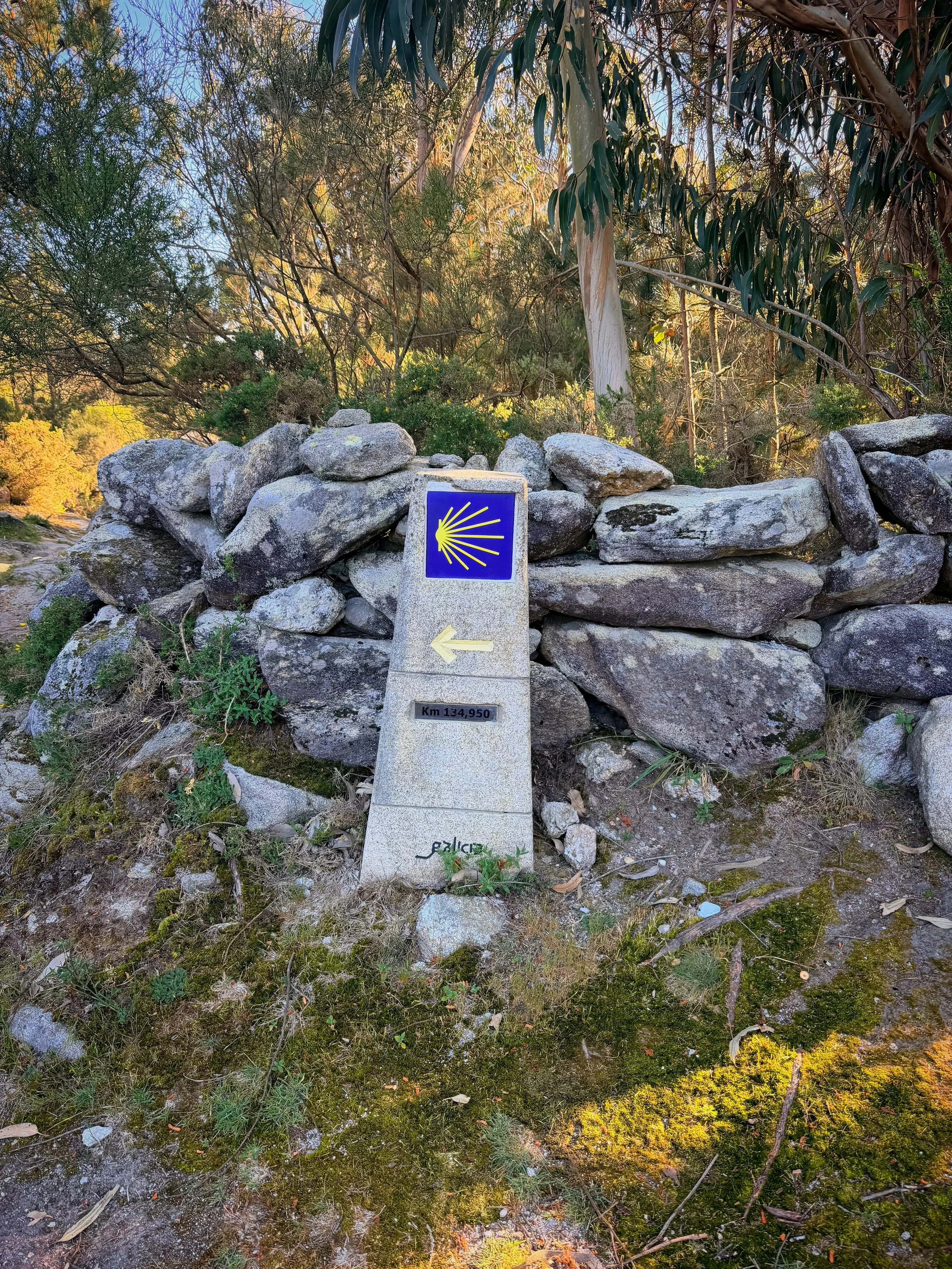
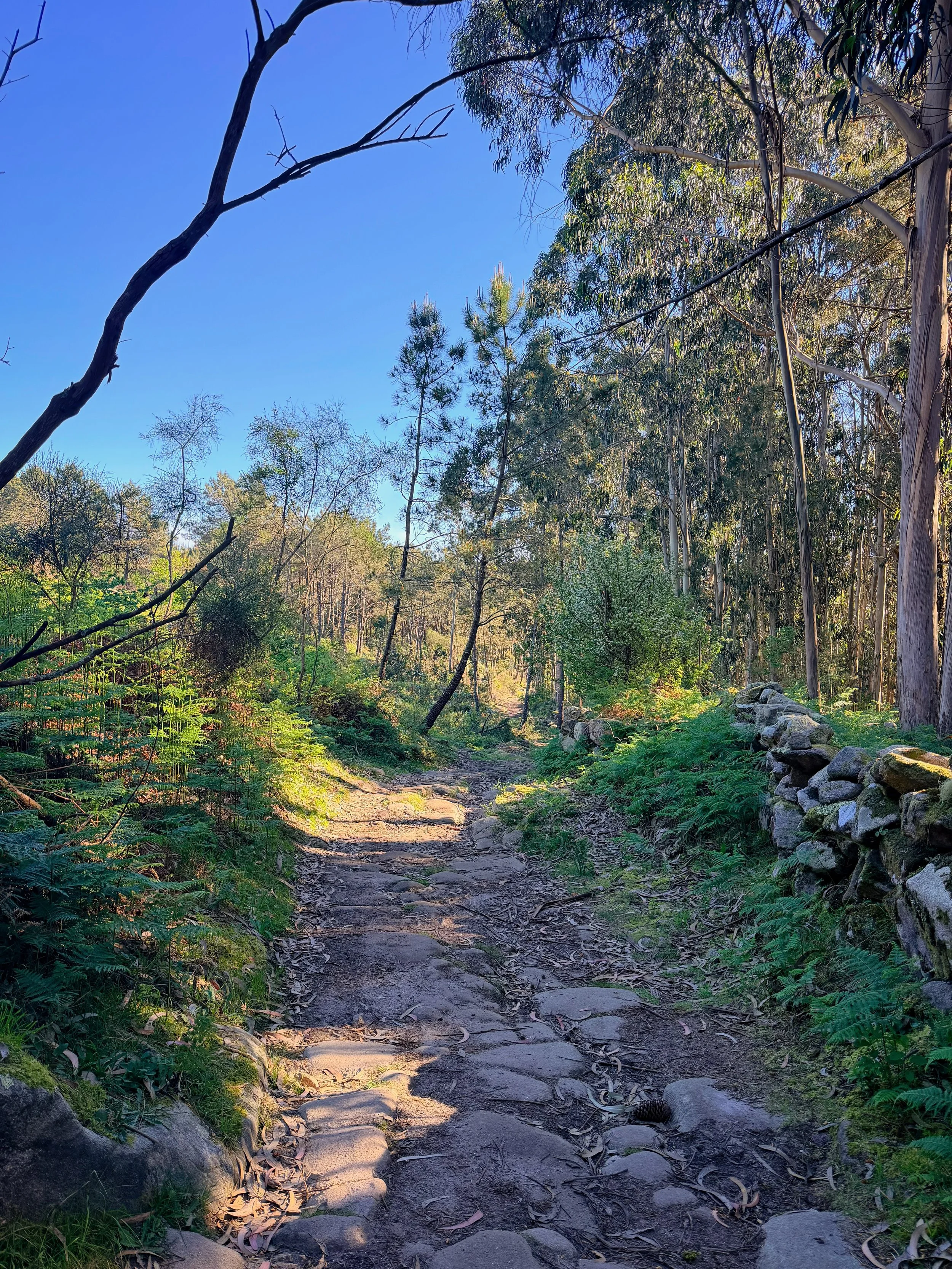
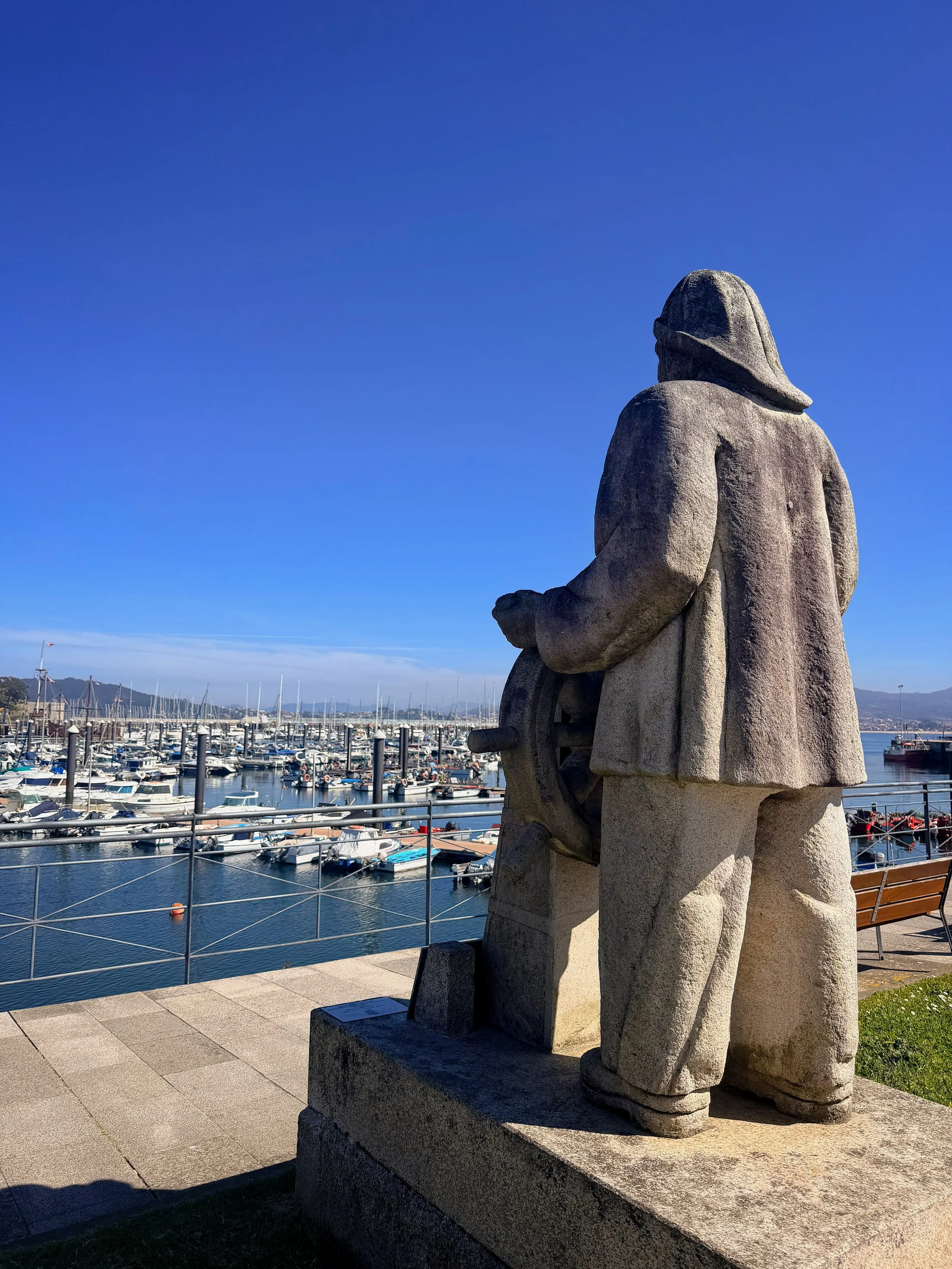
The walk from Viladesuso to A Ramallosa became one of my favourite routes of the entire Camino. The trail eventually curved inland, threading through tiny villages and quiet country roads before opening out into Baiona. Baiona was instantly charming. A medieval seaside town filled with yachts, old stone buildings and wide promenades lining the water. It also gifted us what became the defining bocadillo sandwich of the trip.
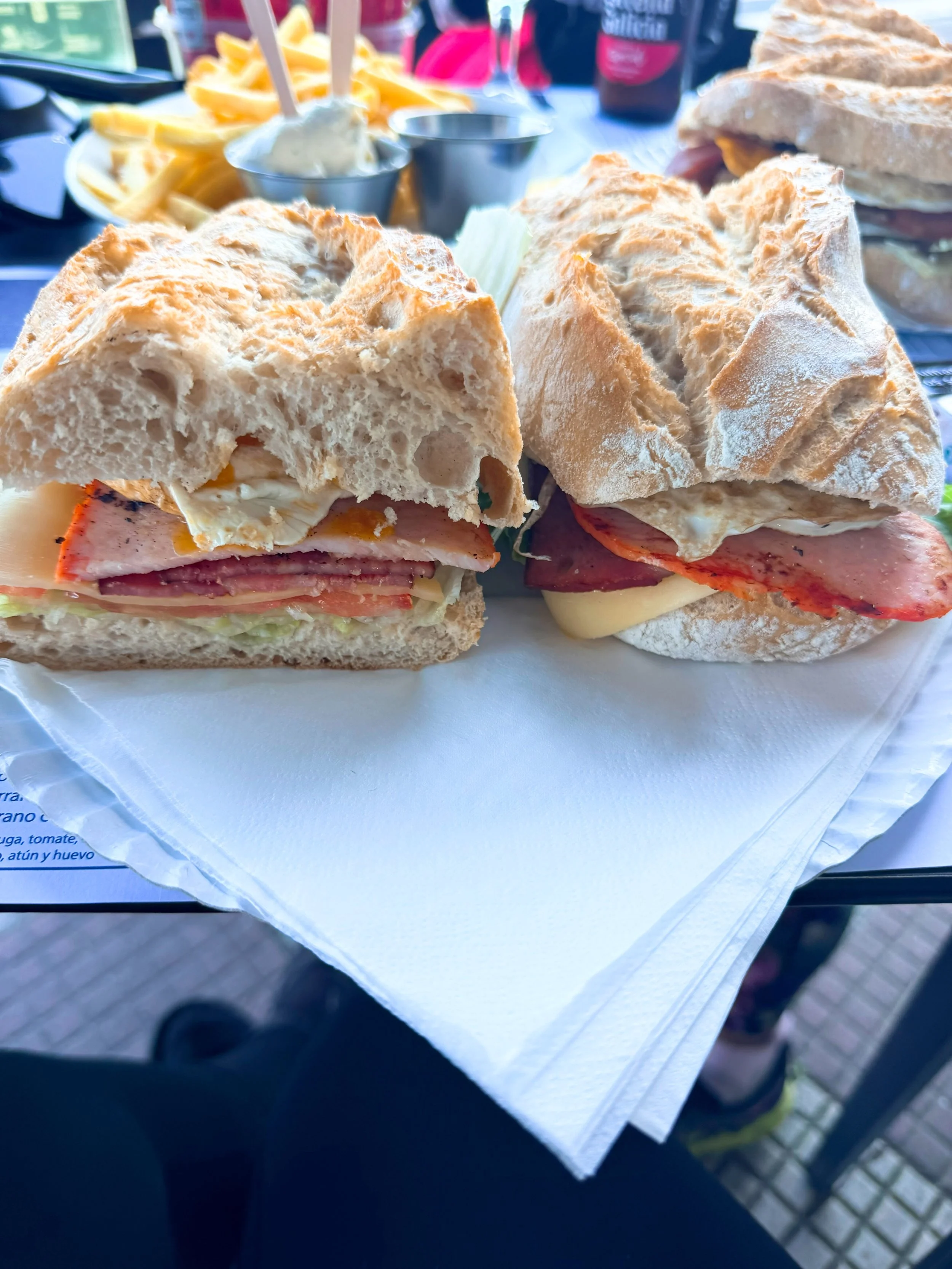
This sandwich was five euros of absolute heaven. Crusty bread, fried egg, ham, melted cheese, perfection. Accompanied, naturally, by a small cold beer. There are very few pleasures in life greater than a little beer after six hours of hiking. Everything tastes amplified on the Camino, partly because you’ve spent all morning earning it.
After lunch, slightly sun-drunk and very content, we continued on towards A Ramallosa for the evening. Our hotel had the friendliest staff imaginable and, equally, one of the worst rooms imaginable. The bathroom flooded almost immediately, soaking half the floor. By this point we had both adopted the Camino mindset of accepting things as they came. Besides, a sunset dinner of Iberico pork and Padrón peppers overlooking the water compensated for the inconvenience.
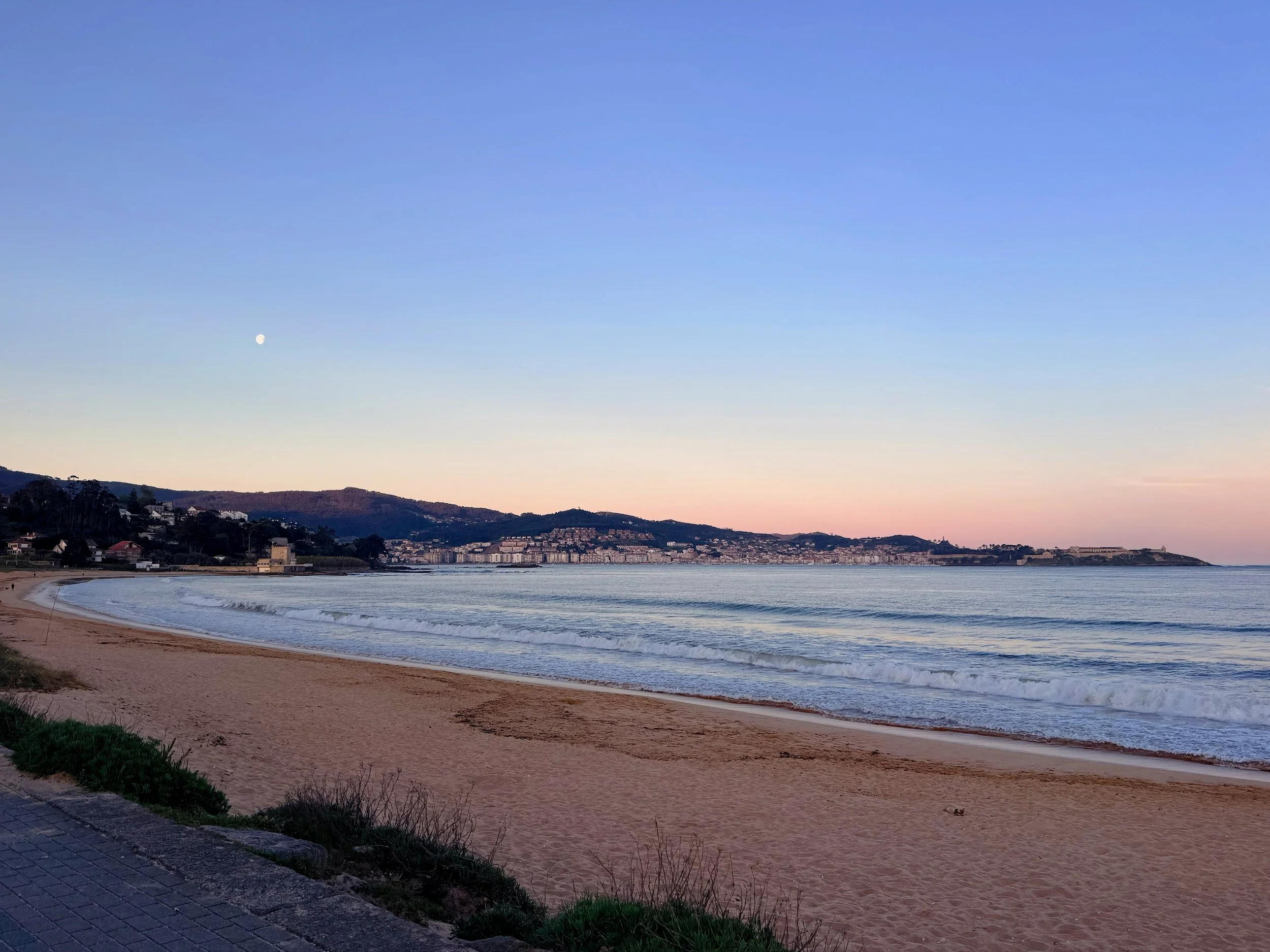
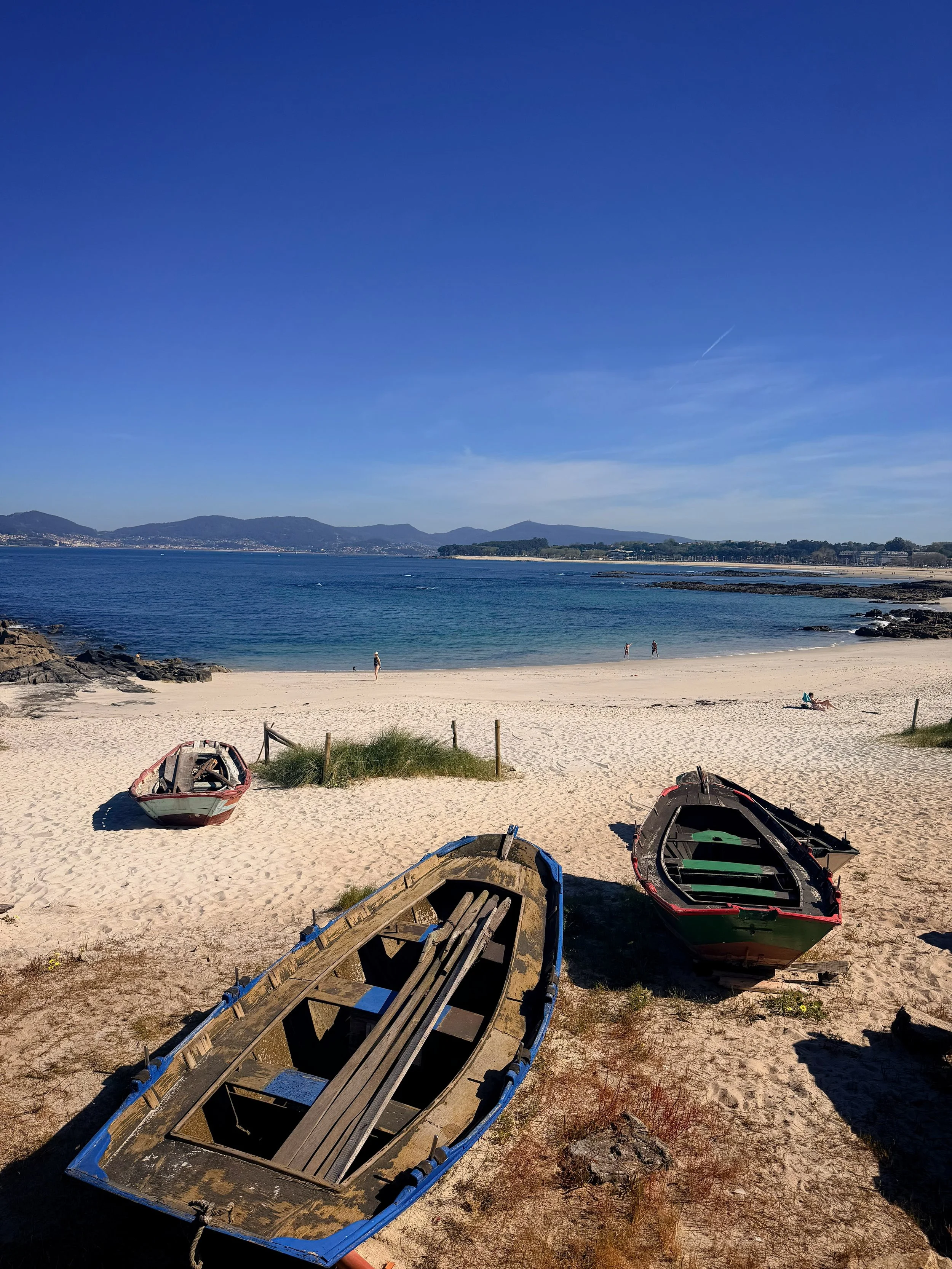
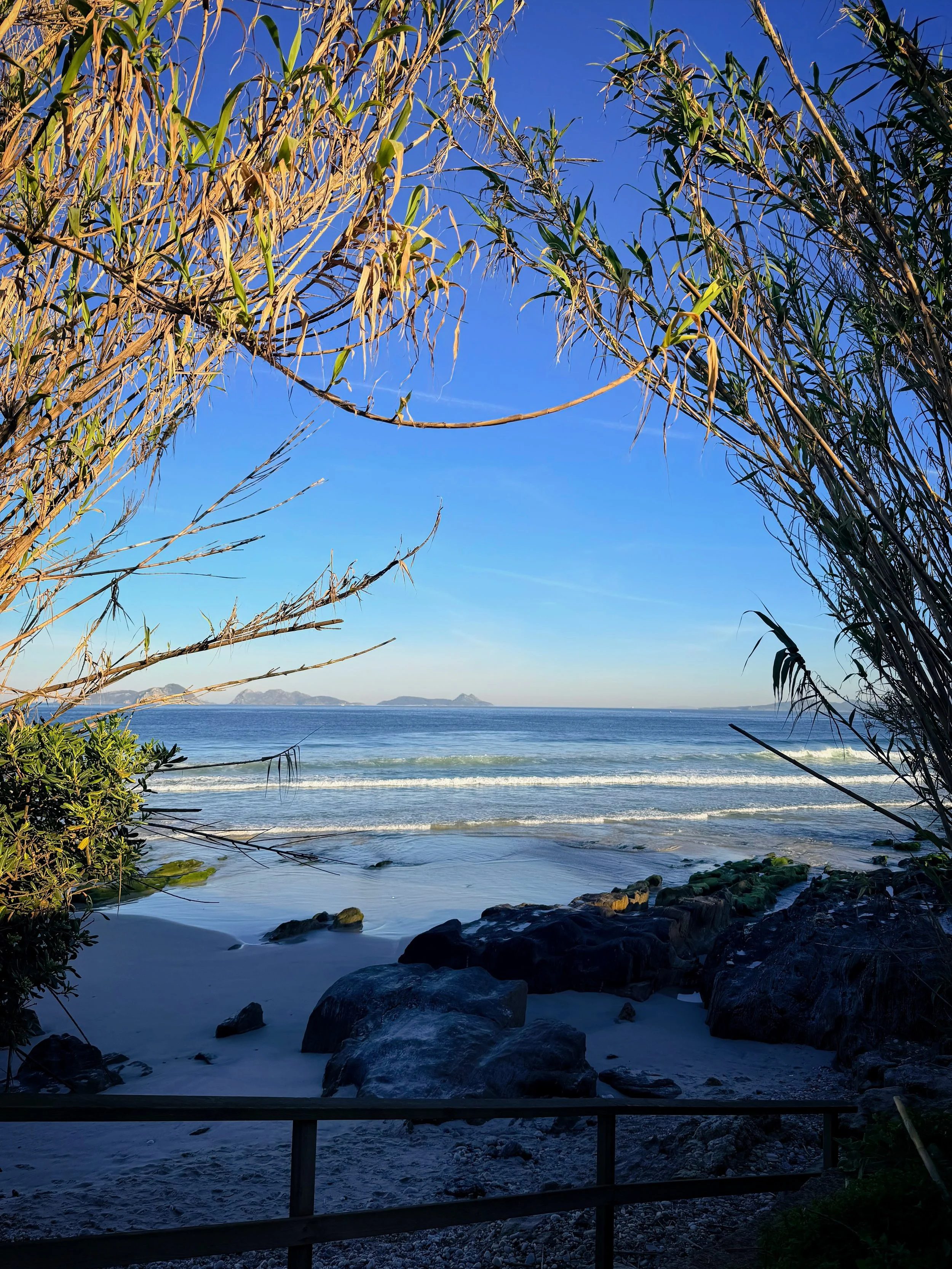
The following morning, we set off at sunrise again, this time heading towards Vigo. The first part of the route was stunning. The trail hugged the coastline so closely at points that we were walking across beaches themselves. Parts of Galicia felt unexpectedly tropical, with sandy paths lined with palms, forests growing right down to the waterline and bright blue sea glittering in the early morning sun.
The beaches on the approach into Vigo were some of the most beautiful of the entire trip and our spirits were incredibly high at first. But the Camino has a way of humbling you eventually.
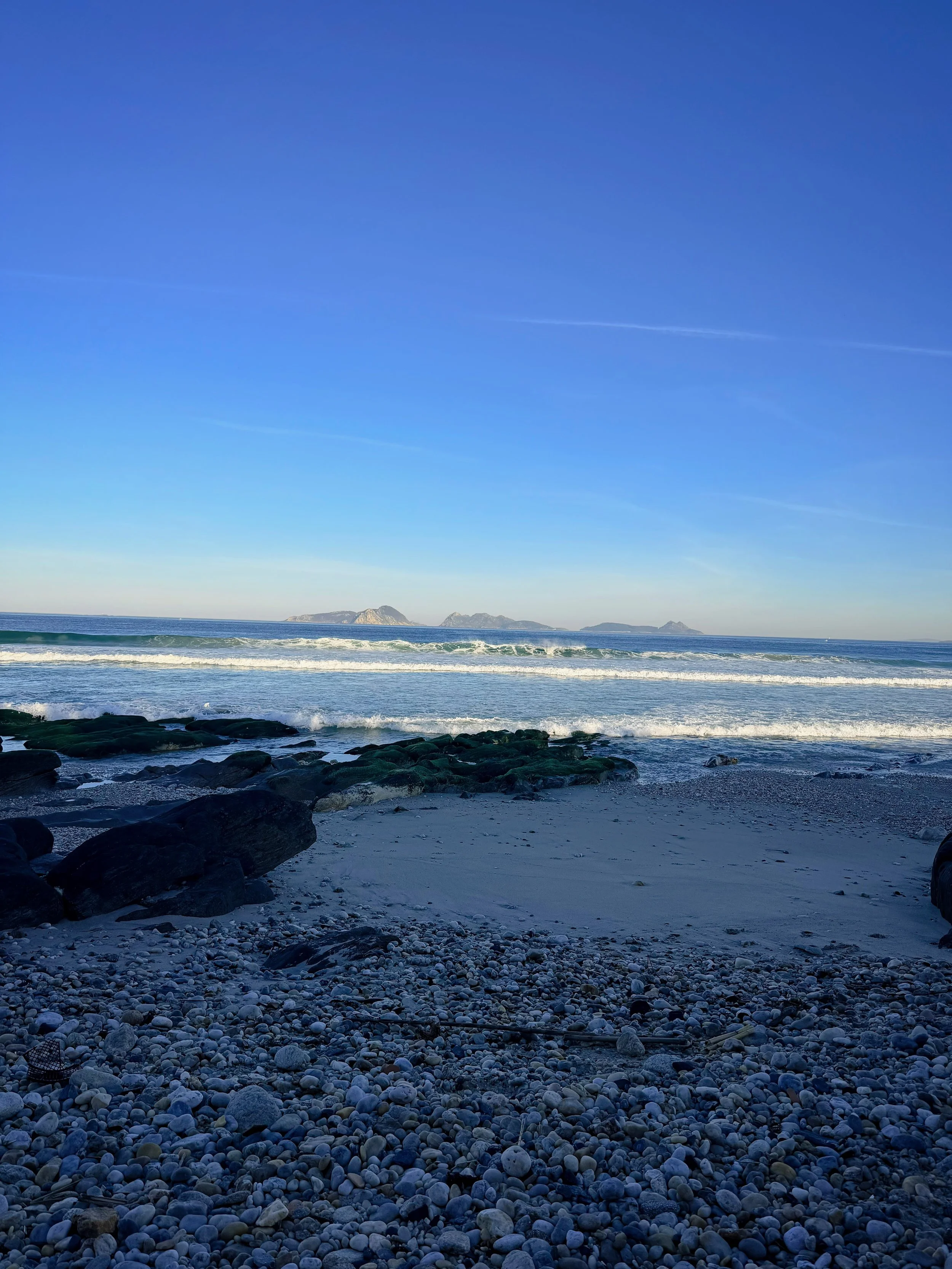
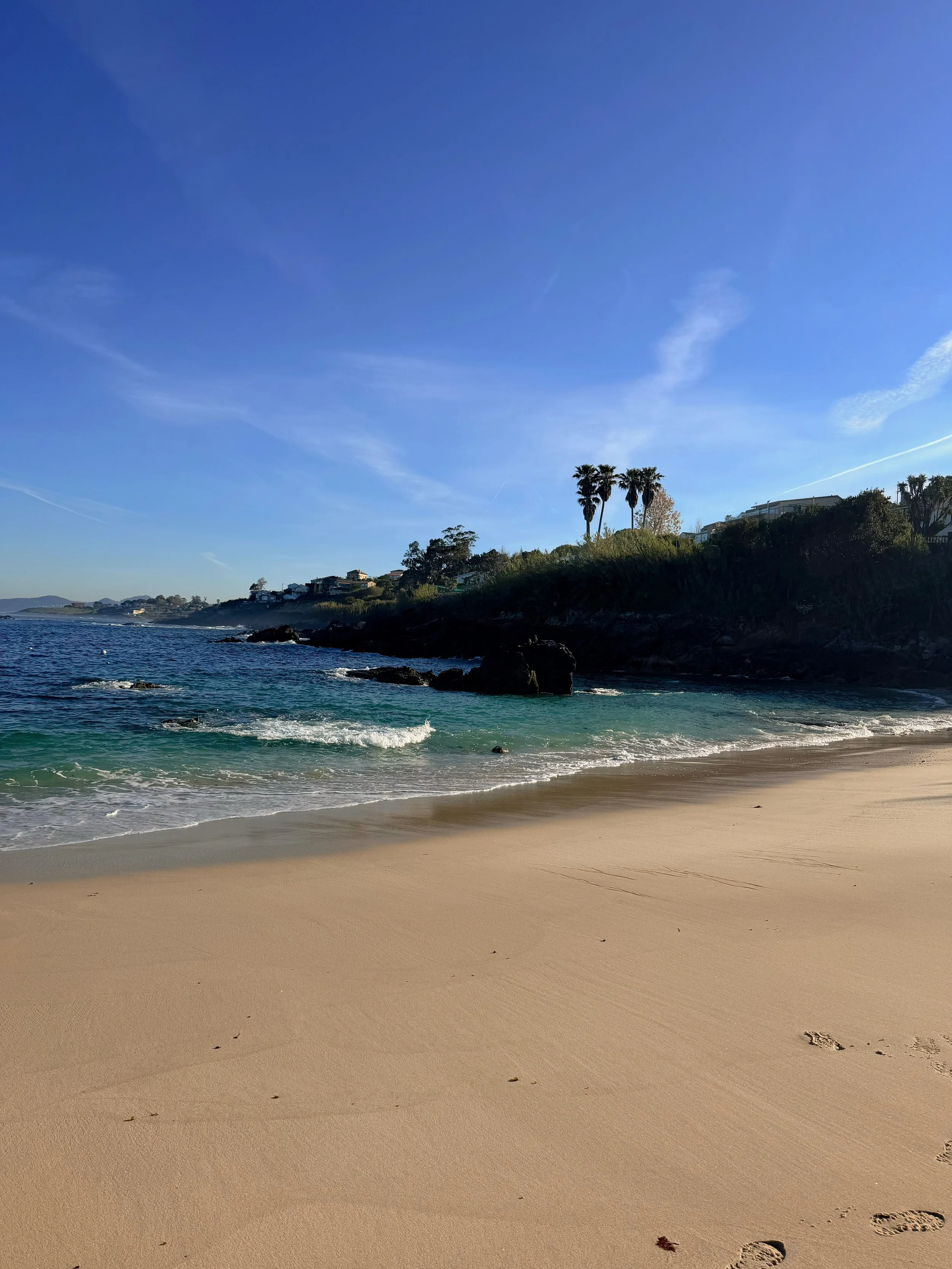
By around 3pm, we crashed completely. It was the hottest day so far, well over 30 degrees, with almost no shade cover for the final stretch. Worse still, the route into Vigo became relentlessly uphill just as the heat reached its peak. We had also made a critical error: we hadn’t eaten lunch.
My best friend has the extraordinary ability to survive on tiny morsels of food like some kind of highly evolved lizard. I think I did actually call her a lizard this day. I, unfortunately, absolutely do not. By mid-afternoon we had been hiking for seven hours with no food and I hit a wall spectacularly. We ended up collapsing into the first café we could find on the outskirts of the city. At this point I was genuinely delirious from dehydration and heat, sitting there glassy-eyed while desperately drinking water and inhaling whatever food appeared in front of me.
Another truth of the Camino quickly revealed itself though: however terrible you feel, there is very little that cannot be improved quickly by food, water, rest and perhaps one of those tiny cold beers. Within half an hour, I had been fully resurrected.
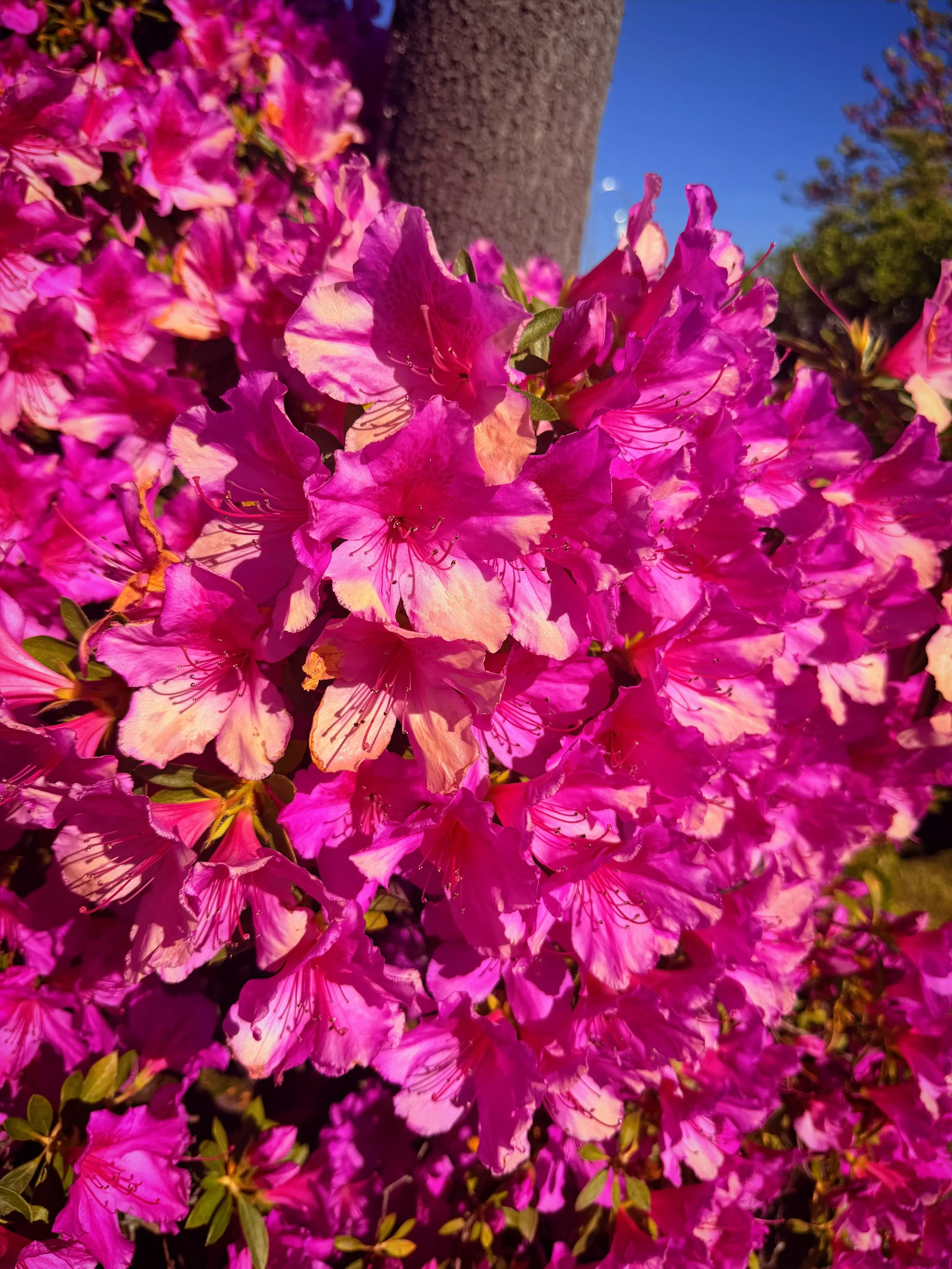
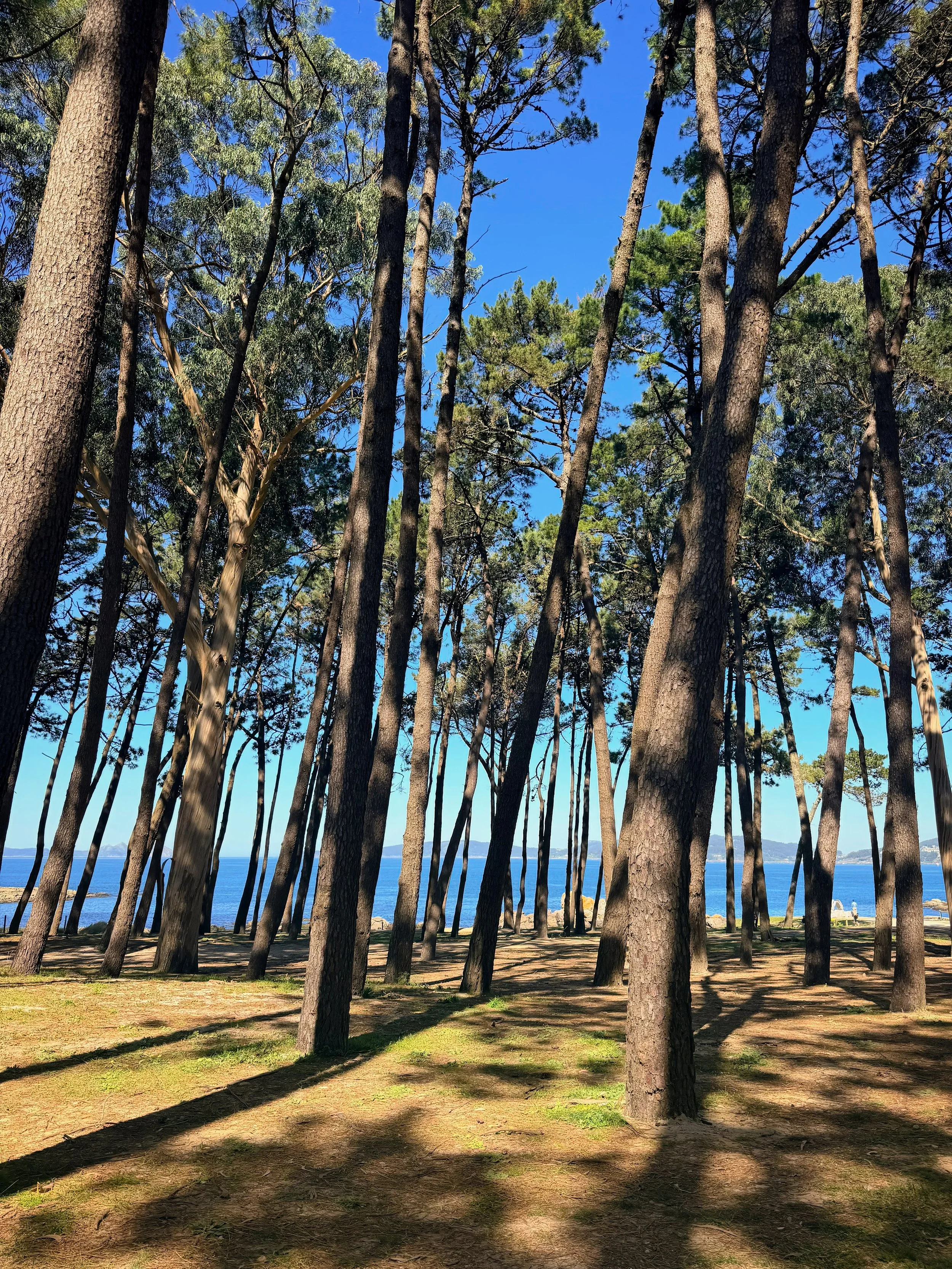
I’m glad we stopped when we did because the remaining forty-five minutes into Vigo was a brutal, uphill, blistering afternoon climb through parts of the city that were significantly less picturesque than the beaches we had spent the morning wandering through.
But that is the Camino too. You take the difficult stretches alongside the beautiful ones. The same day can hold both a serene sunrise walk across empty beaches and a sweaty, slightly tortuous uphill trudge into a city. It all balances out in the end.